

Setting Up a Football Simulator Attraction: A Step-by-Step Guide
- Why Add a Football Simulator to Your Venue?
- Understanding visitor demand for a football simulator attraction
- Key performance indicators to measure success with a football simulator
- Step 1 — Business Case and Site Selection for Your Football Simulator
- Estimating demand and defining the
- Space, power and environmental requirements
- Step 2 — Choosing the Right Football Simulator Hardware and Software
- Simulator types and how they match venue goals
- Software features to prioritize in a football simulator
- Step 3 — Installation, Integration and Safety for a Football Simulator
- Project planning and timeline
- Safety, accessibility and compliance
- Step 4 — Operations, Staffing and Pricing Strategy for Football Simulator Revenue
- Operational models and staffing
- Pricing, packages and promotions
- Step 5 — Marketing, Events and Monetization of Your Football Simulator
- Promotional tactics to drive trials
- Monetization beyond play fees
- Technical Support, Maintenance and Lifecycle for a Football Simulator
- Maintenance plan and spare parts inventory
- Upgrades and content refresh strategy
- Case Study Comparison: Choosing Between Kick-Target and Full-Motion Football Simulator
- Which model fits which venue?
- Why Partner With an Experienced Supplier — JAMMA Amusement Profile
- About JAMMA Amusement and how we support football simulator projects
- JAMMA's commercial and technical strengths
- JAMMA advantages and core product focus
- Checklist Before You Launch Your Football Simulator Attraction
- Pre-launch operational checklist
- FAQ — Football Simulator Common Questions
- 1. How much space do I need for a football simulator?
- 2. What is the typical cost to install a commercial football simulator?
- 3. How long before I can expect a return on investment?
- 4. Do football simulators require special insurance?
- 5. Can I host tournaments and corporate events with a football simulator?
- 6. How do I keep content fresh so customers return?
- Contact and Next Steps
- References
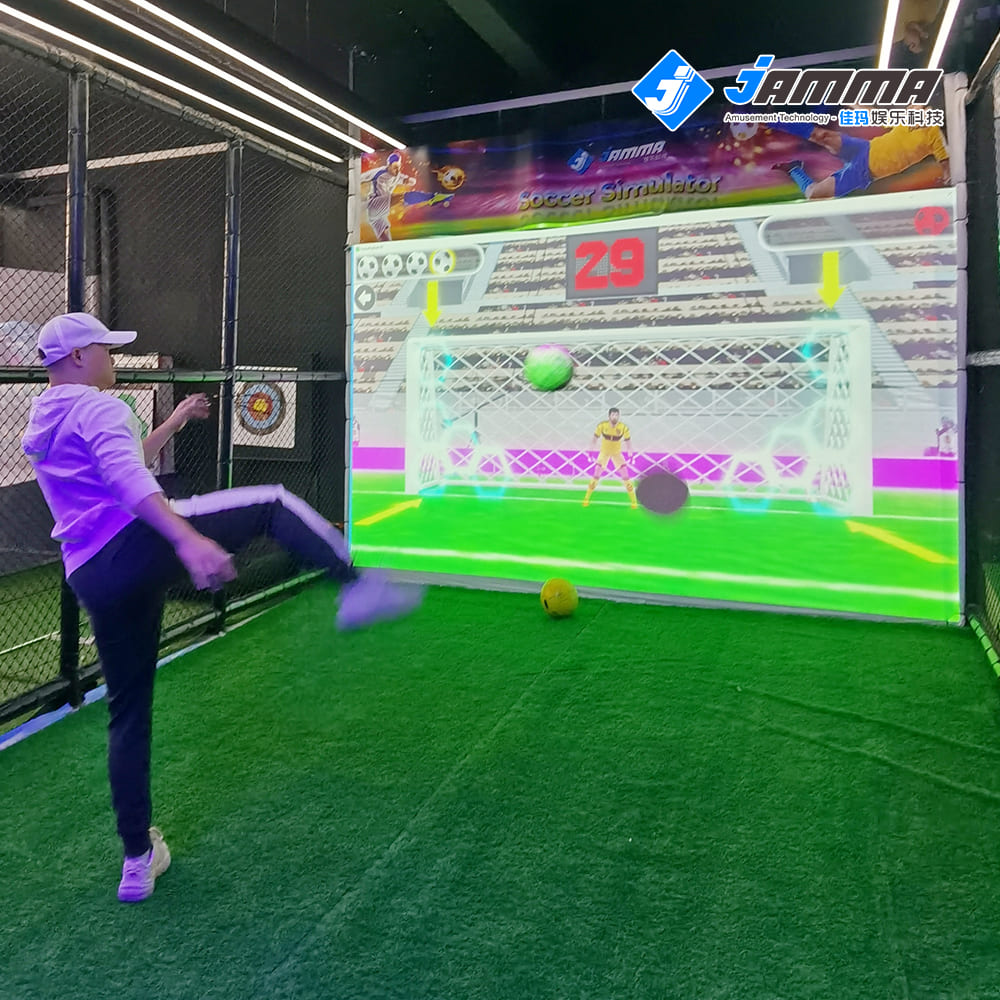
Why Add a Football Simulator to Your Venue?
Understanding visitor demand for a football simulator attraction
Adding a football simulator can diversify revenue, increase dwell time and attract new customer segments—families, sports fans, corporate groups and gamers. A well-executed football simulator installation converts casual footfall into paid play, and supports cross‑sell opportunities (food & beverage, events, memberships). Operators should align the football simulator experience with venue goals: is the objective higher throughput and quick-play revenue, High Quality pay-per-play immersive experiences, or event rentals and tournaments?
Key performance indicators to measure success with a football simulator
Track KPIs such as plays per day, average revenue per play, conversion rate from walk-ins to paid players, repeat-play rate, and ancillary spend. Benchmarks vary by market and model, but clear tracking from day one is essential to optimize pricing, session length and promotions.
Step 1 — Business Case and Site Selection for Your Football Simulator
Estimating demand and defining the
Start with a feasibility check: gather local footfall data, competing attractions, target demographics and peak times. Define keywords internally—e.g., “football simulator for arcade,” “football simulator rental for events,” or “football simulator family entertainment center”—to guide positioning, pricing and marketing. Use short online surveys, staff insights and pilot promotions to validate demand before committing to large capital outlay.
Space, power and environmental requirements
Different football simulator systems have different footprints. Typical space guidelines:
- Compact single-station simulators: 3–4 m x 3–4 m (10–13 ft square).
- Full-motion or multi-player setups: 6–10 m long and 4–6 m wide, depending on motion envelope and spectator areas.
- Ceiling height: 2.8–3.5 m minimum for projection or kicker systems; higher for full-motion rigs.
Electrical: expect a dedicated 110–240V circuit, with 5–15A draw for static setups and higher for motion platforms or multiscreen systems. Confirm HVAC and ventilation if the attraction will be in an enclosed area. For outdoor installations consider weatherproofing and drainage.
Step 2 — Choosing the Right Football Simulator Hardware and Software
Simulator types and how they match venue goals
Choose the simulator type based on your commercial goals (high throughput vs High Quality immersive experience). Consider hardware reliability, software content depth (game modes, skill training, tournament features), measurement accuracy and local-language support.
| Type | Footprint | Estimated cost range (USD) | Throughput | Best for |
|---|---|---|---|---|
| Kick-to-score projection/target | Small (3–4 m²) | 5,000–25,000 | High (short sessions) | Arcades, shopping mall activations |
| Full-motion VR football simulator | Medium to large (5–10 m²) | 25,000–80,000+ | Medium (longer sessions) | High Quality FECs, experiential centers |
| Multi-player arena (projected pitch) | Large (10–40 m²) | 50,000–200,000+ | Variable (group bookings) | Entertainment complexes, sports bars, events |
Note: cost ranges are illustrative; request quotes from vendors for precise pricing. See references for industry sources and vendor profiles.
Software features to prioritize in a football simulator
Look for software that offers: accurate physics and ball-tracking, multiple game modes (training, accuracy, shootout, free-play), tournament management, online leaderboards, spectator modes, and data export for analytics. Multi-language UI and content licensing for popular competition modes can increase appeal in diverse markets.
Step 3 — Installation, Integration and Safety for a Football Simulator
Project planning and timeline
Typical installation timeline: site survey (1–2 weeks), permitting & electrical work (2–6 weeks, depending on local regulations), installation & commissioning (2–7 days for a single unit; longer for complex systems). Build contingencies for freight, customs and software localization if importing hardware.
Safety, accessibility and compliance
Install impact-absorbing surfaces where participants run or kick. Ensure clear sightlines for attendants and emergency exits are unobstructed. For public venues, check local safety codes and accessibility standards (ramps, clearances for wheelchair users). Implement signage with age/height/weight guidelines, and train staff on safe operation and emergency stop procedures.
Step 4 — Operations, Staffing and Pricing Strategy for Football Simulator Revenue
Operational models and staffing
Choose an operation model that fits your venue: self-serve with staff supervision, attendant-operated sessions, or fully staffed event booking model. For high-throughput setups a single attendant can manage multiple compact units; High Quality immersive rigs often require dedicated attendants. Staff responsibilities: equipment sanitation, session setup, troubleshooting, upselling and crowd control.
Pricing, packages and promotions
Pricing strategies include pay-per-play, time-based sessions, membership bundles, corporate package rates and tournament entry fees. Test introductory pricing and upsell value-adds like photo packages, branded jerseys, or training analytics reports. Use off-peak discounts to increase utilization and group offers for parties and corporate team-building.
Step 5 — Marketing, Events and Monetization of Your Football Simulator
Promotional tactics to drive trials
Leverage local partnerships (football academies, fan clubs, sports bars), social media short-form video, influencer try-outs, and live tournaments to generate buzz. Position the football simulator for birthday parties, corporate team-building and watch-party events around major tournaments. Use targeted local ads with keywords like “football simulator near me” and “football simulator for events.”
Monetization beyond play fees
Ancillary revenue streams: branded merchandise, food & beverage packages, sponsorship (local businesses or sports brands), data-driven coaching reports, and photo/video upsells. Hosting tournaments with entry fees and sponsor support can create recurring high-attendance events.
Technical Support, Maintenance and Lifecycle for a Football Simulator
Maintenance plan and spare parts inventory
Establish a preventative maintenance schedule: daily checks (sensors, cables), weekly software updates, monthly calibration, and annual safety inspections. Maintain a stock of critical spares (sensors, cameras, cabling, control PC) to minimize downtime. Negotiate a support SLA with your vendor for remote diagnostics and prioritized parts shipping.
Upgrades and content refresh strategy
Plan software content updates and seasonal modes to keep the attraction fresh. Consider subscription models for software updates or pay-per-update content to manage ongoing value. Evaluate hardware upgrade paths at procurement to extend the lifecycle of the investment.
Case Study Comparison: Choosing Between Kick-Target and Full-Motion Football Simulator
Which model fits which venue?
This short comparison highlights key tradeoffs—choose kick-target units for high throughput and lower CAPEX; choose full-motion VR for immersive, High Quality pricing and event-driven revenue.
| Criteria | Kick-Target | Full-Motion VR |
|---|---|---|
| Initial cost | Lower | Higher |
| Throughput | High | Medium |
| Maintenance complexity | Low–Medium | Medium–High |
| Appeal | Broad | High Quality/Tech-savvy |
Why Partner With an Experienced Supplier — JAMMA Amusement Profile
About JAMMA Amusement and how we support football simulator projects
JAMMA Amusement was established in 2009, located in Guangzhou, with 15 years of experience in the amusement industry. We focus on providing high-value, one-stop solutions for amusement projects. Our product portfolio includes VR games, AR sports simulators (including football simulator solutions), AR interactive projection games, 5D cinema systems, as well as classic arcade games and outdoor playground equipment.
JAMMA's commercial and technical strengths
We have a highly efficient international sales team dedicated to understanding customer needs and providing professional solutions and high-quality products for venues. Our industry-leading technical team keeps abreast of the latest technological trends and continuously develops and updates the products. Our manufacturing and after-sales teams are skilled and experienced, providing comprehensive technical support. We are committed to becoming a leading global provider of amusement equipment and park solutions.
JAMMA advantages and core product focus
JAMMA’s competitive strengths for football simulator installations include:
- End-to-end project support: site planning, installation, customization and after-sales service.
- Flexible product range: from compact football simulator kiosks to immersive multi-player arenas.
- Technical capability: ongoing software updates, analytics integration and localization support.
- Proven manufacturing experience and quality control with a track record since 2009.
Main products relevant to your venue: Sports Simulators, Interactive Projection Games, Immersive Attractions, and VR Games. For details, consult JAMMA’s product pages at https://www.jammapark.com/ or contact their international sales team for tailored proposals.
Checklist Before You Launch Your Football Simulator Attraction
Pre-launch operational checklist
- Complete market validation and set pricing strategy.
- Confirm space layout, power and network requirements.
- Secure permits and complete safety assessments.
- Train staff and create runbooks for common faults.
- Plan opening promotions, local partnerships and a tournament calendar.
- Set KPI dashboards for daily/weekly measurement.
FAQ — Football Simulator Common Questions
1. How much space do I need for a football simulator?
Space depends on the type: compact kick-target units need about 3–4 m²; full-motion or multi-player arenas require 6–40 m². Confirm exact dimensions with your supplier based on the chosen model.
2. What is the typical cost to install a commercial football simulator?
Costs vary widely: smaller kiosks can start in the low five figures (USD), while High Quality full-motion or multi-player systems can exceed USD 50,000–100,000. Ask for detailed quotes including shipping, installation, training and warranty.
3. How long before I can expect a return on investment?
ROI depends on pricing, utilization and ancillary sales. Well-located units with good marketing can see payback in 12–36 months. Build conservative and optimistic projections and monitor actual KPIs closely.
4. Do football simulators require special insurance?
Yes. Update your public liability insurance to cover interactive attractions. For larger motion rigs, additional equipment and event insurance may be advisable. Check local regulations and consult your insurer.
5. Can I host tournaments and corporate events with a football simulator?
Absolutely. Tournaments and corporate packages are high-value revenue streams. Ensure booking management, staffing and spectator space are planned in advance.
6. How do I keep content fresh so customers return?
Use software updates, seasonal themes, leaderboards and tournament series. Work with your vendor on periodic content refreshes and special event modes.
Contact and Next Steps
If you’re planning a football simulator attraction and want a tailored solution, contact JAMMA Amusement for a consultation, custom quote or product demo. Visit our website: https://www.jammapark.com/ or email the international sales team to discuss venue requirements, pricing and project timelines. Start with a site survey and concept proposal to get accurate CAPEX and OPEX forecasts.
References
- International Association of Amusement Parks and Attractions (IAAPA) — Facts & Figures. https://www.iaapa.org/resources/facts-and-figures (accessed 2025-01-10).
- JAMMA Amusement official website — company profile and products. https://www.jammapark.com/ (accessed 2025-01-10).
- Blooloop — industry articles and case studies on immersive attractions and VR arcades. https://blooloop.com/ (accessed 2024-11-05).
- Statista — Amusement parks and attractions market overview. https://www.statista.com/topics/964/amusement-parks/ (accessed 2024-12-01).
For vendor quotes, technical specs and project proposals tailored to your venue, contact JAMMA Amusement via https://www.jammapark.com/.
How Multi-sport Simulators Boost Arcade Revenue
Top 10 interactive climbing wall experiences Manufacturers and Supplier Brands in Europe
Tech Integration: AR/VR in Indoor Play Centers
Top archery simulator Manufacturers and Suppliers in us
Product details
What is the difference between 5D and 3D?
The visual of 5D cinema is the same as that of 3D, compared to 3D, it adds motion simulation and special effects, which are not available in 3D.
How many players can play soccer at the same time?
Up to 4 players can play at the same time, you need to add more soccer balls.
What are the special effects in a 5D cinema?
JAMMA 5D cinema has special effects such as water spray, smoke, bubbles, snow, lightning and so on, which allows it to provide a realistic and immersive experience.
Can I customize the number of seats of 5D cinema?
Yes, we generally have options for six, nine, eighteen, twenty-four, and thirty-six seats, and the quantity of seats also can be customized.
Standard and other
How will it be transported?
For large items, we usually use sea freight, while for small items, we use air freight or services like DHL, FedEx, or UPS. We can also accommodate specific shipping methods based on your requirements.
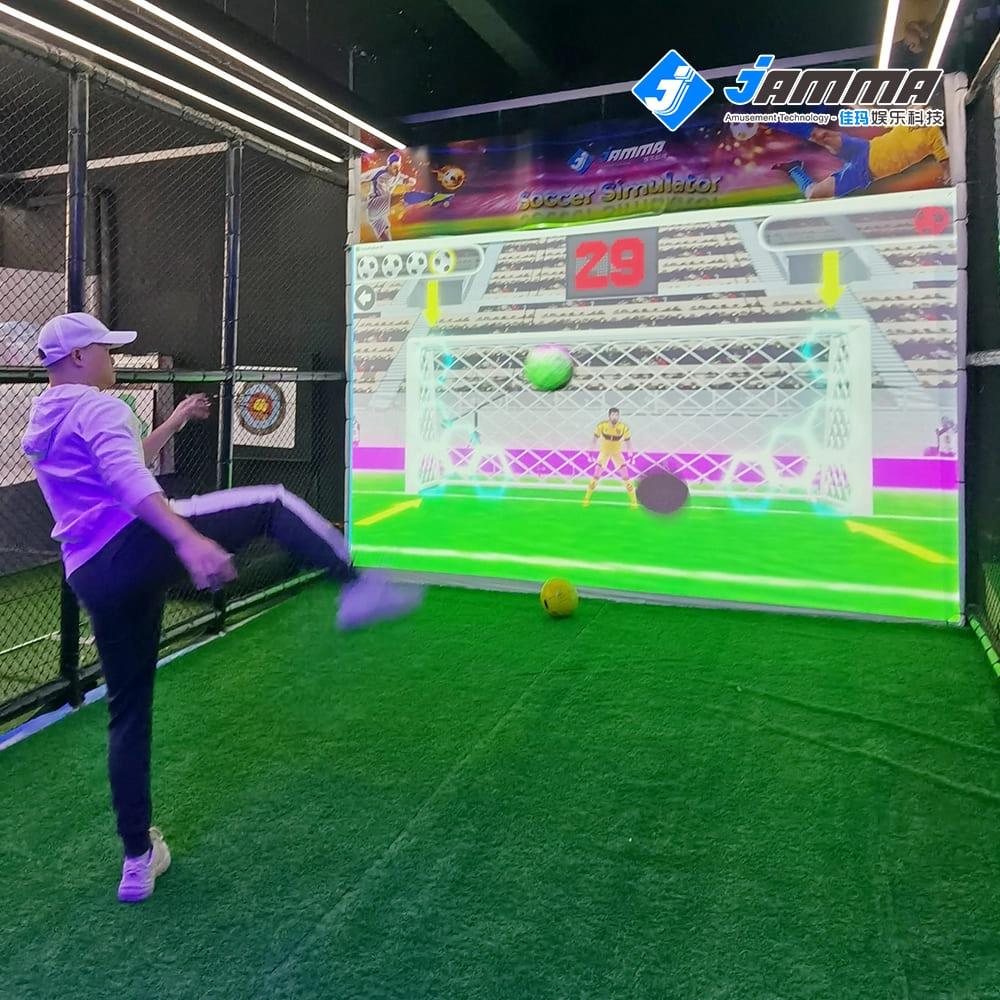
Football Simulator Interactive Projection Penalty Shootout Game
Based on basic soccer rules, a soccer simulator takes you back to the real and exciting competitive scene through augmented reality technology.
Choose your favorite game and start kicking. The high-speed camera can accurately capture the ball speed and angle to simulate a real soccer experience.
Even though the simulator is very simple to use, it is very enjoyable to play every time.
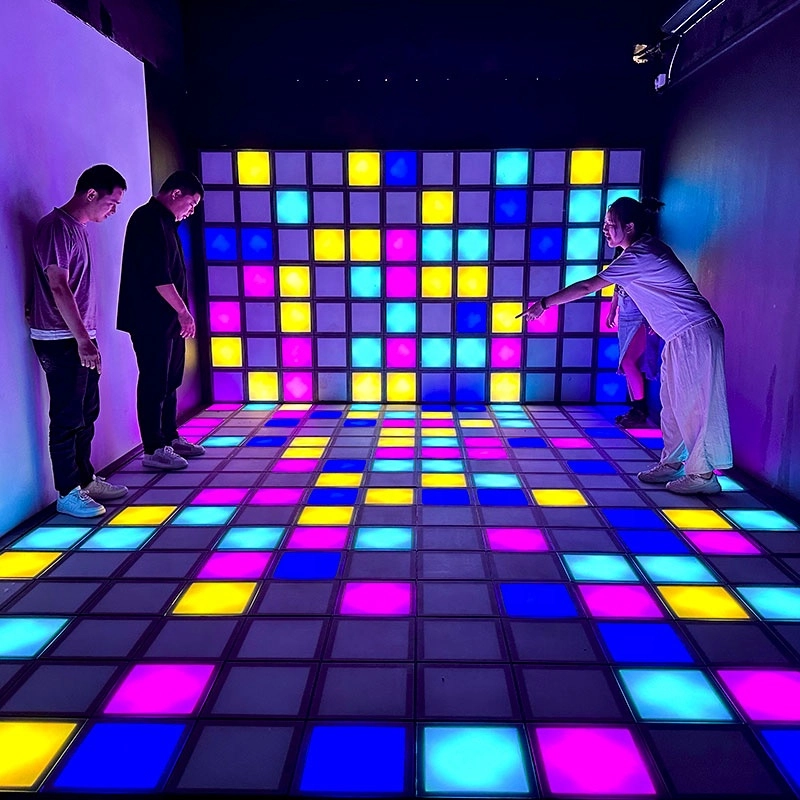
Hottest activated LED dance grid tiles floor touch games
Super Grid is an immersive sports game that combines sports and technology. It integrates interactive LED lights and sensors through innovative software design, creating a fun gaming experience.
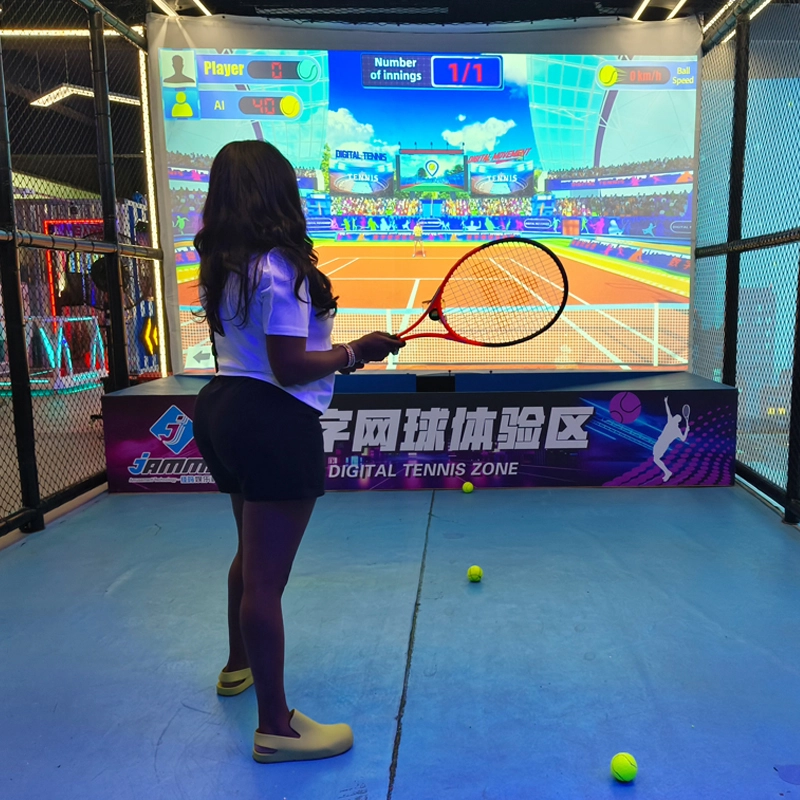
Top Indoor Tennis Racketball Training Simulator Dual Player Games
Interactive somatosensory fitness game
Combine traditional tennis sports with advanced 3D digital technology to bring customers an immersive tennis training experience
COMBINE TRADITIONAL TENNIS SPORTS WITH ADVANCED 3D DIGITAL TECHNOLOGY TO BRING CUSTOMERS AN IMMERSIVE TENNIS TRAINING EXPERIENCE INDOOR AND TENNIS EXPERIENCE HALL
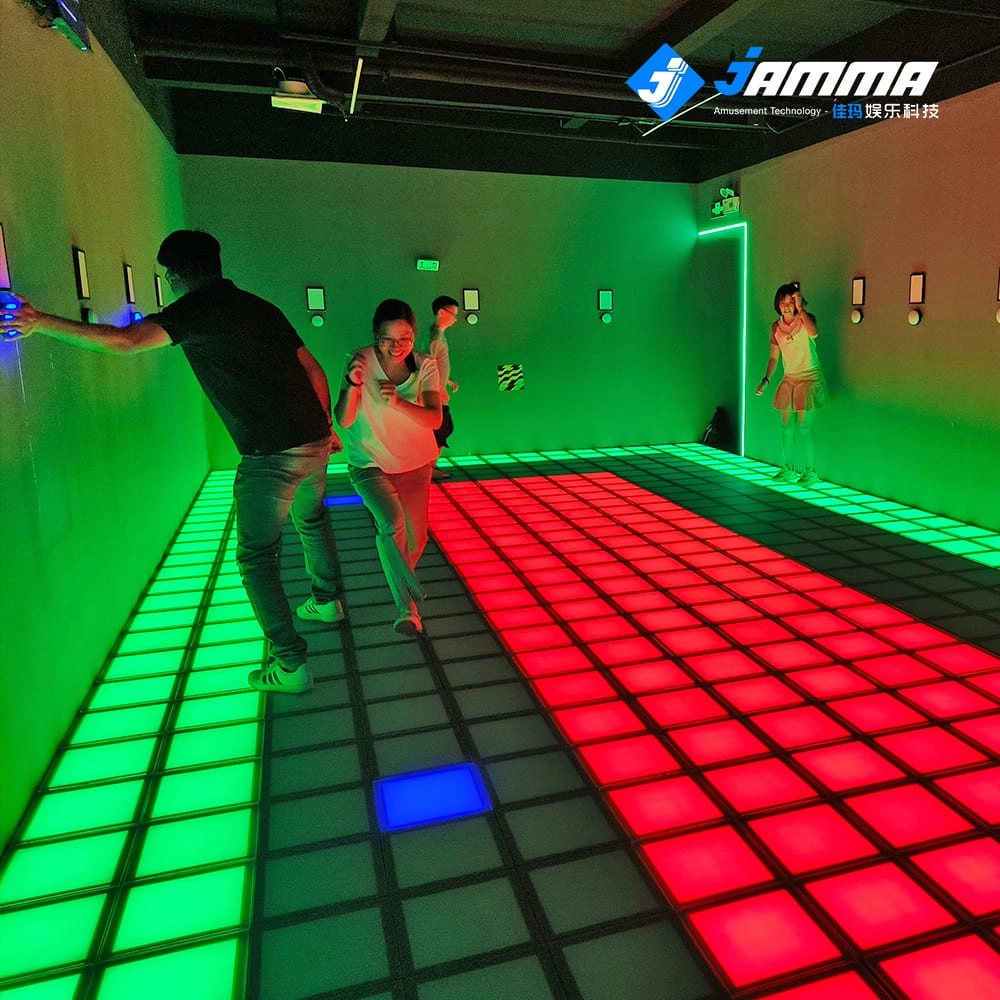
Super Grid Interactive LED Floor Activate Game Team Play
Super Grid is an immersive sports game that combines sports and technology. It integrates interactive LED lights and sensors through innovative software design, creating a fun gaming experience.
