

Designing an Engaging Simulator Experience for Families
- Design Principles for Family-Centered Multi-sport Simulator Attractions
- Understanding Family Intent: Why a Multi-sport Simulator Works for Venues
- Audience Research and Segmenting for Simulator Content
- Hardware Design Considerations for a Family-Friendly Multi-sport Simulator
- Software and Content Strategy: Balancing Accessibility and Challenge
- Accessibility, Safety and Compliance in Multi-sport Simulator Implementation
- Space Planning and Operational Flow for Family Groups
- Monetization Models and Pricing Strategies for Family Audiences
- Designing for Intergenerational Play: Game Modes & UX Patterns
- Measuring Success: KPIs for a Family-Focused Multi-sport Simulator
- Comparative Table: Simulator Types and Family Suitability
- Operational Case Study: Designing a Family Party Package Around a Multi-sport Simulator
- Integrating Marketing and Guest Experience: Family Communication Best Practices
- Vendor Selection Criteria When Procuring a Multi-sport Simulator
- JAMMA Amusement: Partnering to Deliver Family-Focused Simulator Solutions
- JAMMA's Industry Position and Capabilities in Multi-sport Simulator Projects
- How JAMMA Supports Operators: Technical and Commercial Advantages
- Core Products and Competitive Differentiators
- Practical Next Steps for Operators Considering a Multi-sport Simulator
- Frequently Asked Questions (FAQ)
- 1. What is a Multi-sport Simulator and is it suitable for family entertainment centers?
- 2. How much floor space does a typical Multi-sport Simulator require?
- 3. What safety measures are essential for family-focused simulators?
- 4. What are effective pricing models for families?
- 5. How can I measure whether a Multi-sport Simulator is successful with family audiences?
- 6. How do I choose between VR, AR and Multi-sport Simulator technologies for my venue?
- 7. Can Multi-sport Simulators be adapted for birthday parties and events?
- Contact & Consultation
- References
Design Principles for Family-Centered Multi-sport Simulator Attractions
Understanding Family Intent: Why a Multi-sport Simulator Works for Venues
Families visiting entertainment centers seek shared experiences that are social, safe, and easy to adopt across age groups. A Multi-sport Simulator answers that need by offering modular sports content (e.g., soccer, baseball, basketball, tennis) that can be played cooperatively or competitively. From an operator perspective, this flexibility increases attraction reach—kids, parents, grandparents, and friends can each find meaningful play—improving dwell time, repeat visits, and secondary sales (F&B, merchandise).
Audience Research and Segmenting for Simulator Content
Design should begin with research: identify primary guest segments (families with young children, tweens/teens, adult recreational players) and map play preferences and time budgets. Typical insights: families prefer short session lengths (6–15 minutes) with easy onboarding and visible progress; teens prefer skill-based leaderboards and social sharing; adults value accessible coaching or casual modes. These patterns should dictate session length options, UI complexity, and reward mechanics embedded in the Multi-sport Simulator experience.
Hardware Design Considerations for a Family-Friendly Multi-sport Simulator
Hardware choices strongly affect usability, throughput, and safety. Prioritize durable, low-maintenance surfaces and sensors that tolerate varied skill levels (e.g., children dropping balls or inexperienced swings). Key hardware design choices include scalable playing areas, modular sensor arrays for different sports, adjustable fixtures for different heights/ages, and clear sightlines for parents to supervise. Robust collision protection and soft-edge design reduce injury risk and liability.
Software and Content Strategy: Balancing Accessibility and Challenge
Software should be layered: an onboarding tutorial for first-time players, a casual mode for mixed-age groups, and advanced skill drills and competitive modes for repeat visitors. Visual and audio cues must be intuitive—icons, countdowns, and coaching prompts shorten the learning curve. Integrate family-oriented modes (co-op challenges, parent-child mini-games) and social features (instant photos, leaderboard sharing) to increase emotional engagement and organic marketing.
Accessibility, Safety and Compliance in Multi-sport Simulator Implementation
Accessibility means physical access for strollers and wheelchairs, adjustable input sensitivity, and font/icon sizes readable from a distance. Safety protocols should include emergency stop features, soft barriers, clear floor markings and staff training. Comply with local safety standards for indoor attractions and ensure insurance coverage reflects simulator-specific risks. Visible signage on age/height/weight recommendations helps families make safe choices quickly.
Space Planning and Operational Flow for Family Groups
Optimize spatial flow to reduce bottlenecks: a welcoming queue that entertains (simple projection or interactive displays), a clear staging area for parents, and a dedicated exit path toward F&B or retail to capture secondary spend. Provide flexible session lengths (pay-per-play 8–10 minutes, party packages 30–45 minutes) and reservation/queue management with mobile notifications. Staffing should balance supervision and throughput: one trained attendant can typically manage multiple simulator bays when software automates onboarding.
Monetization Models and Pricing Strategies for Family Audiences
Consider mixed monetization: single-session pricing, bulk packs (family cards), birthday-party bundles, and subscription/season passes for local repeat visitors. Upsell opportunities include photo packages, skill coaching sessions, branded merchandise, and timed tournaments with small entry fees and prizes. Track guest conversion and per-visit secondary spend to fine-tune pricing. Offer family discounts during off-peak hours to improve utilization.
Designing for Intergenerational Play: Game Modes & UX Patterns
Intergenerational appeal requires game modes where different skill and mobility levels are meaningful. Examples: cooperative target-hitting where cumulative score matters more than individual accuracy; relay-style team games where children and adults take turns; simplified controls or assisted aiming modes for younger players. UX should present a clear mode selector labeled by playtype (Family Fun, Competitive, Training) to reduce decision friction.
Measuring Success: KPIs for a Family-Focused Multi-sport Simulator
Track key performance indicators that reflect family needs: average session length, group size per session, repeat-visitation rate (30/90-day), revenue per session (ticket + secondary), and Net Promoter Score segmented by family vs. non-family groups. Use integrated analytics (login/ID, RFID cards, or mobile-app ties) to correlate sessions with F&B and retail purchases, then optimize offers and staffing around peak family windows (weekends, school holidays).
Comparative Table: Simulator Types and Family Suitability
The table below summarizes typical differences between simulator technologies relevant to family entertainment operators.
| Attribute | Multi-sport Simulator | VR Sports Simulator | Interactive Projection / AR |
|---|---|---|---|
| Age Range | Wide (5+); adjustable settings | Teens–Adults; younger kids may struggle with headsets | All ages; highly accessible |
| Throughput | Medium–High (modular bays) | Low–Medium (setup time for headsets) | High (group play, free-roam) |
| Footprint | Medium—depends on sports supported | Small—per headset station | Variable—can be large projection areas |
| Learning Curve | Low—sport-like mechanics are intuitive | Medium—motion sickness risk; controller learning | Low—gestural or ball-based interaction |
| Maintenance Complexity | Medium—sensors and moving parts | High—headset hygiene and tracking systems | Low—projector upkeep |
| Family Appeal | High | Medium | High |
Sources: technology profile synthesis from industry reports (see references below).
Operational Case Study: Designing a Family Party Package Around a Multi-sport Simulator
Example concept (realistic implementation): 30–45 minute birthday package for up to 10 guests includes: 20 minutes of Multi-sport Simulator time (split into cooperative mini-games), a photo montage, dedicated party host, and F&B bundle. Benefits: predictable staffing, High Quality pricing, and cross-sell moments. Measure success by party conversion rate and tables turned in party slots.
Integrating Marketing and Guest Experience: Family Communication Best Practices
Promote family benefits clearly: session lengths, age suitability, safety features, and package pricing. Use short video clips showing families playing (social proof) and emphasize inclusive modes. For digital booking, present family bundles and mobile check-in to shorten on-site queuing. Encourage guest-generated content with easy-sharing tools and park-branded photo overlays—this increases word-of-mouth among local family groups.
Vendor Selection Criteria When Procuring a Multi-sport Simulator
Choose vendors based on stability, post-sale support, and product roadmap. Important criteria: modular content library, integration with your POS and booking systems, remote diagnostics, spare-parts availability, and proven installations in family entertainment centers. Ask for references and site visits to see units operating with real families.
JAMMA Amusement: Partnering to Deliver Family-Focused Simulator Solutions
JAMMA's Industry Position and Capabilities in Multi-sport Simulator Projects
JAMMA Amusement was established in 2009 in Guangzhou and has 15 years of experience in the amusement industry. JAMMA offers one-stop, high-value solutions for amusement projects including VR games, AR sports simulators, AR interactive projection games, 5D cinema, arcade games and outdoor playground equipment. Their strengths include an efficient international sales team that understands customer needs and provides professional solutions, an industry-leading technical R&D team that continuously updates products, and skilled manufacturing and after-sales teams for comprehensive technical support.
How JAMMA Supports Operators: Technical and Commercial Advantages
JAMMA emphasizes modular hardware and an expanding content library, enabling venues to offer multiple sports modes from one footprint. Their after-sales and manufacturing capabilities reduce downtime and provide predictable maintenance costs—critical for family-oriented venues where reputation hinges on consistent quality. JAMMA's international sales and technical teams support integration with booking and POS systems and advise on layout and operational workflows to optimize throughput for family groups.
Core Products and Competitive Differentiators
JAMMA's core product lines most relevant to family experiences include Sports Simulators, Interactive Projection Games, Immersive Attractions, and VR Games. Competitive differentiators include:
- Comprehensive one-stop solutions from concept to installation
- Customizable game libraries with family and party modes
- Strong R&D focus to keep pace with AR/VR trends
- Robust manufacturing and responsive after-sales support
For more details or to request a consultation, visit JAMMA’s website at https://www.jammapark.com/.
Practical Next Steps for Operators Considering a Multi-sport Simulator
1) Pilot small: start with one bay configured for family modes and measure KPIs for 3 months. 2) Train staff on rapid onboarding and safety briefings. 3) Create family-friendly price bundles and party offerings. 4) Work with vendors (e.g., JAMMA) on content customization, signage, and integration with existing systems.
Frequently Asked Questions (FAQ)
1. What is a Multi-sport Simulator and is it suitable for family entertainment centers?
A Multi-sport Simulator is an integrated attraction that supports multiple sports experiences (e.g., soccer, baseball, tennis) using sensors, projection/AR and software. Yes—when designed with family modes, adjustable settings and short session options, it is highly suitable for family entertainment centers because it appeals across ages and promotes shared play.
2. How much floor space does a typical Multi-sport Simulator require?
Footprint varies by configuration. Compact units can fit in 10–20 m² per bay, while full-motion or large-field setups require 30 m² or more. Consider circulation space for spectators and queuing when planning your layout.
3. What safety measures are essential for family-focused simulators?
Essential measures include soft or rounded edges, protective netting or barriers where needed, clear floor markings, emergency stop controls, staff supervision, and age/height guidance signs. Regular maintenance and staff training reduce operational risks.
4. What are effective pricing models for families?
Successful models combine single-session pricing (6–15 minutes), family bundles, party packages, and bundled offers with F&B. Off-peak family discounts and loyalty packages (e.g., 5-session cards) can increase repeat visits.
5. How can I measure whether a Multi-sport Simulator is successful with family audiences?
Track KPIs including average group size, session length, repeat visitation (30/90-day), revenue per session, and secondary spend on F&B/retail. Guest feedback and NPS segmented by family groups provide qualitative insights.
6. How do I choose between VR, AR and Multi-sport Simulator technologies for my venue?
Choose based on target demographics and operational constraints. Multi-sport Simulators and AR projection are often better for families (accessible and social), while VR can be compelling for teens/adults but has hygiene and motion-sickness considerations. Hybrid spaces combining technologies can maximize appeal.
7. Can Multi-sport Simulators be adapted for birthday parties and events?
Yes—party packages are a natural fit. Configure multi-player cooperative modes, assign a party host, add themed overlays and photo packages to create High Quality birthday offerings that command higher margins.
Contact & Consultation
If you want a tailored consultation to design or procure a family-focused Multi-sport Simulator, contact JAMMA Amusement. Their experienced international sales and technical teams can provide site assessments, product demos, and turnkey installation services. Visit https://www.jammapark.com/ to request a quote or schedule a demo.
References
- IAAPA: Global Attractions Attendance and Industry Reports — https://www.iaapa.org/ (accessed 2025-11-26)
- Grand View Research: Virtual Reality Market Size & Trends — https://www.grandviewresearch.com/ (accessed 2025-11-26)
- Statista: Family Entertainment Center Market Insights — https://www.statista.com/ (accessed 2025-11-26)
- JAMMA Amusement official website — https://www.jammapark.com/ (accessed 2025-11-26)
How to manufacturing interactive floor led screen in Asia
JAMMA Best professional laser maze for sale manufacturers and supplier brands in Asia
Everything You Need to Know About interactive projector diy
How to start the 7d cinema hall business in Asia ?
Standard and other
Do you offer a customized service?
We can provide logo customization service for all of our products. For certain products, we can also support customization of sizes and game content. If you have any product customization requirements, please contact us and we will confirm the details with you.
How will it be transported?
For large items, we usually use sea freight, while for small items, we use air freight or services like DHL, FedEx, or UPS. We can also accommodate specific shipping methods based on your requirements.
How long is the warranty period?
Our products have a one-year warranty period. During the warranty period, if there are any issues with the product that are not caused by human error, we can replace the parts for you free of charge. If the problems are caused by improper use, you will need to purchase the parts and bear the shipping costs yourself.
Product details
Does the soccer simulator configuration include the curtain?
Yes, a 4-meter-wide, 3-meter-high projection curtain is included.
Can I customize the number of seats of 5D cinema?
Yes, we generally have options for six, nine, eighteen, twenty-four, and thirty-six seats, and the quantity of seats also can be customized.
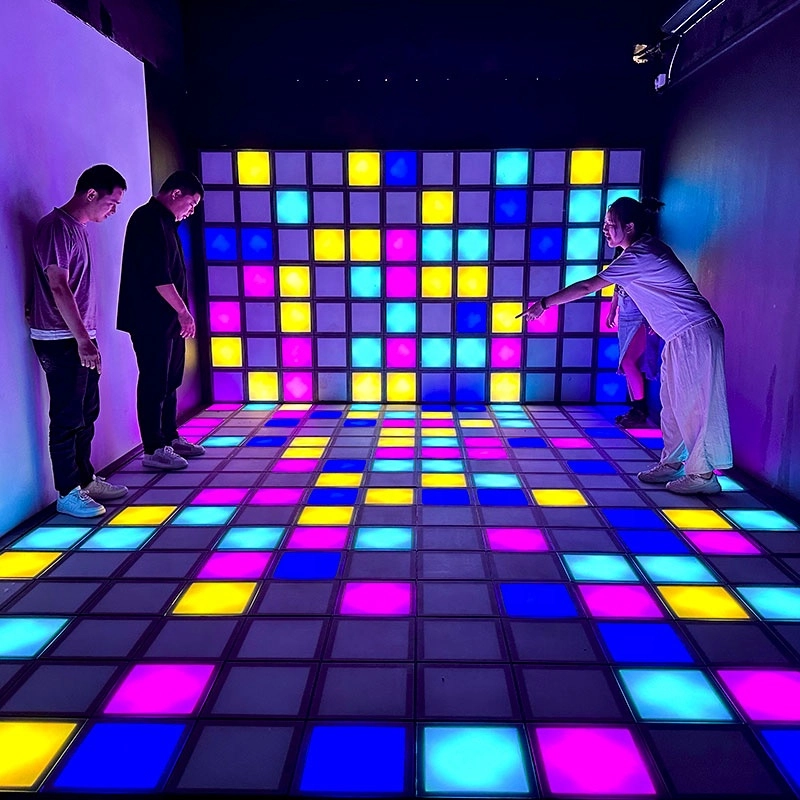
Hottest activated LED dance grid tiles floor touch games
Super Grid is an immersive sports game that combines sports and technology. It integrates interactive LED lights and sensors through innovative software design, creating a fun gaming experience.
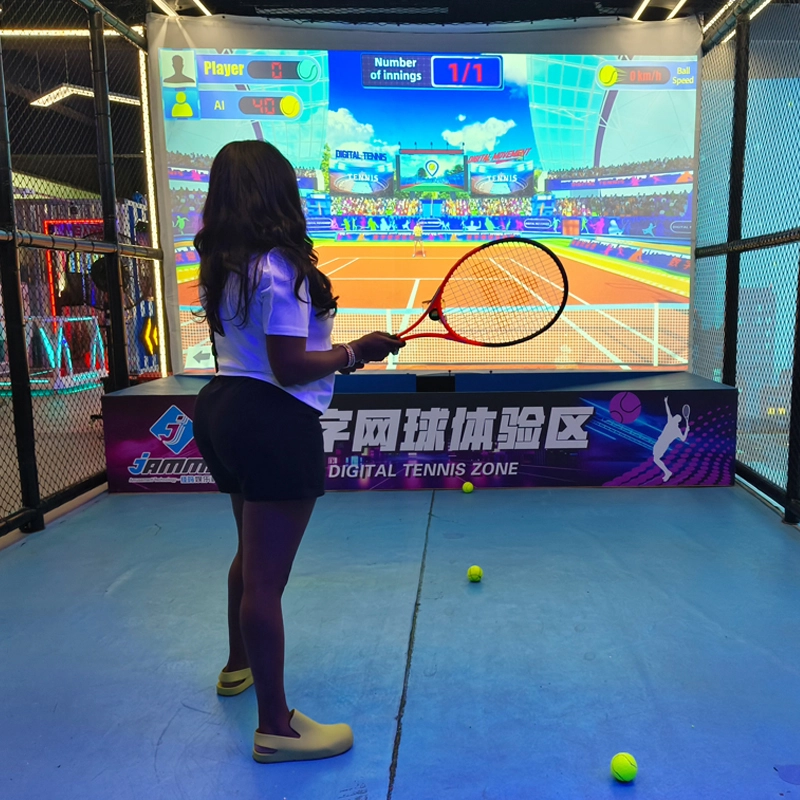
Top Indoor Tennis Racketball Training Simulator Dual Player Games
Interactive somatosensory fitness game
Combine traditional tennis sports with advanced 3D digital technology to bring customers an immersive tennis training experience
COMBINE TRADITIONAL TENNIS SPORTS WITH ADVANCED 3D DIGITAL TECHNOLOGY TO BRING CUSTOMERS AN IMMERSIVE TENNIS TRAINING EXPERIENCE INDOOR AND TENNIS EXPERIENCE HALL
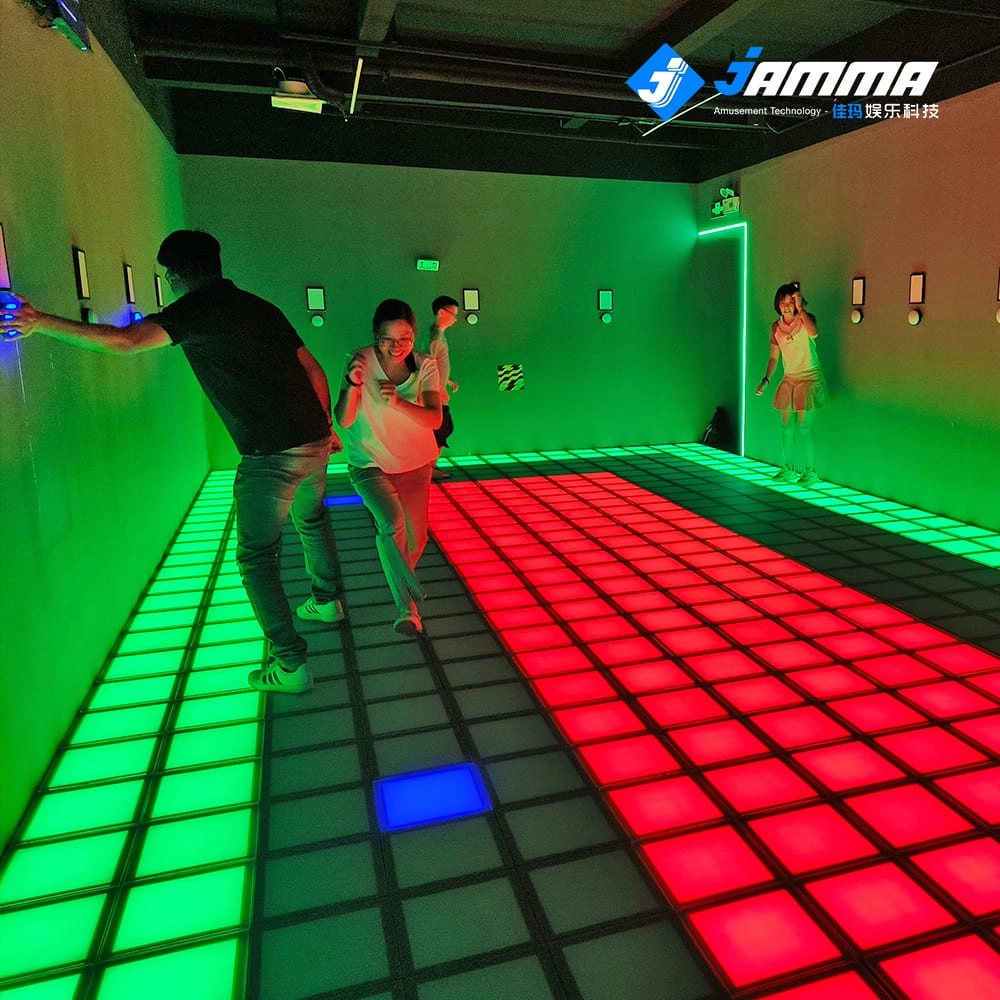
Super Grid Interactive LED Floor Activate Game Team Play
Super Grid is an immersive sports game that combines sports and technology. It integrates interactive LED lights and sensors through innovative software design, creating a fun gaming experience.
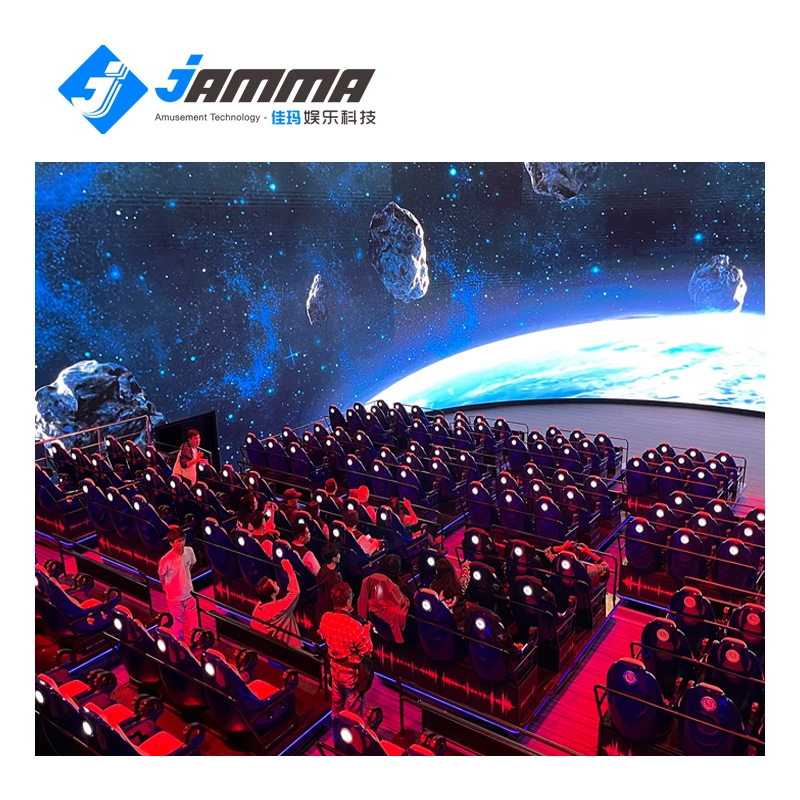
Immersive 5D/7D/9D cinema dynamic visual experience room
Compared with other types of theaters, 5D/7D/9D cinema have high technical content, prominent themes, and have a strong impact on the characteristics of the picture. With the increasing demand in the entertainment market and the continuous development of video entertainment technology, in the past, audiences would experience vibration, drop, rain, scratches and other effects in some 4D theaters, but now with 5D theaters, audiences can experience new Unique features, touch and feel effects such asreal smoke, water, snow, bubbles, smell, lightning, leg touch,camera system and more. When the audience is watching amovie, the seats and environmental effects will change into corresponding actions according to the development of the movie,allowing the audience to experience an immersive viewing experience.
