

Everything You Need to Know About interactive projector diy
- Essential Components for Interactive Projector DIY
- Step-by-Step Guide to Interactive Projector DIY
- 1. Define Your Purpose and Audience
- 2. Select Suitable Equipment
- 3. Prepare the Installation Area
- 4. Install and Mount Hardware
- 5. Deploy Interactive Software
- 6. Calibration and Testing
- 7. Ongoing Maintenance
- Popular Applications of Interactive Projector DIY in Amusement Projects
- Tips for a Successful Interactive Projector DIY Project
- Commercial Advantages of Interactive Projector DIY
- Future Trends in Interactive Projector DIY
- Frequently Asked Questions
- Conclusion
Customize games and experiences to suit your specific theme or demographic.
- Flexible installation: Adaptable for various site layouts—indoor or outdoor, large or small.
- Upgradeability: Start small and scale up as your needs evolve.
JAMMA Amusement’s expertise in AR interactive projection games shows how DIY setups can bring commercial-grade fun and learning to venues of all sizes.
Essential Components for Interactive Projector DIY
To build an interactive projector system, you’ll typically need:
- Projector: Short-throw or ultra-short-throw projectors minimize shadows and maximize immersion.
- PC or media box: Runs the interactive software and processes user input.
- Motion or touch sensors: Infrared cameras, Kinect, or LiDAR detect touch, gestures, or presence.
- Interactive software: Custom or off-the-shelf solutions provide games, menus, and interactive media.
- Mounting hardware: Ceiling or wall mounts ensure stability and optimal projection angles.
- Projection surface: Any flat, light-colored surface, or specialized projection screens.
It’s important to choose components that suit your environment and audience—an area where JAMMA excels with deep project planning and tailored hardware recommendations.
Step-by-Step Guide to Interactive Projector DIY
1. Define Your Purpose and Audience
Is your goal to entertain families in an arcade, offer interactive lessons in schools, or attract visitors to a museum? Define content structure, age group, and required interactivity.
2. Select Suitable Equipment
For high-traffic amusement venues, durability is key. Consider brightness (measured in lumens), resolution, compatibility with sensors, and ease of maintenance. JAMMA Amusement’s 15 years of project experience can help you make informed choices.
3. Prepare the Installation Area
Choose a location with controlled lighting to maximize image quality. Surfaces should be clean, flat, and unobstructed. For floor projections, ensure the area is safe and accessible.
4. Install and Mount Hardware
Secure the projector, attach sensors, and connect to the control PC. Double-check alignment and stability—poor mounting can lead to misalignment and reduced user experience.
5. Deploy Interactive Software
Load interactive games or content. Many AR interactive projection game software systems support custom themes, multiplayer modes, and learning modules. Jam to test responsiveness and fun factor!
6. Calibration and Testing
Set up sensor zones and calibrate touch/gesture sensitivity. Test with real users to refine alignment, speed, and engagement features.
7. Ongoing Maintenance
Regularly clean hardware, update software, and monitor user feedback. JAMMA Amusement provides technical after-sales support to ensure long-term reliability.
Popular Applications of Interactive Projector DIY in Amusement Projects
- Children’s Playgrounds: Transform floors into digital playmats with games and learning activities.
- VR & AR Arcades: Add gesture-controlled sports, puzzles, or dance games to your attractions.
- Museum Exhibits: Facilitate immersive, educational interactions on walls or table projections.
- Cultural Tourism Projects: Create interactive experiences that blend local heritage, art, and technology.
- Restaurants & Retail: Offer engaging, branded games to entertain waiting customers.
JAMMA Amusement has delivered successful interactive projection solutions to over 1,000 international amusement parks, ensuring fun, safety, and maximum customer engagement.
Tips for a Successful Interactive Projector DIY Project
- Plan for scalability: Allow future expansion with modular hardware and content licenses.
- Prioritize user safety: Use anti-slip projection surfaces and robust cable management.
- Design for all ages: Choose content suitable for children, families, or custom audiences.
- Measure performance: Use analytics to track engagement and optimize your attractions.
- Leverage professional support: Work with experienced partners like JAMMA for seamless installation and troubleshooting.
Commercial Advantages of Interactive Projector DIY
Implementing your own interactive projector system can give your venue a competitive edge:
- Enhanced customer retention: Offer fresh, interactive experiences that keep guests coming back.
- Increased revenue streams: Add ticketed attractions, pay-to-play games, or branded experiences.
- Efficient updates: Swap out themes and games seasonally to drive repeat visits.
- Cross-promotions: Integrate brand messages, educational content, or seasonal events within interactive games.
With JAMMA’s industry expertise, you gain access to proven strategies for maximizing the commercial impact of interactive projection setups.
Future Trends in Interactive Projector DIY
- AR & AI Integration: With advances in AR and artificial intelligence, content is becoming smarter and more adaptive.
- Touchless Interaction: Gesture and voice controls are reducing the need for physical contact in public installations.
- Cloud-based Content: Remote updates and analytics will streamline management for multipark operators.
- Eco-friendly Hardware: Energy-efficient projectors and recyclable materials support sustainability goals.
JAMMA’s team keeps pace with these technological advances, offering up-to-date advice, components, and development services.
Frequently Asked Questions
What is an interactive projector DIY?
It refers to building and configuring your own interactive projector system using readily available hardware and software. This enables customized content and lower overall costs.
How much does an interactive projector DIY system cost?
Prices can range from a few hundred to several thousand dollars, depending on components and required interactivity. DIY projects are generally more budget-friendly than fully custom commercial packages.
Can I use any projector for interactive DIY applications?
While most digital projectors will work, short-throw or ultra-short-throw models are best for small spaces and interactive play due to reduced shadows and larger images.
Is technical expertise required to build an interactive projector DIY system?
Basic AV, IT, and hardware setup skills are helpful. For complex installations, partnering with a company like JAMMA Amusement ensures professional and efficient installation.
What interactive projector games or content are available?
A wide range of games is available, from educational activities to sports, puzzles, and creative challenges. JAMMA Amusement provides both off-the-shelf and custom-developed content for various age groups and themes.
How do I maintain an interactive projector DIY installation?
Regular cleaning, software updates, and hardware checks are essential for reliable operation. JAMMA offers ongoing support and upgrades for all its amusement solutions.
Conclusion
Creating your own interactive projector (interactive projector DIY) is an innovative, scalable way to enrich amusement venues and maximize both engagement and revenue. By carefully choosing components, designing user-focused content, and leveraging the expertise of partners like JAMMA Amusement, you set the stage for captivating interactive experiences. Contact JAMMA today to explore how interactive projection games and systems can elevate your next amusement project!
Indoor Playground Birthday Party Planning Tips
Custom laser maze equipment Manufacturers and Suppliers in Europe
Where to Buy interactive floor games projector in US
Tips for Wholesale 5d cinema price in Dubai
Product details
Can I customize the number of seats of 5D cinema?
Yes, we generally have options for six, nine, eighteen, twenty-four, and thirty-six seats, and the quantity of seats also can be customized.
What are the special effects in a 5D cinema?
JAMMA 5D cinema has special effects such as water spray, smoke, bubbles, snow, lightning and so on, which allows it to provide a realistic and immersive experience.
What is the difference between 5D and 3D?
The visual of 5D cinema is the same as that of 3D, compared to 3D, it adds motion simulation and special effects, which are not available in 3D.
Standard and other
Do you offer a customized service?
We can provide logo customization service for all of our products. For certain products, we can also support customization of sizes and game content. If you have any product customization requirements, please contact us and we will confirm the details with you.
How long is the warranty period?
Our products have a one-year warranty period. During the warranty period, if there are any issues with the product that are not caused by human error, we can replace the parts for you free of charge. If the problems are caused by improper use, you will need to purchase the parts and bear the shipping costs yourself.
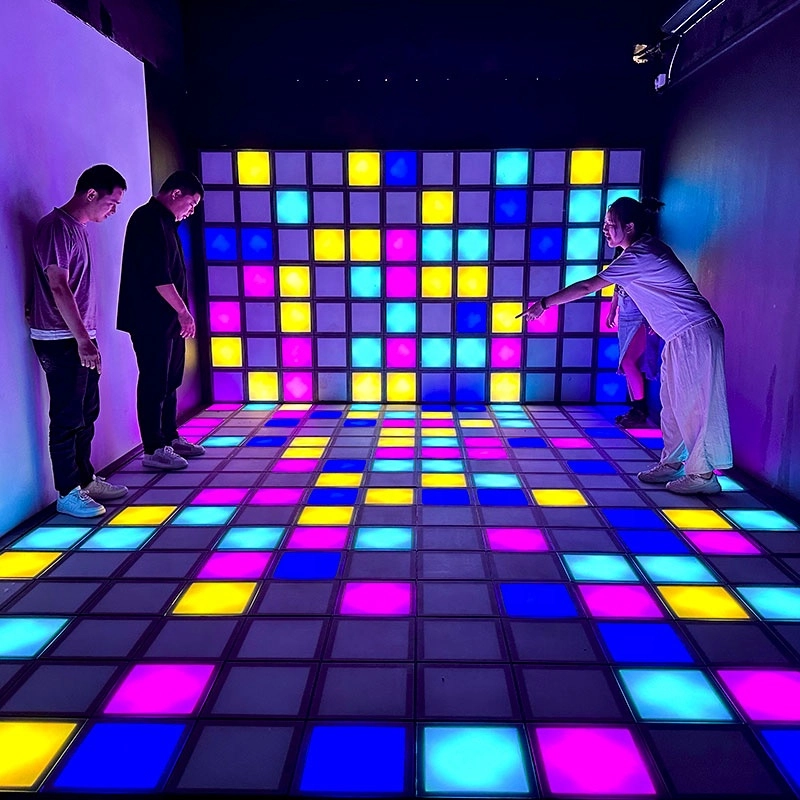
Hottest activated LED dance grid tiles floor touch games
Super Grid is an immersive sports game that combines sports and technology. It integrates interactive LED lights and sensors through innovative software design, creating a fun gaming experience.
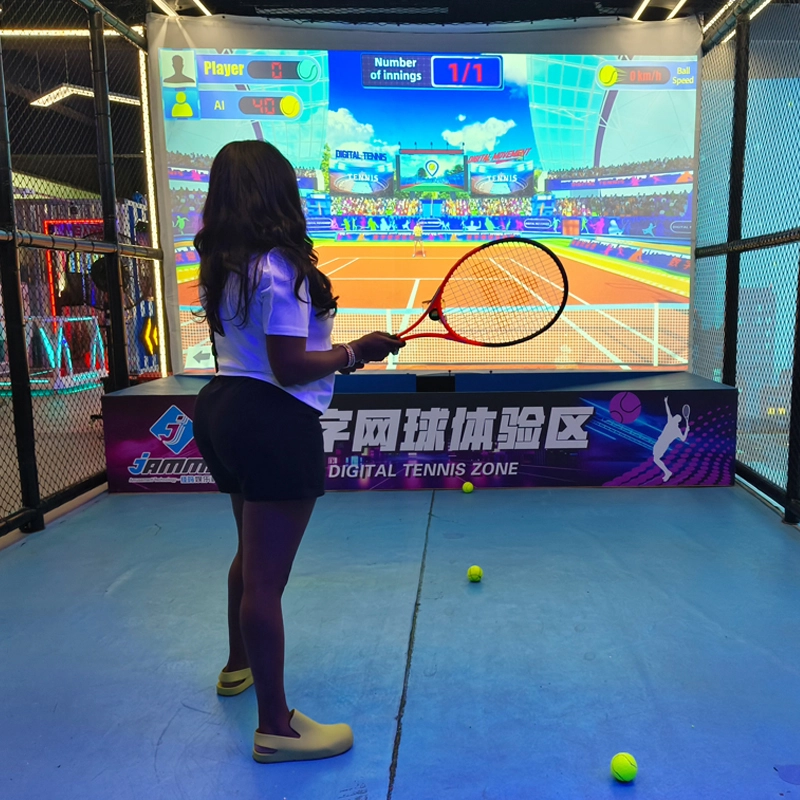
Top Indoor Tennis Racketball Training Simulator Dual Player Games
Interactive somatosensory fitness game
Combine traditional tennis sports with advanced 3D digital technology to bring customers an immersive tennis training experience
COMBINE TRADITIONAL TENNIS SPORTS WITH ADVANCED 3D DIGITAL TECHNOLOGY TO BRING CUSTOMERS AN IMMERSIVE TENNIS TRAINING EXPERIENCE INDOOR AND TENNIS EXPERIENCE HALL
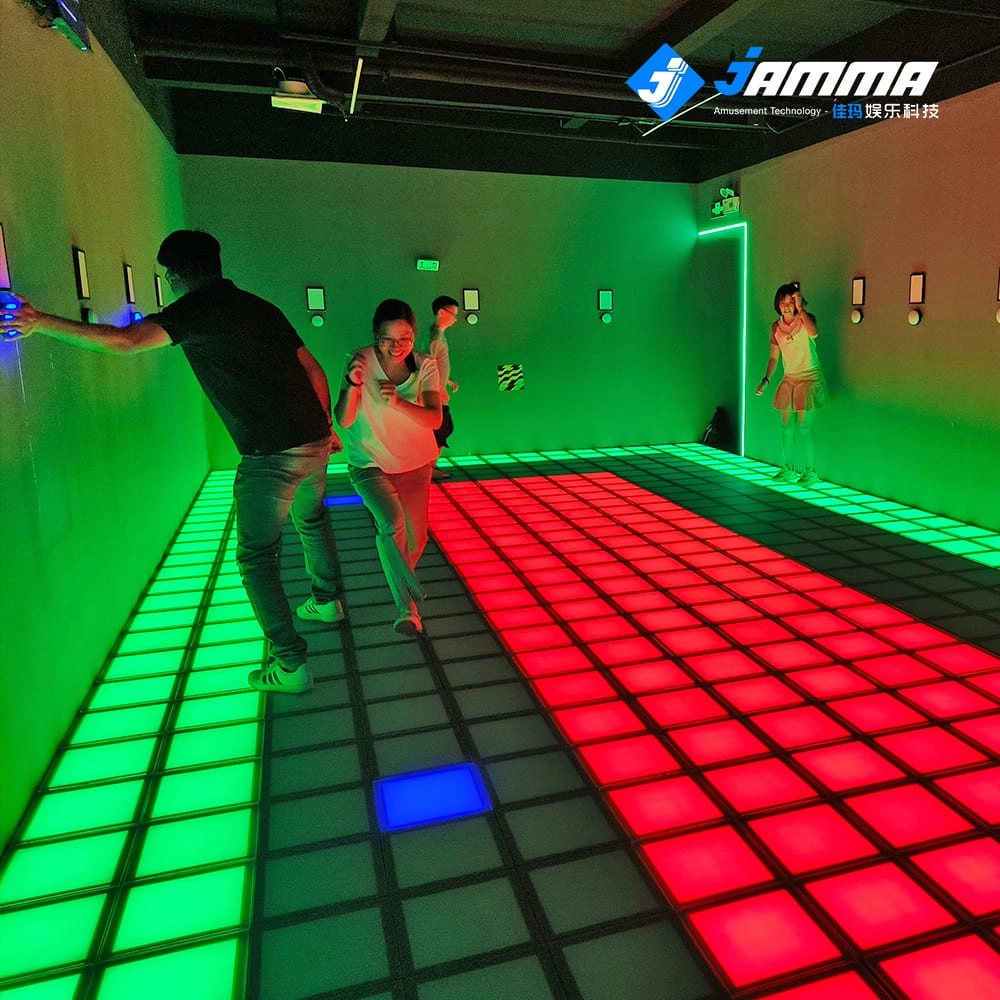
Super Grid Interactive LED Floor Activate Game Team Play
Super Grid is an immersive sports game that combines sports and technology. It integrates interactive LED lights and sensors through innovative software design, creating a fun gaming experience.
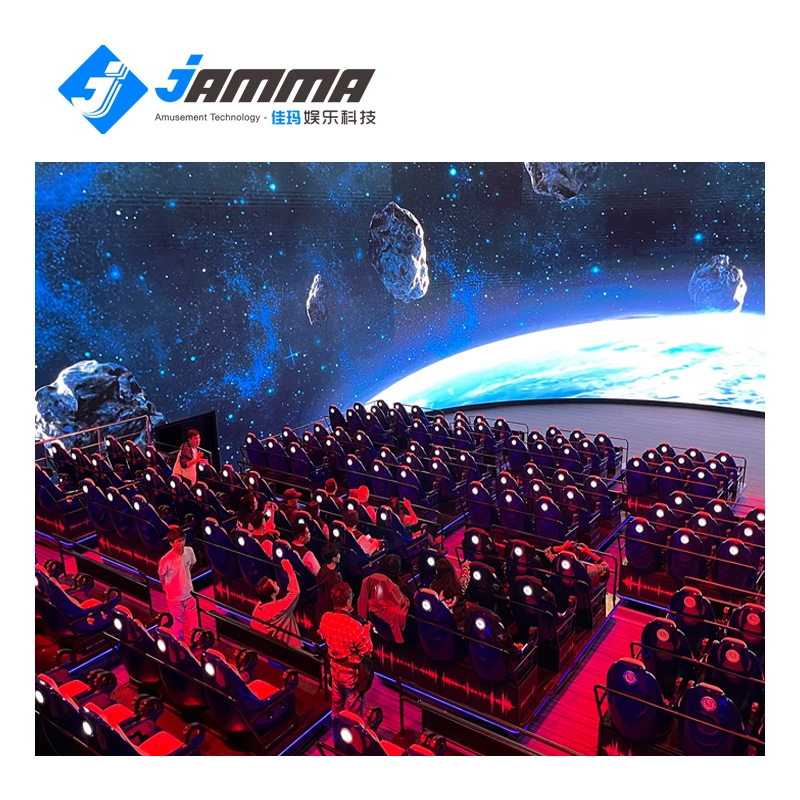
Immersive 5D/7D/9D cinema dynamic visual experience room
Compared with other types of theaters, 5D/7D/9D cinema have high technical content, prominent themes, and have a strong impact on the characteristics of the picture. With the increasing demand in the entertainment market and the continuous development of video entertainment technology, in the past, audiences would experience vibration, drop, rain, scratches and other effects in some 4D theaters, but now with 5D theaters, audiences can experience new Unique features, touch and feel effects such asreal smoke, water, snow, bubbles, smell, lightning, leg touch,camera system and more. When the audience is watching amovie, the seats and environmental effects will change into corresponding actions according to the development of the movie,allowing the audience to experience an immersive viewing experience.
