

The latest trends for interactive activation games for events in 2026 us | JAMMA Ultimate Insights
- The latest trends for interactive activation games for events in 2026 (US)
- Why event planners search for interactive activation games for events
- Macro trend: Experience-first marketing drives demand
- Immersive tech stack: AR, VR, projection, and AI converge
- Design trend: Short-format competitive loops with shareable content
- Operational trend: Modular, scalable activations for diverse venues
- Monetization trend: Hybrid revenue models
- Data trend: First-party data and privacy-respecting analytics
- Safety and accessibility trend: Contactless and inclusive design
- Hardware trend: Robust, low-maintenance equipment for high throughput
- Case study approach: How brands win with activation games
- Comparing activation formats: Which to pick for your event
- ROI and KPI planning for activation games
- Implementation checklist: From concept to teardown
- Why choose JAMMA Amusement for your 2026 activations
- Technology & service strengths JAMMA delivers
- Real-world activation examples and outcomes
- Future-proofing: Scalability, updates, and sustainability
- Practical next steps for event planners and marketers
- Conclusion: What 2026 means for interactive activation games for events
The latest trends for interactive activation games for events in 2026 (US)
Why event planners search for interactive activation games for events
Event professionals looking for interactive activation games for events want measurable engagement, shareable moments, and return on investment. Brands and venues seek immersive activations that attract footfall, create social media buzz, and capture first-party data while being scalable and reliable for festivals, brand tours, conferences, and location-based entertainment (LBE) centers.
Macro trend: Experience-first marketing drives demand
Experience-first marketing is the macro force behind interactive activation games for events. As consumers prioritize memorable experiences over products, brands invest in activations that foster emotional connections. Interactive games deliver measurable dwell time and social amplification—two KPIs marketers care about. For event operators, this trend increases demand for turnkey, high-value solutions that can be rapidly deployed and consistently supported.
Immersive tech stack: AR, VR, projection, and AI converge
The leading interactive activation games for events in 2026 combine AR overlays, VR immersion, multi-touch projection, and AI-driven personalization. AR sports simulators and projection-mapped competitive games are especially effective at blending physical presence with digital overlays, creating tactile competition that drives repeat plays and social sharing. AI personalization adapts difficulty and content in real time to maximize engagement and conversion.
Design trend: Short-format competitive loops with shareable content
Top-performing interactive activation games for events use short-format competitive loops—games that last 30–90 seconds with clear objectives and instant feedback. This format maximizes throughput at high-traffic events and creates quick wins for players. Integrating instant social captures (GIFs, short videos, AR filters) increases earned media and extends reach beyond the physical footprint.
Operational trend: Modular, scalable activations for diverse venues
Event operators prefer modular interactive activation games for events that can be scaled up or down depending on space and crowd. Modular hardware—single-player pods, multi-player arenas, and portable AR kits—enables the same game concept to work in a conference hall or a theme park. This modularity reduces transport costs and shortens setup times for multi-city brand tours.
Monetization trend: Hybrid revenue models
Successful event activations increasingly use hybrid revenue models. Sponsors and brand partners subsidize installations for exposure, while ticketed or pay-per-play mechanics add direct revenue. Data capture for lead generation and retargeting adds long-term value. When operators combine sponsorship, on-site transactions, and post-event digital engagement, ROI improves significantly.
Data trend: First-party data and privacy-respecting analytics
With evolving privacy regulations and changes in third-party tracking, interactive activation games for events now emphasize first-party data capture. Games that request opt-in for email, SMS, or loyalty linking provide valuable consented data. Event analytics focus on dwell time, repeat plays, conversion to leads, and social shares—metrics that show clear business value.
Safety and accessibility trend: Contactless and inclusive design
Post-pandemic expectations keep contactless interactions popular. Gesture controls, mobile-phone-as-control, and voice-activated elements reduce touchpoints. Equally important is inclusive game design—accessible control options, adjustable difficulty, and clear instructions ensure broader participation across age and ability groups, increasing total engagement.
Hardware trend: Robust, low-maintenance equipment for high throughput
Event environments demand hardware that is durable and easy to service. Reliable kiosks, rugged VR headsets with quick sanitation workflows, and projection systems with minimal alignment time are essential. For operators focused on uptime, vendor support and local parts availability are key selection criteria.
Case study approach: How brands win with activation games
Brands that succeed with interactive activation games for events combine a clear marketing objective, measurable KPIs, and a partner who can deliver end-to-end. Effective activations include on-site ambassadors, pre-event promotion, and post-event follow-up using captured leads. This full-funnel approach turns short-format games into long-term customer relationships.
Comparing activation formats: Which to pick for your event
Choosing among AR, VR, projection, and physical-sports simulators depends on objectives: footfall, time-on-site, data capture, or social reach. The table below summarizes typical strengths and ideal use cases for each format.
| Format | Strengths | Best use cases | Operational needs |
|---|---|---|---|
| AR Interactive Games | Low footprint, phone-friendly, shareable filters | Brand activations, retail pop-ups, street marketing | Mobile integration, internet bandwidth, minimal hardware |
| VR Experiences | Deep immersion, strong memorability | Product demos, experiential showcases, LBE centers | Sanitation protocol, trained staff, robust headsets |
| AR Sports Simulators | Physical engagement, competitive play, high dwell time | Sports brand events, fairs, mall activations | Space, durable peripherals, power supply |
| Projection & Interactive Floors | Large-scale spectacle, group play | Festivals, trade shows, brand launches | Darkened areas, projector alignment, mounting points |
ROI and KPI planning for activation games
Defining KPIs before deployment makes it possible to measure success. Common KPIs for interactive activation games for events include: total participants, repeats per user, social shares, lead capture rate, and sponsorship impressions. Establishing benchmarks—such as target plays per hour or opt-in conversion—allows real-time optimization during events.
Implementation checklist: From concept to teardown
A practical checklist accelerates successful activations. Key items: clear objective and target audience, site survey and power plan, modular hardware and spares, trained on-site staff, lead generation setup, social capture mechanics, privacy and waiver forms, and a post-event reporting plan. Working with an experienced vendor reduces hiccups and shortens setup time.
Why choose JAMMA Amusement for your 2026 activations
JAMMA Amusement provides end-to-end solutions for interactive activation games for events. Founded in 2009 and based in Guangzhou, JAMMA brings 15 years of industry experience, offering VR games, AR sports simulators, AR interactive projection games, 5D cinema, arcade games, and outdoor playground equipment. Our international sales team and technical staff support rapid deployment, customization, and reliable after-sales service—critical for high-visibility events.
Technology & service strengths JAMMA delivers
JAMMA’s strengths include an industry-leading R&D team that continuously updates products and integrates the latest trends—like AI personalization and cloud-enabled analytics—into activation games. Our manufacturing and after-sales teams provide skilled installation and maintenance, ensuring uptime and consistent guest experiences across multi-city tours or permanent installations.
Real-world activation examples and outcomes
Examples of effective JAMMA deployments include branded AR sports simulators at mall activations, projection-mapped game arenas at fairs, and VR demo pods at product launches. These solutions typically increase foot traffic around the activation, deliver strong social share rates, and produce opt-in rates that support post-event remarketing. For operators, the combined sponsorship and pay-to-play models improve short-term revenue and long-term lead value.
Future-proofing: Scalability, updates, and sustainability
Choosing interactive activation games for events that are software-updatable, modular, and energy-efficient future-proofs investments. JAMMA focuses on hardware that accepts remote updates, supports cloud analytics, and uses modular components to reduce waste. Sustainable practices—such as efficient power management and recyclable materials—also align with brand values and regulatory expectations.
Practical next steps for event planners and marketers
To move from idea to activation, start by defining your KPIs and audience, then select a format that matches those goals. Request case studies, uptime guarantees, and local support options from vendors. For multi-city activations, prioritize modular hardware and proven logistics experience. Contact JAMMA for tailored proposals that include concept design, deployment timelines, and ROI projections.
Conclusion: What 2026 means for interactive activation games for events
In 2026, interactive activation games for events will be defined by hybrid immersive technologies, data-driven personalization, modular deployment, and measurable business outcomes. Operators and brands that prioritize durable hardware, accessible design, and clear KPIs will capture the greatest value. Companies like JAMMA Amusement that offer one-stop solutions—from concept and manufacturing to deployment and analytics—are well positioned to help brands win in this experience-first era.
References:
- PwC Global Entertainment & Media Outlook reports (industry trends and forecasting)
- Event Marketer experiential marketing reports (activation best practices)
- Grand View Research and similar market analyses on VR/AR and location-based entertainment
- Statista datasets on event attendance and social media sharing behavior
- Industry case studies from leading LBE operators and technology vendors
Interactive activation games for events — Frequently Asked Questions
What industries benefit most from interactive activation games for events?Brands in retail, sports, entertainment, automotive, and FMCG benefit most; also trade shows, festivals, and malls see strong ROI.
How do I measure success for an interactive activation?Track participants, repeat plays, opt-in rate, social shares, on-site purchases, and sponsor impressions. Compare against pre-defined KPIs.
What is the typical setup time for modular activations?Modular activations can often be set up in 2–8 hours depending on scale; full immersive VR arenas may require longer and professional technicians.
Can interactive games capture leads while respecting privacy?Yes—by using explicit opt-ins, clear privacy notices, and first-party data collection best practices to maintain consent and comply with regulations.
What support should a vendor provide for multi-city tours?Look for logistics planning, local service partners or spares, remote software support, training for on-site staff, and rapid-response maintenance.
How much space do AR sports simulators require?Space requirements vary by model; compact simulators can fit in 3–6 m2 footprints, while full-scale setups may need 10–30 m2. Confirm with vendor specs.
What budget range should planners expect for high-quality activations?Budgets vary widely by format and scope; a small AR activation may fit a modest budget, while turnkey VR arenas and projection-mapped installations require higher investment but deliver strong engagement and sponsorship opportunities. Request detailed quotes with ROI estimates.
Top bowling equipment Manufacturers and Suppliers in us
Tips for Wholesale immersive light up game room in Europe
Everything You Need to Know About activate game room
The anime boxing simulator Cost Guide
Standard and other
Are you an amusement park equipment manufacturer?
Yes. We have our own production factory, which is located in Guangzhou, China, covering an area of over 2,000 square meters. With our professional production team, we are able to ensure high quality and on-time delivery of our products. All products have undergone rigorous testing and quality inspection. You are welcome to visit our factory.
Product details
What is the difference between 5D and 3D?
The visual of 5D cinema is the same as that of 3D, compared to 3D, it adds motion simulation and special effects, which are not available in 3D.
Can I customize the number of seats of 5D cinema?
Yes, we generally have options for six, nine, eighteen, twenty-four, and thirty-six seats, and the quantity of seats also can be customized.
Does the soccer simulator configuration include the curtain?
Yes, a 4-meter-wide, 3-meter-high projection curtain is included.
How many players can play soccer at the same time?
Up to 4 players can play at the same time, you need to add more soccer balls.
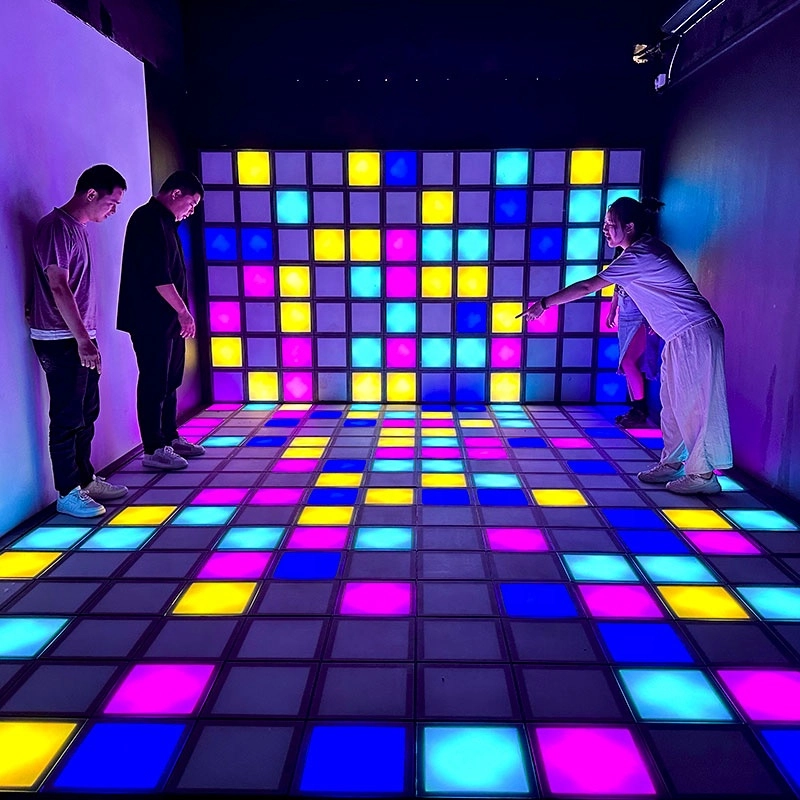
Hottest activated LED dance grid tiles floor touch games
Super Grid is an immersive sports game that combines sports and technology. It integrates interactive LED lights and sensors through innovative software design, creating a fun gaming experience.
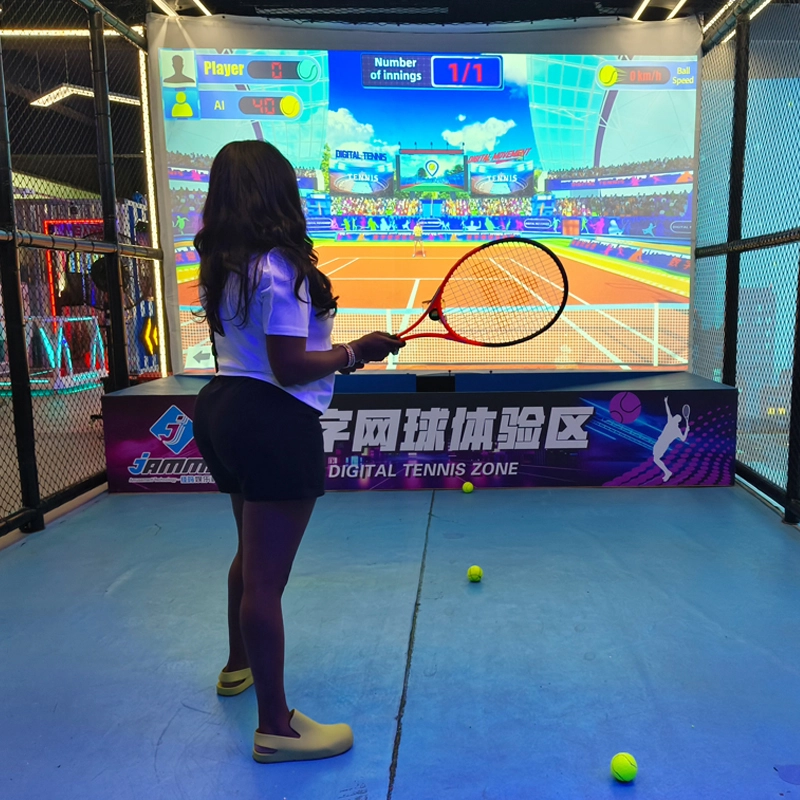
Top Indoor Tennis Racketball Training Simulator Dual Player Games
Interactive somatosensory fitness game
Combine traditional tennis sports with advanced 3D digital technology to bring customers an immersive tennis training experience
COMBINE TRADITIONAL TENNIS SPORTS WITH ADVANCED 3D DIGITAL TECHNOLOGY TO BRING CUSTOMERS AN IMMERSIVE TENNIS TRAINING EXPERIENCE INDOOR AND TENNIS EXPERIENCE HALL
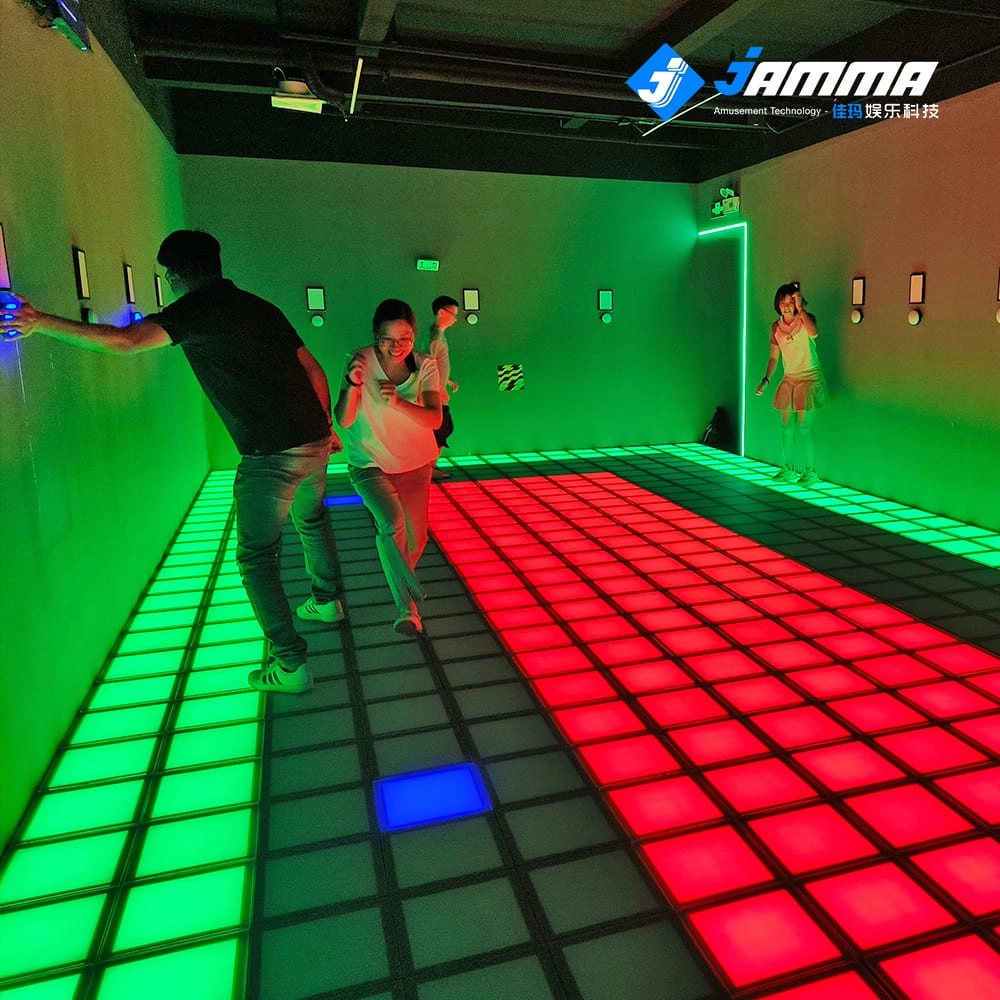
Super Grid Interactive LED Floor Activate Game Team Play
Super Grid is an immersive sports game that combines sports and technology. It integrates interactive LED lights and sensors through innovative software design, creating a fun gaming experience.
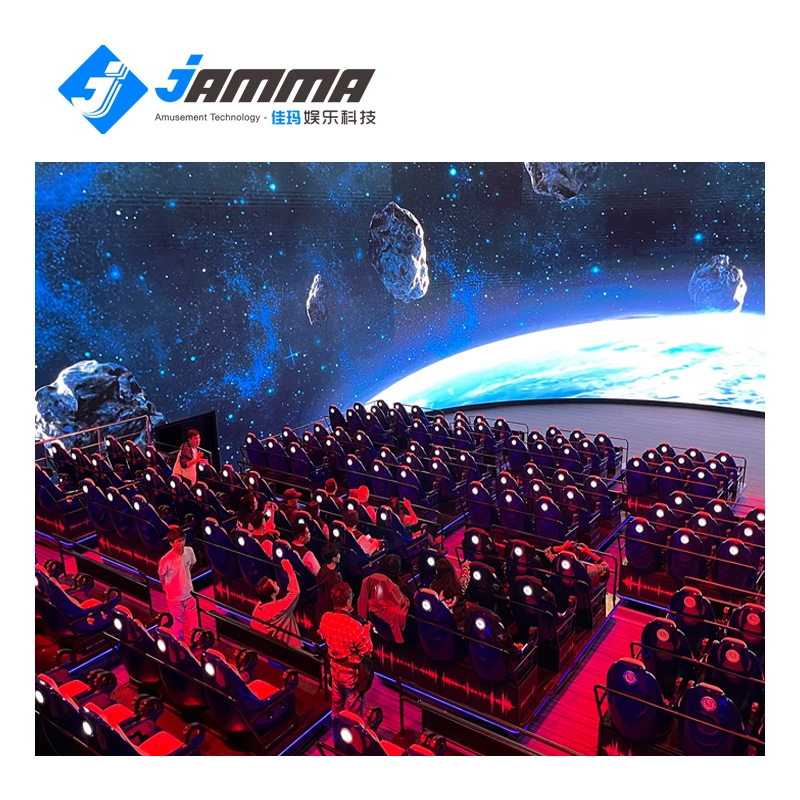
Immersive 5D/7D/9D cinema dynamic visual experience room
Compared with other types of theaters, 5D/7D/9D cinema have high technical content, prominent themes, and have a strong impact on the characteristics of the picture. With the increasing demand in the entertainment market and the continuous development of video entertainment technology, in the past, audiences would experience vibration, drop, rain, scratches and other effects in some 4D theaters, but now with 5D theaters, audiences can experience new Unique features, touch and feel effects such asreal smoke, water, snow, bubbles, smell, lightning, leg touch,camera system and more. When the audience is watching amovie, the seats and environmental effects will change into corresponding actions according to the development of the movie,allowing the audience to experience an immersive viewing experience.
