

Indoor Soft Play Design for Toddlers and Kids
- Designing Safe, Engaging Indoor Play Spaces
- Key Principles of Indoor Playground Soft Play Design
- Age Zoning and Flow for Toddlers and Kids in an Indoor Playground
- Materials, Surfacing and Safety Standards for Indoor Playgrounds
- Quick Surfacing Maintenance Plan (Recommended)
- Equipment Selection: Soft Play Modules, Sensory, and Interactive Elements
- Operational Considerations: Staffing, Cleaning, Maintenance, and Insurance for Indoor Playgrounds
- Accessibility, Inclusivity and Developmental Programming in Indoor Playgrounds
- Monetization and Business Models for Indoor Playgrounds
- Case Example: Layout and Capacity Planning for a 500 sqm Indoor Playground
- Why JAMMA Amusement Is a Strong Partner for Indoor Playground Projects
- FAQ — Frequently Asked Questions
- 1. What safety standards should an indoor playground meet?
- 2. How much space is needed per child in an indoor playground?
- 3. How do you keep a soft play area hygienic, especially ball pits?
- 4. What are the main revenue drivers for modern indoor playgrounds?
- 5. How can an indoor playground be made inclusive?
- 6. Is technology (AR/VR/Interactive Projection) worth adding?
- References
Designing Safe, Engaging Indoor Play Spaces
Indoor Playground operators and venue planners face a dual challenge: create an environment that is irresistibly fun for toddlers and kids while meeting high safety, hygiene, and operational standards. This guide synthesizes industry best practices, safety references, and commercial considerations to help architects, operators, and investors design indoor soft play areas that delight families, control risk, and maximize return on space.
Key Principles of Indoor Playground Soft Play Design
An effective indoor playground balances five core principles: safety, age-appropriate challenge, visibility for caregivers, circulation and capacity planning, and maintenance efficiency. Embedding the primary keyword 'Indoor Playground' into all planning stages ensures the space aligns with user (parents and operators researching indoor facilities) and commercial outcomes (bookings, birthday parties, memberships).
- Safety first: Comply with local regulations and internationally recognized guidelines (see references). Prioritize layered fall protection, pinch-point elimination, and non-toxic materials.
- Developmental design: Provide progressive challenges—separate toddler zones (0–3 years) from preschool (3–5) and early school-age areas (6–8) to support motor and social development.
- Sightlines and supervision: Open sightlines reduce staffing requirements and improve perceived safety for caregivers.
- Durable, cleanable finishes: Choose materials resistant to repeated cleaning and disinfecting to maintain hygiene without degrading appearance.
- Revenue-driven zoning: Include rentable party rooms, café/retail touchpoints, and flexible event space to diversify income.
Age Zoning and Flow for Toddlers and Kids in an Indoor Playground
Zoning reduces risks and improves user experience. Typical zones are: toddler soft play (0–3 years), active play for 3–6 years, challenge/climbing for 6–12 years, and family/relax areas. Each zone should have tailored surfacing, entry/exit control, and age-appropriate equipment.
Practical layout tips:
- Place the toddler zone near caregiver seating and toilets/diaper areas.
- Use low partitions and clear glazing to maintain sightlines but provide acoustic separation.
- Design circulation paths that avoid cross-traffic between energetic older children and toddlers.
- Provide a distinct entry with reception and queuing space to support check-in, wristbands, and age verification—important for both safety and monetization.
Materials, Surfacing and Safety Standards for Indoor Playgrounds
Flooring, wall padding, and equipment surfacing determine both safety and lifecycle costs. Select impact-attenuating surfaces under elevated platforms and fall zones, and durable, low-VOC finishes elsewhere.
| Surface Type | Primary Benefits | Limitations | Best Use |
|---|---|---|---|
| Closed-cell EVA foam mats | Soft, lightweight, easy to replace | Can gap and move under heavy traffic; seams collect dirt | Toddler floors, low platforms |
| Unitary rubber flooring | Durable, good impact attenuation, slip-resistant | Higher upfront cost, requires precise installation | High-traffic areas, under climbing structures |
| Engineered loose-fill (rubber mulch) | Excellent fall protection for high falls | Not suitable indoors in food/cafe areas; maintenance required | Large drop zones under tall structures (less common indoors) |
| Vinyl (commercial grade) | Easy to clean, aesthetic variety, affordable | Less shock absorption; needs pads under equipment | Circulation, party rooms, café |
Follow recognized safety guidance such as the U.S. Consumer Product Safety Commission (CPSC) Public Playground Safety Handbook and applicable ASTM standards (e.g., ASTM F1487) for design clearances, fall heights, and surfacing specifications. Local regulations and insurance requirements may add further constraints—confirm early in design.
Quick Surfacing Maintenance Plan (Recommended)
| Surface | Daily | Weekly | Quarterly / Annual |
|---|---|---|---|
| Soft foam flooring | Vacuum/brush, spot-clean spills | Deep clean per manufacturer's disinfectant guidance | Replace worn tiles; check seams and adhesion |
| Rubber surfacing | Sweep, remove debris | Wash with neutral detergent | Inspect for wear and re-coat if required |
| Vinyl | Mop with disinfectant-safe cleaner | Inspect seams and baseboards | Professional re-seam and repair |
Equipment Selection: Soft Play Modules, Sensory, and Interactive Elements
Equipment selection should reflect your target demographic and business model. For toddler-focused venues prioritize low-height soft modules, sensory panels, tactile pathways, and quiet/napping corners. For mixed-age venues include multi-level soft play frames, slides, ball pits with hygiene controls, and interactive projection or AR elements to drive repeat visits.
When choosing suppliers, evaluate: warranty terms, material certifications (flame-retardant, phthalate-free), lead times, customization options, and the availability of spare parts. Request test samples and installation references.
Operational Considerations: Staffing, Cleaning, Maintenance, and Insurance for Indoor Playgrounds
Operational excellence separates profitable venues from marginal ones. Key topics include staffing ratios, incident reporting, cleaning protocols, preventive maintenance, and insurance coverages.
- Staffing: For toddler areas, maintain a higher adult-to-child ratio. Standard policies often recommend one trained attendant per 10–15 children in mixed-age areas; adjust by risk and local law.
- Training: Staff should be trained in first aid/CPR, cleaning/disinfection procedures, and emergency evacuation plans.
- Cleaning & infection control: Establish documented procedures for routine cleaning and escalation during outbreaks (use EPA-registered disinfectants as appropriate).
- Maintenance: Keep a digital log of inspections and repairs. Replace impact-attenuating surfacing per manufacturer guidance.
- Insurance: Carry public liability, product liability (for vendor-supplied items), and property insurance. Consult a broker experienced in leisure/amusement underwriting.
Accessibility, Inclusivity and Developmental Programming in Indoor Playgrounds
Design for inclusivity to expand market reach and meet legal/access standards. Provide wheelchair-accessible routes, sensory-friendly hours for children with autism, and equipment options that encourage parallel play. Incorporating inclusive design is both ethical and commercially advantageous, increasing dwell time and broadening the customer base.
Monetization and Business Models for Indoor Playgrounds
Indoor playgrounds generate revenue through multiple streams: general admission, hourly play, memberships, birthday parties, private hire, F&B, and retail. Adding technology-driven attractions (e.g., interactive projection zones, AR sports simulators) can command High Quality pricing and higher repeat visitation.
| Revenue Stream | Pros | Considerations |
|---|---|---|
| General Admission / Hourly Play | Predictable flow, easy to scale | Requires efficient turnover management |
| Birthday Parties & Events | High-margin bookings, off-peak utilization | Needs dedicated party spaces and staff |
| Memberships & Subscriptions | Steady cash flow, customer loyalty | Requires strong retention programming |
| Tech Attractions (VR/AR/Simulators) | High Quality pricing, differentiator | Higher CAPEX and technical maintenance |
Case Example: Layout and Capacity Planning for a 500 sqm Indoor Playground
Below is a conceptual allocation to illustrate space planning. Adjust according to local code, target market, and equipment footprint.
| Area | Suggested sqm | Notes |
|---|---|---|
| Toddler soft play | 80 | Soft flooring, low modules, parent seating nearby |
| Active play / multi-level frame | 150 | Slides, tunnels, climbing features |
| Interactive/Tech zone (projection/AR) | 70 | Turn-key attractions commanding higher admission |
| Party rooms & café | 120 | Flexible partitions to host events |
| Circulation / storage / staff | 80 | Toilets, storage, reception |
Capacity: Depending on layout and supervision policies, a 500 sqm venue might safely accommodate 80–150 guests at any one time. Use your local safety guidelines and an occupancy plan tied to staff ratios.
Why JAMMA Amusement Is a Strong Partner for Indoor Playground Projects
JAMMA Amusement was established in 2009, located in Guangzhou, with 15 years of experience in the amusement industry. Focusing on providing high-value, one-stop solutions for amusement projects, our products include VR games, AR sports simulators, AR interactive projection games, 5D cinema, as well as arcade games and outdoor playground equipment. We have a highly efficient international sales team dedicated to understanding customer needs and providing professional solutions and high-quality products for venues. Our industry-leading technical team keeps abreast of the latest technological trends and continuously develops and updates the products. Our manufacturing and after-sales teams are skilled and experienced, providing comprehensive technical support. We are committed to becoming a leading global provider of amusement equipment and park solutions. Our website is https://www.jammapark.com/.
JAMMA's competitive advantages for indoor playground projects:
- Turnkey expertise: From concept and 3D design to manufacturing, installation, and after-sales support, JAMMA provides end-to-end project delivery.
- Product breadth: Core offerings include Sports Simulators, Interactive Projection Games, Immersive Attractions, and VR Games—solutions that add high-margin, tech-driven revenue streams to traditional soft play.
- Technical R&D: A dedicated technical team iterates products based on market feedback and new interaction technologies, keeping venues fresh and marketable.
- Manufacturing & QA: Experienced manufacturing teams and quality control processes ensure consistent delivery and spare-parts availability.
- Global sales support: International sales professionals help tailor commercial models (sales, lease, revenue share) to client needs.
Choosing partners with proven product reliability, compliant materials, and accessible maintenance support reduces long-term operating costs and downtime—critical factors in a profitable indoor playground business.
FAQ — Frequently Asked Questions
1. What safety standards should an indoor playground meet?
Designers should consult local building codes and applicable international guidelines such as the CPSC Public Playground Safety Handbook and ASTM standards (for equipment). Additionally, select materials with health and fire-safety certifications and document maintenance and inspection procedures.
2. How much space is needed per child in an indoor playground?
Space-per-child varies by layout and activity type. A practical planning range is roughly 1.2–2.0 sqm per child in active play zones; toddler areas may require more caregiver circulation. Confirm with local regulations and insurance underwriters for occupancy limits.
3. How do you keep a soft play area hygienic, especially ball pits?
Implement daily spot-cleaning, scheduled deep-cleaning (weekly/quarterly), use antimicrobial materials where possible, and select ball pit designs with removable, cleanable balls and drain/filtration systems. Maintain a cleaning log and communicate cleaning schedules to customers.
4. What are the main revenue drivers for modern indoor playgrounds?
High-margin drivers include birthday parties, memberships, private hires, and High Quality attractions (VR, AR, immersive experiences). Ancillary F&B and retail also contribute to overall profitability.
5. How can an indoor playground be made inclusive?
Provide accessible routes, sensory-friendly sessions, equipment suitable for varied abilities (transfer platforms, low-sensory play), staff training in inclusive supervision, and clear signage. Inclusive marketing attracts broader customer segments.
6. Is technology (AR/VR/Interactive Projection) worth adding?
Yes, when matched to market demand. Tech attractions command High Quality pricing and differentiate your offering, increasing repeat visits. However, they require higher CAPEX and structured maintenance plans—consider hybrid models combining traditional soft play and tech zones.
For project consultations, tailored designs, equipment quotes, or to view JAMMA's product portfolio, contact JAMMA Amusement: https://www.jammapark.com/. Our team can provide turnkey proposals, 3D layouts, and financing options to suit your venue goals.
References
- U.S. Consumer Product Safety Commission (CPSC), Public Playground Safety Handbook — https://www.cpsc.gov/Safety-Education/Safety-Guides/playgrounds (accessed 2025-12-14).
- ASTM International, Playground Equipment Standards (ASTM F1487) — https://www.astm.org/Standards/F1487.htm (accessed 2025-12-14).
- World Health Organization (WHO), Guidelines on Physical Activity for Children — https://www.who.int/news-room/fact-sheets/detail/physical-activity (accessed 2025-12-14).
- International Play Equipment Manufacturers Association (IPEMA) — https://ipema.org/ (accessed 2025-12-14).
- JAMMA Amusement official website — https://www.jammapark.com/ (accessed 2025-12-14).
All recommendations above are based on industry best practices, safety guidelines, and practical operational experience. For a site-specific assessment and a customized indoor playground design, reach out to JAMMA Amusement's project team via the website.
Where to Buy virtual archery simulator in UK
Football Simulator ROI: Profitability for Amusement Operators
Trends: AI and AR in Sports Simulation Entertainment
Why choose JAMMA interactive smart table manufacturer in Asia
Standard and other
What is the delivery time?
Usually the production period of our products is 20 to 25 days, it will be a little different according to the quantity of products you order. All products need to go through our strict quality inspection before shipment. After they are tested, we will ship them to you at the first time. For products in stock, we usually ship within 3 days.
How will it be transported?
For large items, we usually use sea freight, while for small items, we use air freight or services like DHL, FedEx, or UPS. We can also accommodate specific shipping methods based on your requirements.
Product details
Are glasses required to see a 5D film?
Audience needs to wear 3D glasses while watching movie, but not VR glasses.
What is the difference between 5D and 3D?
The visual of 5D cinema is the same as that of 3D, compared to 3D, it adds motion simulation and special effects, which are not available in 3D.
What are the special effects in a 5D cinema?
JAMMA 5D cinema has special effects such as water spray, smoke, bubbles, snow, lightning and so on, which allows it to provide a realistic and immersive experience.
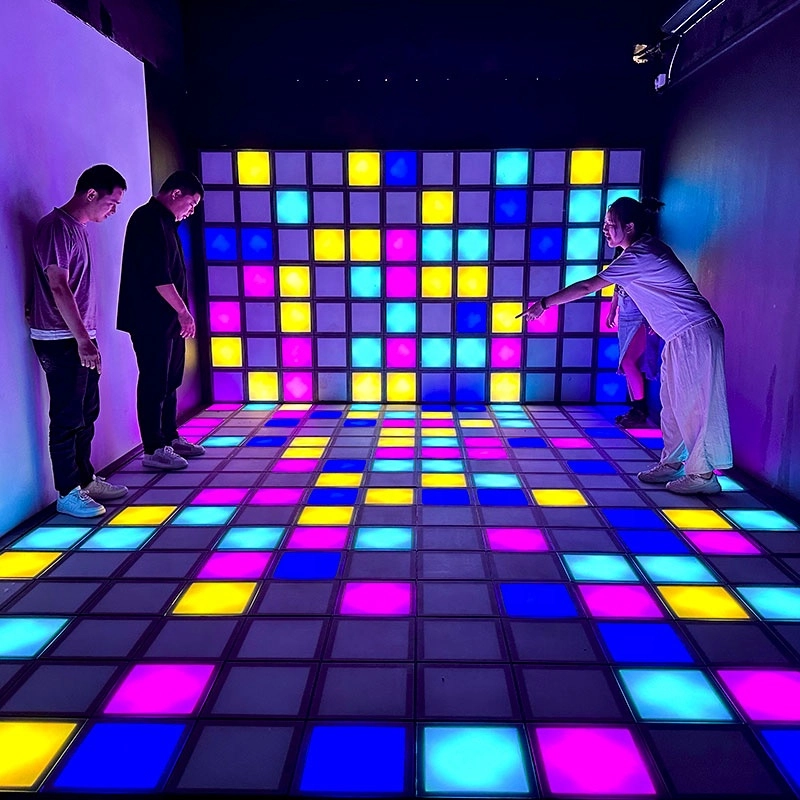
Hottest activated LED dance grid tiles floor touch games
Super Grid is an immersive sports game that combines sports and technology. It integrates interactive LED lights and sensors through innovative software design, creating a fun gaming experience.
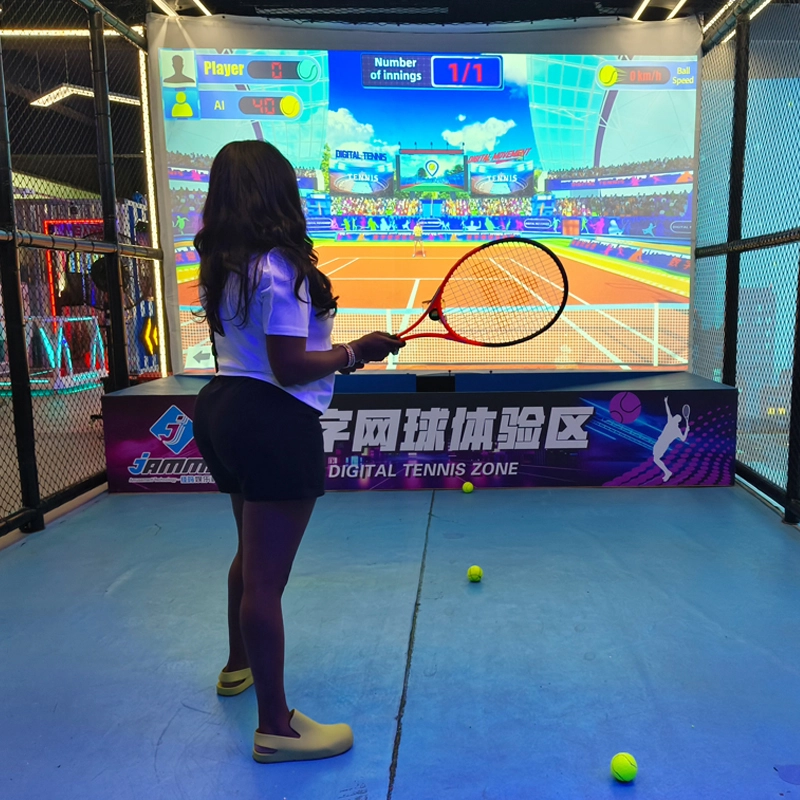
Top Indoor Tennis Racketball Training Simulator Dual Player Games
Interactive somatosensory fitness game
Combine traditional tennis sports with advanced 3D digital technology to bring customers an immersive tennis training experience
COMBINE TRADITIONAL TENNIS SPORTS WITH ADVANCED 3D DIGITAL TECHNOLOGY TO BRING CUSTOMERS AN IMMERSIVE TENNIS TRAINING EXPERIENCE INDOOR AND TENNIS EXPERIENCE HALL
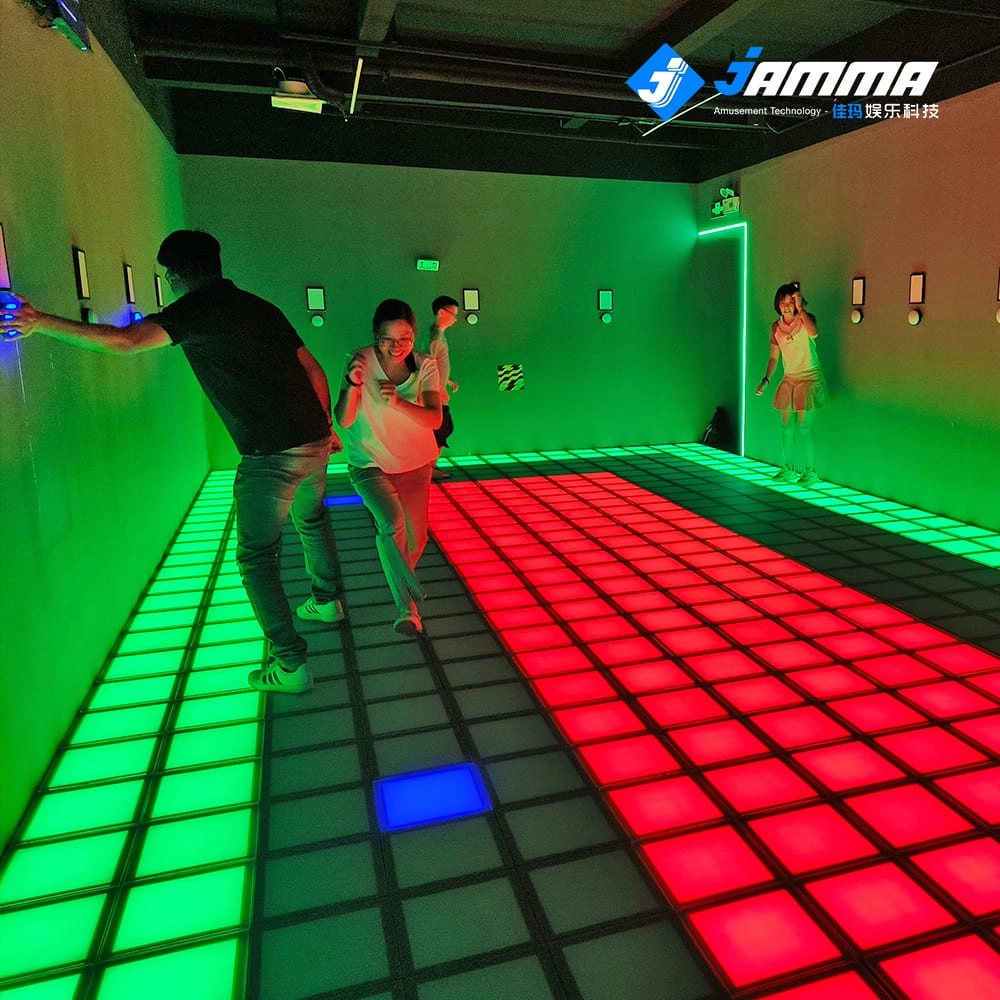
Super Grid Interactive LED Floor Activate Game Team Play
Super Grid is an immersive sports game that combines sports and technology. It integrates interactive LED lights and sensors through innovative software design, creating a fun gaming experience.
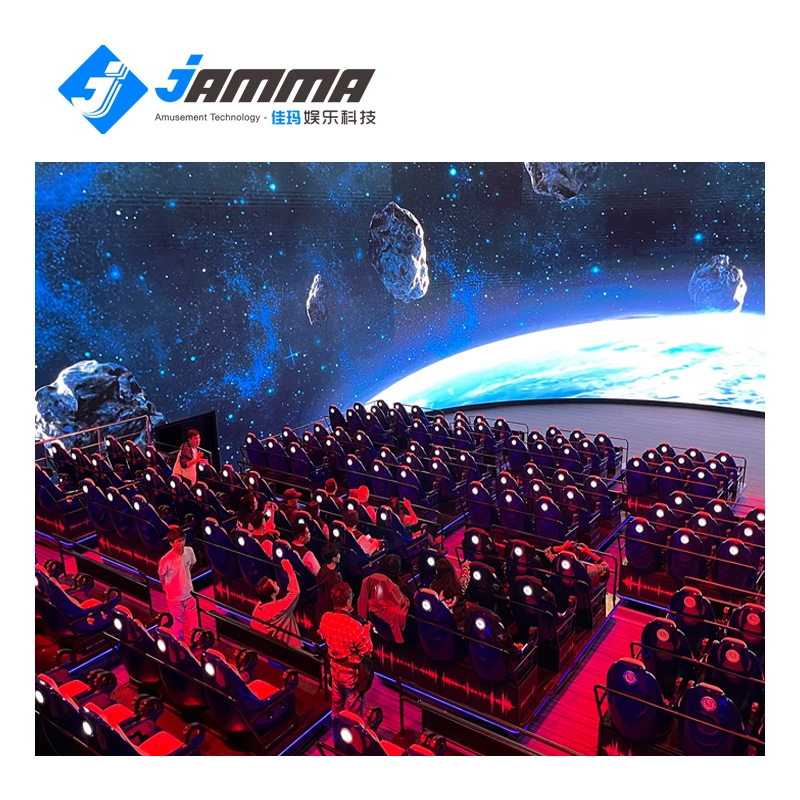
Immersive 5D/7D/9D cinema dynamic visual experience room
Compared with other types of theaters, 5D/7D/9D cinema have high technical content, prominent themes, and have a strong impact on the characteristics of the picture. With the increasing demand in the entertainment market and the continuous development of video entertainment technology, in the past, audiences would experience vibration, drop, rain, scratches and other effects in some 4D theaters, but now with 5D theaters, audiences can experience new Unique features, touch and feel effects such asreal smoke, water, snow, bubbles, smell, lightning, leg touch,camera system and more. When the audience is watching amovie, the seats and environmental effects will change into corresponding actions according to the development of the movie,allowing the audience to experience an immersive viewing experience.
