

Sports Simulation vs Real-World Training: Audience Appeal
- How Audiences Engage with Sports Simulation and Real-World Training
- Why the question of sports simulation vs real-world training matters for venues and trainers
- Audience segments: who is drawn to sports simulation?
- Practical takeaway for operators (: sports simulation solutions)
- Training outcomes: what the evidence says about transfer from sports simulation to reality
- Evidence-based coaching applications (: sports training technology)
- Experience & engagement: why consumers choose simulation for entertainment
- Designing a compelling simulation experience (: interactive sports simulators)
- Cost, space and operational considerations: simulation vs real-world facilities
- Measuring ROI: metrics that matter for sports simulation investments
- Benchmarks and expectations (: sports simulation ROI)
- Limitations and risks of relying solely on sports simulation
- Case examples: how different venues deploy sports simulation
- Technology trends shaping the next generation of sports simulation
- JAMMA Amusement: delivering one-stop sports simulation and immersive attractions
- Why choose JAMMA for sports simulation and immersive attractions (: sports simulators)
- Decision framework: when to prioritize sports simulation or real-world training
- FAQ — Common questions about sports simulation vs real-world training
- 1. Do sports simulators actually improve real-world performance?
- 2. Which audience spends more: casual users or serious athletes?
- 3. How much space do sports simulators require compared to a real field?
- 4. What are the maintenance and support needs for simulators?
- 5. Can AR/VR simulators be used for youth coaching safely?
- 6. How should a venue price simulator sessions?
- Contact & next steps (CTA)
- References
How Audiences Engage with Sports Simulation and Real-World Training
Why the question of sports simulation vs real-world training matters for venues and trainers
The term sports simulation covers a wide range of technologies — from dedicated golf and batting simulators to AR sports experiences and full-room VR training systems. For venues, coaches, and equipment buyers the practical question isn't which approach is intrinsically better, but which better meets the needs of distinct audience segments (recreational players, serious athletes, entertainment customers) while delivering measurable returns in engagement, retention, and performance.
Audience segments: who is drawn to sports simulation?
Understanding audience appeal begins with segmentation. Sports simulation attracts four main groups:
- Casual players and families: seek entertainment, convenience, weather-independent play, and an accessible learning curve (arcades, malls, FECs).
- Recreational enthusiasts: want regular practice with data feedback but value convenience over travel to specialized facilities.
- Semi-pro and pro athletes: look for high-fidelity simulation that supports skill transfer, scenario repetition, and measurable metrics.
- Venue and event operators: prioritize throughput, revenue per square meter, differentiation, and maintenance costs.
- Fidelity matters: simulators that reproduce key perceptual and motor cues (ball flight, haptic feedback, timing) produce better transfer than low-fidelity games.
- Task representativeness: practicing the same perceptual demands (e.g., timing a baseball swing to pitch speed) yields more transfer than abstract drills.
- Quality of feedback: objective metrics (ball speed, launch angle, swing path) and coached interpretation accelerate learning.
- Accessibility and convenience — indoor, weatherproof, often playable with minimal skill.
- Immediate feedback — visualizations and leaderboards drive replay and social competition.
- Gamification — missions, modes, and AR overlays keep mixed-ability groups engaged.
- Safety and scalability — low impact and easier to supervise for family venues.
- Revenue per square meter/hour
- Average session length and repeat visit rate
- Conversion from casual user to paid membership or coaching package
- Utilization and downtime (technical reliability)
- Customer acquisition cost for simulator offer vs. alternative attractions
- Perceptual and ecological differences — peripheral awareness, uneven terrain, and group dynamics are difficult to fully simulate.
- Overfitting to simulator-specific cues can impair on-field performance if not managed properly.
- Technical failures and software bugs can disrupt operations and damage customer trust.
- High-fidelity systems require ongoing calibration and expert support to maintain validity.
- Family Entertainment Centers: short-form games, leaderboards, birthday packages — focus on repeat entertainment.
- Golf Centers & Driving Ranges: full-swing simulators combined with on-range practice — monetize off-hours.
- Professional Clubs and Academies: closed high-fidelity systems for tactical rehearsal, scouting simulation, and injury-safe repetition.
- Shopping Malls / Pop-ups: portable AR/VR experiences used for brand activations and customer capture.
- AR overlays that combine real objects with digital cues for mixed-reality practice.
- Improved haptics and ball-tracking that enhance fidelity of motor tasks.
- Cloud analytics and federated leaderboards enabling cross-venue competitions.
- AI-driven coaching insights that translate raw metrics into actionable progress plans.
- Product breadth: Sports Simulators, Interactive Projection Games, Immersive Attractions, VR Games — enabling bundled offers across entertainment and training use cases.
- Technical depth: an in-house R&D team that integrates AR/VR, tracking sensors, and analytics to improve fidelity and data quality.
- Operational support: manufacturing scale and after-sales service that reduce downtime and protect long-term ROI.
- Commercial experience: 15+ years delivering solutions to international markets and customizing offerings by venue type.
- Define primary goal: entertainment revenue, skill development, or hybrid.
- Match fidelity needed: choose simulation only if the system replicates the task-relevant cues.
- Assess audience size and throughput requirements: simulations scale more easily in limited space.
- Plan for hybrid training pathways: schedule on-field validation sessions to ensure transfer.
- Track metrics and iterate: measure engagement and performance to optimize offerings.
- Statista — Global virtual reality (VR) market size 2016-2024. https://www.statista.com/statistics/591181/global-virtual-reality-market-size/ (accessed 2025-06-01).
- PwC — Entertainment & Media Outlook (global trends in immersive media). https://www.pwc.com/gx/en/industries/tmt/media/outlook. (accessed 2025-06-01).
- Frontiers media and NCBI — Reviews on virtual reality and sport training (systematic reviews on transfer and applicability). Example overview articles accessible via PubMed Central: https://www.ncbi.nlm.nih.gov/ (search term: virtual reality sport training review) (accessed 2025-06-01).
- Industry press and case studies — Use cases from golf simulator operators, MLB and training facilities; example operator stories and technology descriptions on industry media (ESPN/Forbes/MLB feature articles). (search online archives) (accessed 2025-06-01).
- Market analysis — Grand View Research / Allied Market Research reports on sports simulation and AR/VR in sports (for marketplace and deployment trends). https://www.grandviewresearch.com/ (accessed 2025-06-01).
Each group interprets value differently: casual users prioritize fun and novelty; athletes prioritize validity of metrics and transfer to the real world. This divergence explains why many successful facilities blend both simulation and real-world practice options.
Practical takeaway for operators (: sports simulation solutions)
When planning offerings, operators should map each product to a target segment and business metric: revenue per session, average time spent, repeat visits, or membership conversions. Sports simulation solutions can be sold as hourly entertainment, subscription-based practice, or High Quality coaching tools with data analytics.
Training outcomes: what the evidence says about transfer from sports simulation to reality
Research on skill transfer from simulated to real environments has grown as technologies matured. Systematic reviews and controlled studies generally conclude that high-fidelity simulation plus deliberate practice can produce positive transfer — but transfer depends on fidelity, task representativeness, and feedback quality.
In short: sports simulation can be an effective training tool for many skills if systems are designed for representative practice and paired with coaching or analytical feedback.
Evidence-based coaching applications (: sports training technology)
Coaches using sports simulation as a complement (not a replacement) to on-field work typically focus simulators on repetition of high-quality reps, controlled scenario exposure (e.g., pitch recognition), and objective measurement to guide progression.
Experience & engagement: why consumers choose simulation for entertainment
From an audience-appeal perspective, sports simulation scores highly on several experiential dimensions:
These attributes make sports simulation a reliable revenue driver for family entertainment centers, FECs, and mixed-use leisure complexes.
Designing a compelling simulation experience (: interactive sports simulators)
To maximize appeal: combine short-form game modes for casual visitors, skill challenges for enthusiasts, and deeper coaching modules for committed players. Add leaderboards and social sharing to convert first-time users into repeat customers.
Cost, space and operational considerations: simulation vs real-world facilities
Operators need to weigh capital outlay, space efficiency, maintenance, and ongoing costs. Key differences:
| Factor | Sports Simulation | Real-World Training |
|---|---|---|
| Initial capital | Variable — from modest arcade systems to high-end simulators; generally lower footprint for comparable per-user throughput. | Field/court construction can be expensive (land, turf, lighting); higher ongoing facility costs. |
| Space efficiency | High — compact footprint; multi-sport setups possible in shared spaces. | Low — requires full-size fields or courts for many sports. |
| Maintenance | Technical (software updates, sensors); predictable spare parts. | Groundskeeping, equipment wear; weather-dependent maintenance. |
| Revenue models | Pay-per-play, memberships, event rentals, corporate bookings. | Memberships, team rentals, league fees; weather affects utilization. |
| Scalability | High — replicate modules, integrate networks for competitions. | Limited by land and staffing. |
Source: market reports and operator case studies (see references).
Measuring ROI: metrics that matter for sports simulation investments
Successful ROI measurement combines financial and engagement KPIs. Recommended metrics:
Use integrated POS and CRM data to link simulator usage with spend on food & beverage, retail, and events. High-quality analytics are a differentiator for operators who want to scale effectively.
Benchmarks and expectations (: sports simulation ROI)
Benchmarks vary by market and product level. As a rule, high-throughput, social-first experiences (short sessions, leaderboard-driven) generate quicker payback in urban FECs, while high-end training simulators command High Quality pricing from serious athletes and clubs.
Limitations and risks of relying solely on sports simulation
While compelling, sports simulation is not a universal substitute for real-world practice. Limitations include:
Therefore, best practice is hybridization: use simulators for focused rehearsal, analytics-driven improvement, and entertainment; pair with periodic real-world sessions to validate transfer.
Case examples: how different venues deploy sports simulation
Common deployment patterns:
Each deployment is tailored to the venue’s target audience and revenue model.
Technology trends shaping the next generation of sports simulation
Key technological drivers to watch:
Adopting these technologies thoughtfully can increase both training validity and entertainment value.
JAMMA Amusement: delivering one-stop sports simulation and immersive attractions
JAMMA Amusement was established in 2009, located in Guangzhou, with 15 years of experience in the amusement industry. Focusing on providing high-value, one-stop solutions for amusement projects, our products include VR games, AR sports simulators, AR interactive projection games, 5D cinema, as well as arcade games and outdoor playground equipment.
We have a highly efficient international sales team dedicated to understanding customer needs and providing professional solutions and high-quality products for venues. Our industry-leading technical team keeps abreast of the latest technological trends and continuously develops and updates the products. Our manufacturing and after-sales teams are skilled and experienced, providing comprehensive technical support. We are committed to becoming a leading global provider of amusement equipment and park solutions. Our website is https://www.jammapark.com/.
Why choose JAMMA for sports simulation and immersive attractions (: sports simulators)
JAMMA’s competitive strengths include:
For operators seeking a partner that can supply hardware, software, installation, and service-level agreements, JAMMA presents a one-stop option able to support both entertainment-first and training-first implementations.
Decision framework: when to prioritize sports simulation or real-world training
Use the following simple decision checklist to align investments with objectives:
This framework helps venues choose the right hardware and services, whether the focus is on high-volume entertainment or elite training.
FAQ — Common questions about sports simulation vs real-world training
1. Do sports simulators actually improve real-world performance?
Yes — when high-fidelity simulators are used for representative practice with quality feedback, studies and practitioner reports show positive transfer. The key is task representativeness and coaching to interpret metrics.
2. Which audience spends more: casual users or serious athletes?
Casual users typically generate recurring pay-per-play revenue and event bookings, while serious athletes and clubs contribute higher-margin, subscription or coaching revenues. The best business models combine both.
3. How much space do sports simulators require compared to a real field?
Simulators can be very space-efficient — many systems fit within 10–30 square meters per bay, whereas full-size courts/fields require far more land and infrastructure.
4. What are the maintenance and support needs for simulators?
Maintenance focuses on sensor calibration, software updates, and wear parts. Reliable manufacturers provide SLA-backed support and replacement parts to minimize downtime.
5. Can AR/VR simulators be used for youth coaching safely?
Yes — when systems are designed with age-appropriate content, supervision, and ergonomic settings. AR solutions that overlay digital cues on physical objects can be especially effective for youth motor learning.
6. How should a venue price simulator sessions?
Consider short session pricing for casual players, membership packages for frequent users, and High Quality hourly rates for coaching. Bundles (F&B discounts, birthday packages) increase per-visit spend.
Contact & next steps (CTA)
If you’re evaluating sports simulation for your venue — whether entertainment-first or performance-driven — JAMMA can help design and deliver a solution tailored to your audience and revenue goals. Visit jammapark.com to view product lines or contact our international sales team for a project consultation and quote.
References
Top 5 virtual shooting simulator Company List and Products Compared
How to Choose the interactive archery simulator manufacturer and supplier ?
What are the application scenarios of ball shoot activate game?
Top playground equipment indoor Manufacturers and Suppliers in France
Standard and other
Are you an amusement park equipment manufacturer?
Yes. We have our own production factory, which is located in Guangzhou, China, covering an area of over 2,000 square meters. With our professional production team, we are able to ensure high quality and on-time delivery of our products. All products have undergone rigorous testing and quality inspection. You are welcome to visit our factory.
How long is the warranty period?
Our products have a one-year warranty period. During the warranty period, if there are any issues with the product that are not caused by human error, we can replace the parts for you free of charge. If the problems are caused by improper use, you will need to purchase the parts and bear the shipping costs yourself.
What is the delivery time?
Usually the production period of our products is 20 to 25 days, it will be a little different according to the quantity of products you order. All products need to go through our strict quality inspection before shipment. After they are tested, we will ship them to you at the first time. For products in stock, we usually ship within 3 days.
Product details
How many players can play soccer at the same time?
Up to 4 players can play at the same time, you need to add more soccer balls.
What is the difference between 5D and 3D?
The visual of 5D cinema is the same as that of 3D, compared to 3D, it adds motion simulation and special effects, which are not available in 3D.
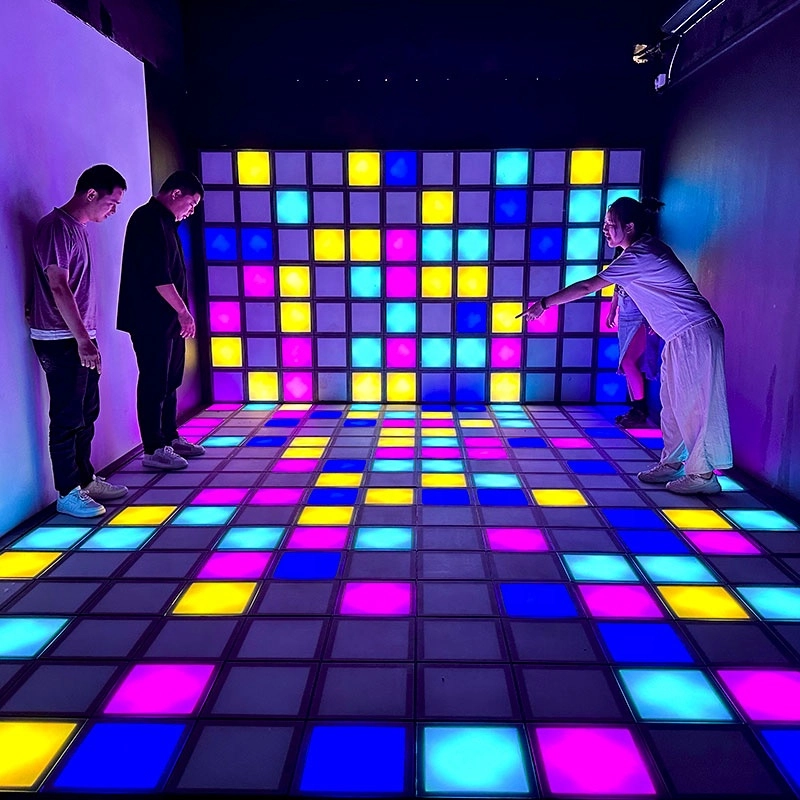
Hottest activated LED dance grid tiles floor touch games
Super Grid is an immersive sports game that combines sports and technology. It integrates interactive LED lights and sensors through innovative software design, creating a fun gaming experience.
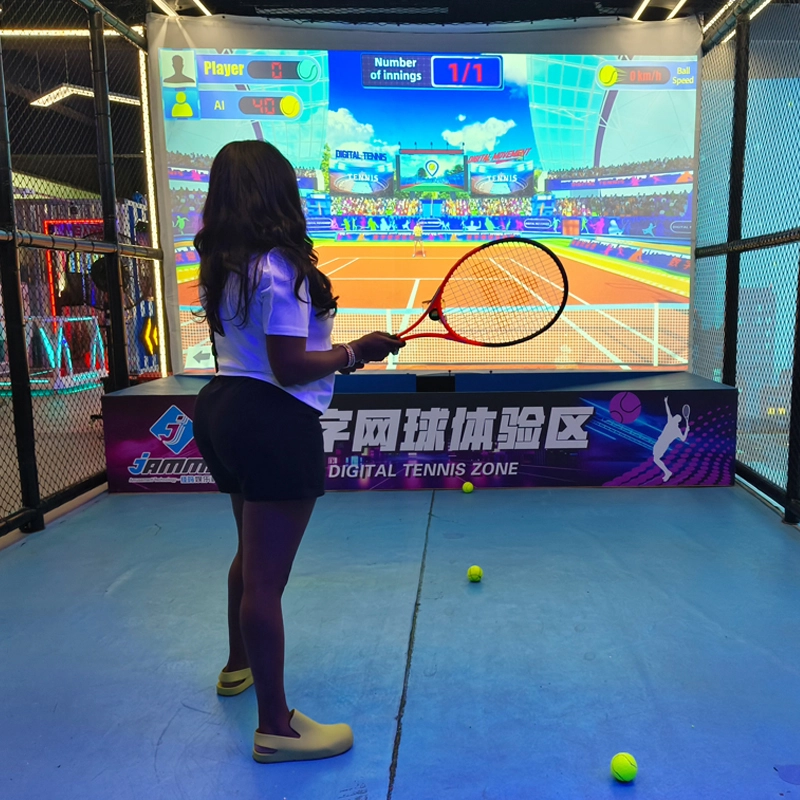
Top Indoor Tennis Racketball Training Simulator Dual Player Games
Interactive somatosensory fitness game
Combine traditional tennis sports with advanced 3D digital technology to bring customers an immersive tennis training experience
COMBINE TRADITIONAL TENNIS SPORTS WITH ADVANCED 3D DIGITAL TECHNOLOGY TO BRING CUSTOMERS AN IMMERSIVE TENNIS TRAINING EXPERIENCE INDOOR AND TENNIS EXPERIENCE HALL
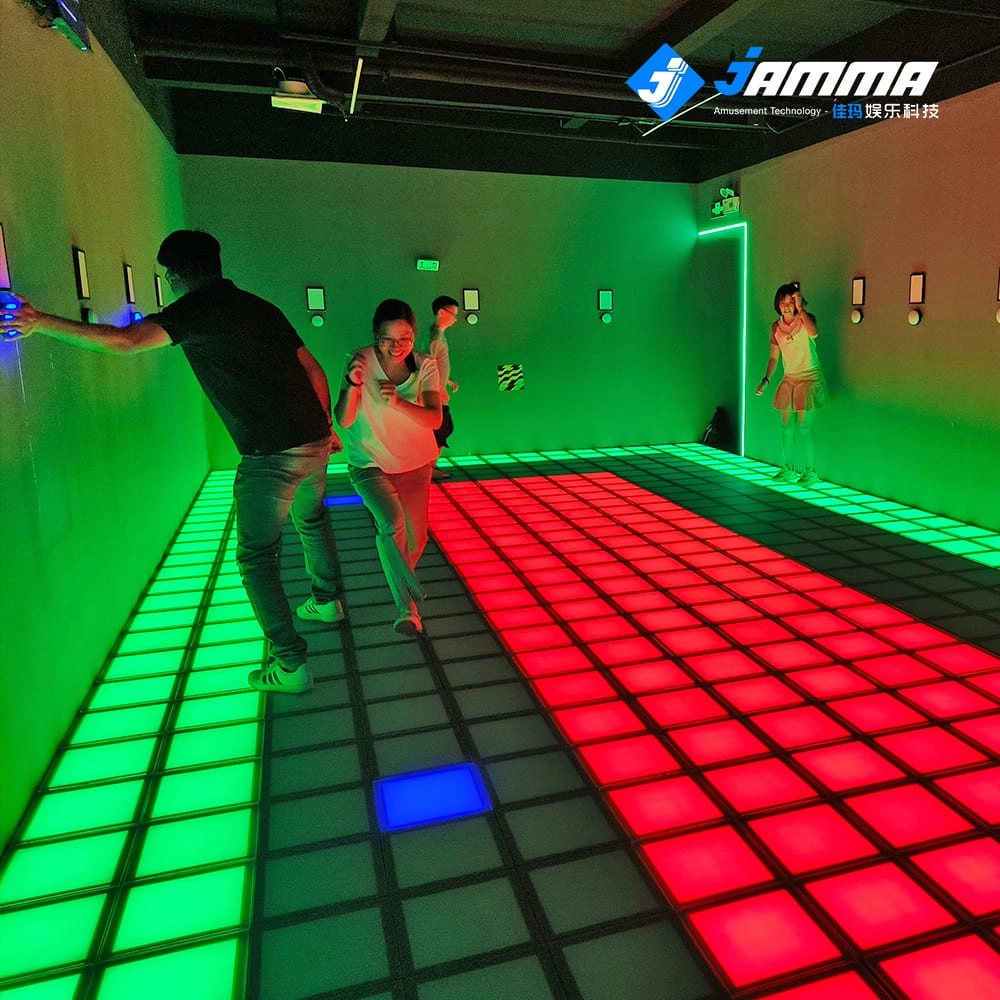
Super Grid Interactive LED Floor Activate Game Team Play
Super Grid is an immersive sports game that combines sports and technology. It integrates interactive LED lights and sensors through innovative software design, creating a fun gaming experience.
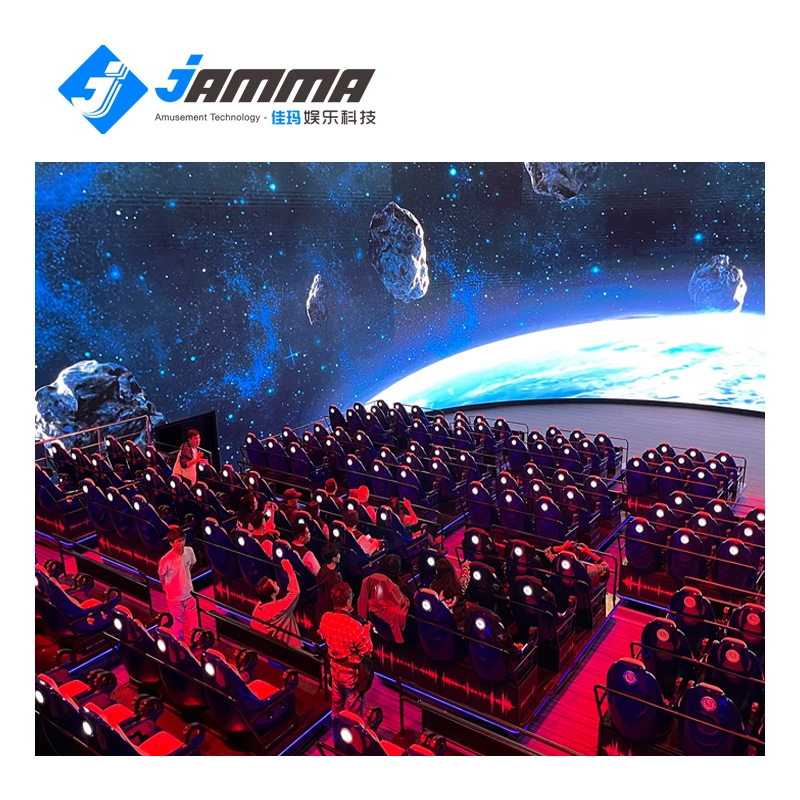
Immersive 5D/7D/9D cinema dynamic visual experience room
Compared with other types of theaters, 5D/7D/9D cinema have high technical content, prominent themes, and have a strong impact on the characteristics of the picture. With the increasing demand in the entertainment market and the continuous development of video entertainment technology, in the past, audiences would experience vibration, drop, rain, scratches and other effects in some 4D theaters, but now with 5D theaters, audiences can experience new Unique features, touch and feel effects such asreal smoke, water, snow, bubbles, smell, lightning, leg touch,camera system and more. When the audience is watching amovie, the seats and environmental effects will change into corresponding actions according to the development of the movie,allowing the audience to experience an immersive viewing experience.
