

Setting Up a Sports Simulation Attraction: Step-by-Step
- Why sports simulation attractions work for modern venues
- 1. Define your concept and business objectives for a sports simulation attraction
- 2. Choose the right sports simulation technology (sports simulation keyword)
- 3. Site planning: space, layout, utilities and safety (: venue, sports simulation)
- 4. Hardware, software and systems integration (keyword: sports simulator)
- 5. Operations model, staffing and pricing (: venue, revenue)
- 6. Budgeting and sample ROI scenarios (keyword: sports simulation attraction)
- 7. Marketing, events and community engagement (keyword: sports simulation)
- 8. Maintenance, software updates and KPIs (keyword: sports simulator solution)
- 9. Risk management, insurance and legal considerations
- 10. Case selection: when to build vs. partner vs. franchise (keyword: sports simulation attraction)
- Vendor profile: JAMMA Amusement — partner option for sports simulation projects
- Why consider JAMMA for sports simulation attractions (summarized advantages)
- 11. Scaling and replication
- Frequently Asked Questions (FAQ)
- Q1: How much floor space do I need for a single sports simulation unit?
- Q2: What are typical pricing models for customers?
- Q3: What ongoing costs should I expect?
- Q4: How do I keep the attraction fresh to drive repeat visits?
- Q5: Is sports simulation suitable for all ages?
- Q6: How long does installation take?
- Contact and next steps
- References
Why sports simulation attractions work for modern venues
Sports simulation has become a compelling option for family entertainment centers, FECs, arcades, malls, and leisure operators because it combines familiar athletic competition with immersive technology. Properly implemented, a sports simulation attraction increases dwell time, boosts ancillary sales (food, parties, merch) and attracts repeat customers through leagues, tournaments and membership models. This guide explains how to plan, build and operate a sports simulation attraction step-by-step to meet both guest expectations and commercial targets.
1. Define your concept and business objectives for a sports simulation attraction
Before choosing hardware, clarify what you want the attraction to accomplish. Common objectives include: increasing foot traffic, creating an F&B upsell funnel, driving youth/teen engagement, hosting corporate team-building events, or delivering a High Quality-priced experience. Specify target demographics (age ranges, spending power, group sizes) and operating hours. Your concept drives technology, space, pricing and staffing decisions—so invest time in market research and competitor visits.
2. Choose the right sports simulation technology (sports simulation keyword)
Sports simulation systems vary widely: stationary golf/putt simulators, batting/softball cages, AR/projection-based sports courts, and full VR experiences. Selection criteria should include realism, throughput (players per hour), footprint, maintenance, content variety and perceived value.
Quick comparison table of common sports simulation options:
| Type | Typical Cost (unit) | Footprint | Throughput (players/hr) | Strengths | Considerations |
|---|---|---|---|---|---|
| AR Sports Simulator (projected court) | $15k–$60k | 10–50 m² | 10–30 | High engagement, family-friendly, multi-game | Requires calibration, projector maintenance |
| Dedicated Golf Simulator | $10k–$80k | 15–30 m² | 6–20 | High Quality spend, private bookings | Higher capex for top-end systems |
| Batting/Ball-Strike Simulator | $12k–$50k | 20–40 m² | 20–50 | High throughput, tournament-friendly | Safety cages and ball management |
| VR Sports (headset) | $5k–$40k | 5–20 m² | 6–18 | High immersion, modular | Sanitation, motion sickness, supervision |
Sources for price ranges: vendor catalogs and industry buyer guides reflect these band estimates; final pricing depends on options, content licensing and installation.
3. Site planning: space, layout, utilities and safety (: venue, sports simulation)
Space planning determines guest flow, sightlines for spectators, staff sightlines for safety, and integration with F&B or party areas. Key considerations:
- Minimum clear ceiling height for ball/flight simulations (often 3–4 m) and safety netting for ball-based attractions.
- Power requirements: high-quality uninterrupted power (dedicated circuits, UPS for servers/PCs) and adequate outlets for projectors, PCs and peripherals.
- Lighting control: projectors and AR solutions perform best in controlled lighting; plan for curtains or dimmable systems.
- Acoustics and noise control: soundproofing to avoid disturbing other attractions or tenants.
- Accessibility and emergency egress: ADA-compliant access, clear signage, and safety procedures for high-speed moving ball systems.
4. Hardware, software and systems integration (keyword: sports simulator)
Integration comprises three layers: input sensors (cameras, radar, motion trackers), core simulation software (game engine, analytics), and output devices (projectors, displays, haptics). Prioritize the following:
- Reliable tracking: choose optical or radar sensors with proven accuracy—critical for realistic ball/shot tracking and player feedback.
- Robust software ecosystem: software should support regular content updates, leaderboards, multi-player and tournament modes.
- PMS and POS integration: connect your booking system and POS to enable timed sessions, package deals and automated check-ins.
- Network architecture: segregate guest Wi‑Fi from attraction control networks; secure remote support access for vendors.
5. Operations model, staffing and pricing (: venue, revenue)
Decide between pay-per-play, timed sessions, memberships, party bookings and corporate events. Example operational roles:
- Attraction Attendant: supervises sessions, enforces safety, performs light troubleshooting.
- Technical Lead: handles deeper technical faults, calibration and vendor communication.
- Sales/Events Manager: sells parties, leagues, group bookings and corporate events.
Sample pricing strategies: time-based (15–30 minute sessions), per-game fees, or High Quality room rental for private events. Add value with coaching, in-game analytics reports, or souvenir replays to increase ARPU (average revenue per user).
6. Budgeting and sample ROI scenarios (keyword: sports simulation attraction)
Below is a conservative example showing capital and operating assumptions for a medium-sized sports simulation zone (3 units of mixed types). These are illustrative estimates—use local cost inputs to model your business case.
| Item | Estimate (USD) | Notes |
|---|---|---|
| 3 simulation units (mixed) | $60,000 | Average $20k per unit (mix of AR/VR/golf) |
| Installation & construction | $12,000 | Netting, flooring, minor walls |
| AV, network & POS integration | $8,000 | Servers, switches, POS links |
| Staffing (first 3 months) | $18,000 | Attendants + technical support |
| Marketing & launch | $6,000 | Local ads, events, influencers |
| Total initial investment | $104,000 |
Revenue scenarios (annual): with average session price $12, 100 sessions/day across three units = $438,000 annual gross. After OpEx (rent, staff, maintenance) a mid-sized attraction could aim for EBITDA margins of 20–30% in good locations. Payback periods often range 18–36 months depending on utilization and ancillary sales. Verify these figures with local market testing and vendor ROI calculators.
7. Marketing, events and community engagement (keyword: sports simulation)
Marketing should blend digital channels (local SEO, Google My Business, paid social) with offline tactics (school outreach, sports clubs, corporate sales). Ideas that drive trial and retention:
- Host weekly leagues and tournaments with leaderboards — drives repeat visits.
- Offer birthday and corporate packages (private sessions, catering).
- Create user-generated content campaigns — best replays, longest drives — to increase social reach.
- Local partnerships with sports academies and high schools for after-school programs.
8. Maintenance, software updates and KPIs (keyword: sports simulator solution)
Plan preventive maintenance and software update windows. KPIs to track monthly include utilization rate, average session revenue, conversion rate (walk-ins to paying guests), repeat visit rate, and NPS (net promoter score). Negotiate SLAs with vendors for uptime (target 98–99% for commercial attractions) and remote diagnostics capability.
9. Risk management, insurance and legal considerations
High-energy sports simulation installations require clear waivers, age and height restrictions for certain equipment, and adequate public liability insurance. Work with a local insurance broker experienced in amusements and ensure compliance with local safety and electrical codes.
10. Case selection: when to build vs. partner vs. franchise (keyword: sports simulation attraction)
Smaller operators may prefer revenue-sharing partnerships with vendors, pop-up activations, or franchise models to reduce upfront risk. Build-in-house when you have venue control, technical staff, and capital; partner when you need rapid deployment or turnkey operations; franchise if you value documented operating standards and brand recognition.
Vendor profile: JAMMA Amusement — partner option for sports simulation projects
JAMMA Amusement was established in 2009, located in Guangzhou, with 15 years of experience in the amusement industry. Focusing on providing high-value, one-stop solutions for amusement projects, our products include VR games, AR sports simulators, AR interactive projection games, 5D cinema, as well as arcade games and outdoor playground equipment. We have a highly efficient international sales team dedicated to understanding customer needs and providing professional solutions and high-quality products for venues. Our industry-leading technical team keeps abreast of the latest technological trends and continuously develops and updates the products. Our manufacturing and after-sales teams are skilled and experienced, providing comprehensive technical support. We are committed to becoming a leading global provider of amusement equipment and park solutions. Our website is https://www.jammapark.com/.
Why consider JAMMA for sports simulation attractions (summarized advantages)
JAMMA's competitive strengths include:
- Comprehensive product range: Sports Simulators, Interactive Projection Games, Immersive Attractions and VR Games—allowing multi-product zones that cross-sell and improve utilization.
- End-to-end solution capability: from concept and hardware to software integration, manufacturing and after-sales service.
- Experienced technical team: ongoing product development and responsive technical support for uptime and feature updates.
- International sales and project experience: familiarity with venue requirements across markets, helping accelerate deployment and reduce implementation risk.
11. Scaling and replication
After proving a concept, scale by standardizing your layout, operational manuals, staff training modules and pricing tiers. Data-driven replication—copying the highest-performing unit mix and marketing channels—shortens the path to profitability in new locations.
Frequently Asked Questions (FAQ)
Q1: How much floor space do I need for a single sports simulation unit?
A: Depends on the type: VR headsets can run in 5–20 m², AR/projected courts typically need 10–50 m², and golf or batting simulators often require 15–30 m². Always verify vendor-specific footprint requirements and safe play zones.
Q2: What are typical pricing models for customers?
A: Common pricing includes timed sessions (15/30/60 minutes), per-game pricing, memberships, event packages and tournament entry fees. Many venues combine time-based pricing with add-ons like coaching or video replays.
Q3: What ongoing costs should I expect?
A: Recurring costs include software licensing/subscriptions, content updates, hardware maintenance and parts, staffing, insurance, utilities and occasional calibration or sensor replacement. Budget 10–20% of capex annually for upkeep as a rule of thumb.
Q4: How do I keep the attraction fresh to drive repeat visits?
A: Rotate game modes, introduce seasonal tournaments, add leaderboards, offer training/coaching content, and refresh marketing campaigns. Regular software updates and new content releases are vital.
Q5: Is sports simulation suitable for all ages?
A: Most systems are adaptable for families and teens. VR may have age or motion-sensitivity limitations; ball-based systems require supervision for younger children. Design zones and age policies accordingly.
Q6: How long does installation take?
A: Simple plug-and-play VR setups can be installed in days; AR/projector or enclosed simulators with construction, netting and AV integration typically take 2–6 weeks depending on site work and permitting.
Contact and next steps
If you are planning a sports simulation attraction and want help with concepting, vendor selection, or a site-specific ROI model, contact us to discuss options and view product demos. To explore JAMMA Amusement's product range and request a quote, visit https://www.jammapark.com/ or reach out to their international sales team for tailored solutions.
References
- Grand View Research — VR Gaming Market Analysis and Size. https://www.grandviewresearch.com/industry-analysis/vr-gaming-market. Accessed June 2024.
- International Association of Amusement Parks and Attractions (IAAPA) — Industry resources and trends. https://www.iaapa.org/. Accessed May 2024.
- JAMMA Amusement official website — company profile and product lineup. https://www.jammapark.com/. Accessed November 2025.
- Vendor product pages and industry buyer guides — aggregated price and footprint estimates (multiple vendors, 2023–2024 catalogs).
Everything You Need to Know About interactive game table
Interactive Multiplayer Sports Simulators for Groups
Where to Buy immersive theater
What are the application scenarios of ball shoot activate game?
Standard and other
How long is the warranty period?
Our products have a one-year warranty period. During the warranty period, if there are any issues with the product that are not caused by human error, we can replace the parts for you free of charge. If the problems are caused by improper use, you will need to purchase the parts and bear the shipping costs yourself.
Do you offer a customized service?
We can provide logo customization service for all of our products. For certain products, we can also support customization of sizes and game content. If you have any product customization requirements, please contact us and we will confirm the details with you.
What is the delivery time?
Usually the production period of our products is 20 to 25 days, it will be a little different according to the quantity of products you order. All products need to go through our strict quality inspection before shipment. After they are tested, we will ship them to you at the first time. For products in stock, we usually ship within 3 days.
Product details
What are the special effects in a 5D cinema?
JAMMA 5D cinema has special effects such as water spray, smoke, bubbles, snow, lightning and so on, which allows it to provide a realistic and immersive experience.
Can I customize the number of seats of 5D cinema?
Yes, we generally have options for six, nine, eighteen, twenty-four, and thirty-six seats, and the quantity of seats also can be customized.
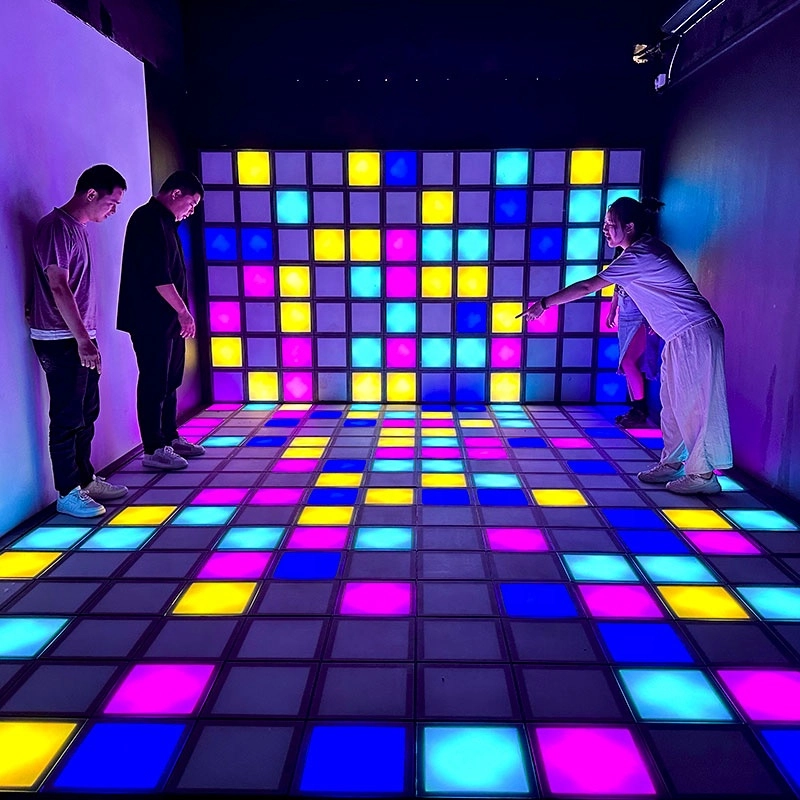
Hottest activated LED dance grid tiles floor touch games
Super Grid is an immersive sports game that combines sports and technology. It integrates interactive LED lights and sensors through innovative software design, creating a fun gaming experience.
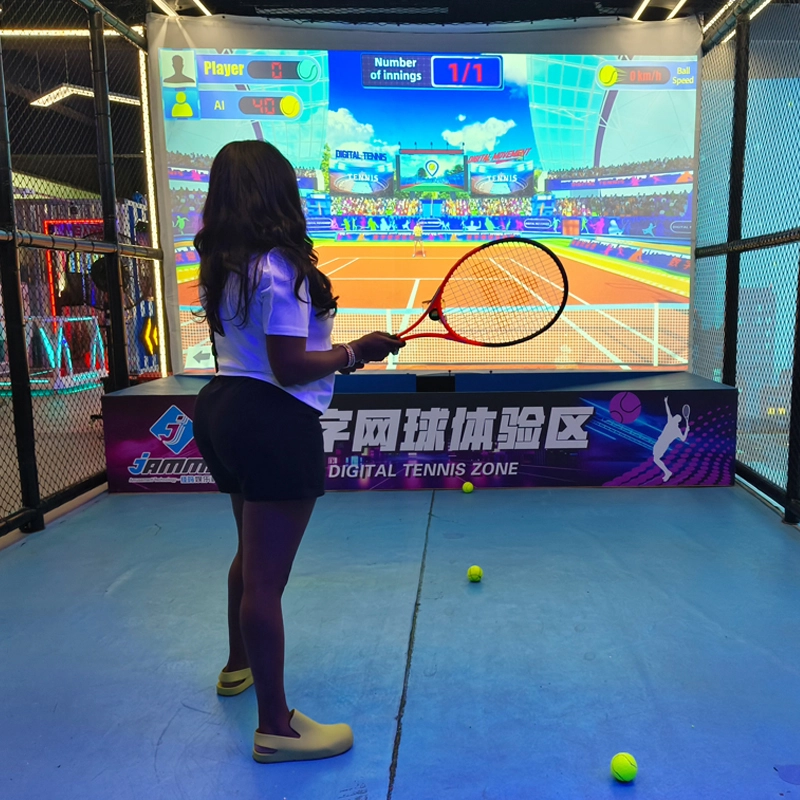
Top Indoor Tennis Racketball Training Simulator Dual Player Games
Interactive somatosensory fitness game
Combine traditional tennis sports with advanced 3D digital technology to bring customers an immersive tennis training experience
COMBINE TRADITIONAL TENNIS SPORTS WITH ADVANCED 3D DIGITAL TECHNOLOGY TO BRING CUSTOMERS AN IMMERSIVE TENNIS TRAINING EXPERIENCE INDOOR AND TENNIS EXPERIENCE HALL
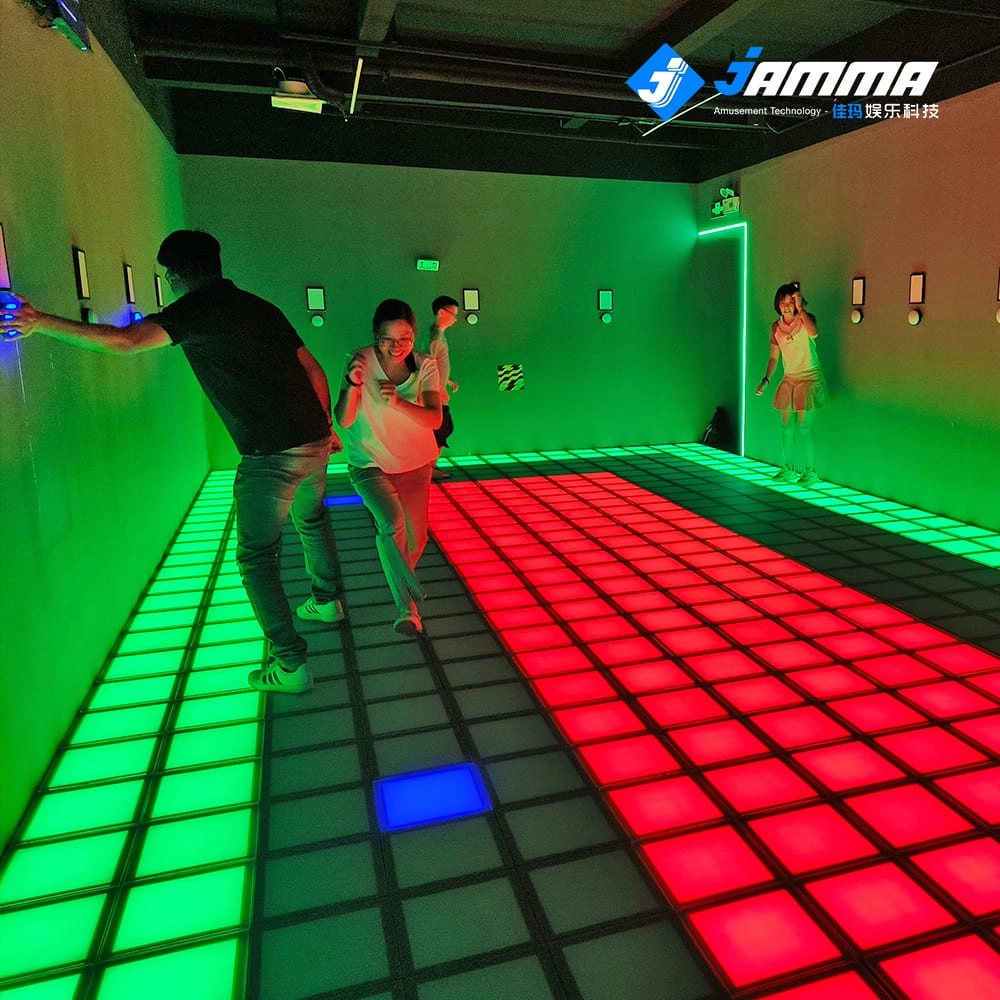
Super Grid Interactive LED Floor Activate Game Team Play
Super Grid is an immersive sports game that combines sports and technology. It integrates interactive LED lights and sensors through innovative software design, creating a fun gaming experience.
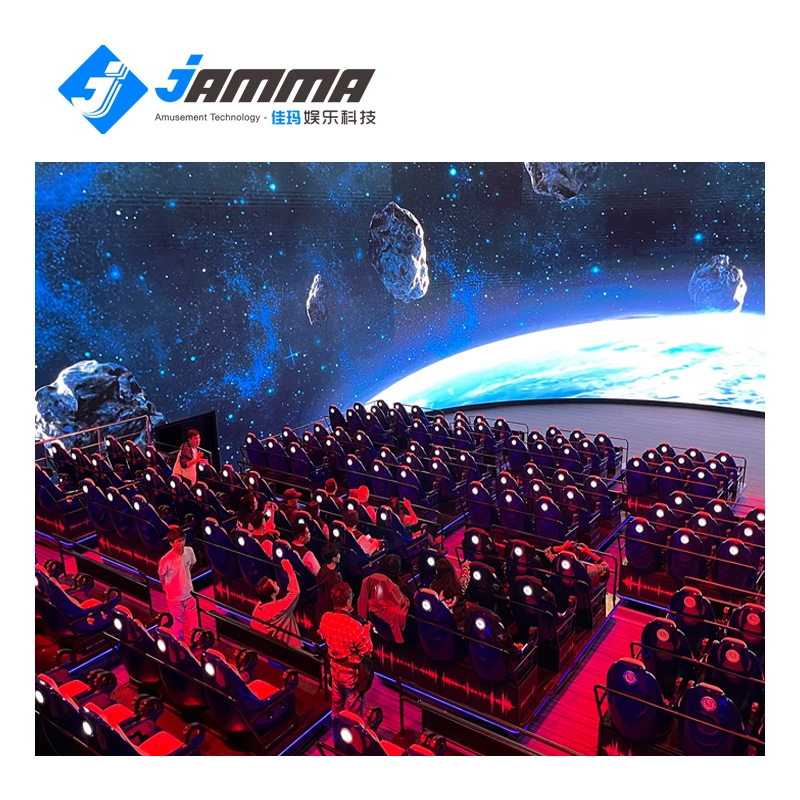
Immersive 5D/7D/9D cinema dynamic visual experience room
Compared with other types of theaters, 5D/7D/9D cinema have high technical content, prominent themes, and have a strong impact on the characteristics of the picture. With the increasing demand in the entertainment market and the continuous development of video entertainment technology, in the past, audiences would experience vibration, drop, rain, scratches and other effects in some 4D theaters, but now with 5D theaters, audiences can experience new Unique features, touch and feel effects such asreal smoke, water, snow, bubbles, smell, lightning, leg touch,camera system and more. When the audience is watching amovie, the seats and environmental effects will change into corresponding actions according to the development of the movie,allowing the audience to experience an immersive viewing experience.
