

Safety Guidelines for Multi-sport Simulator Operation
- Operational Safety Principles for Indoor Sports and Entertainment Equipment
- Site Selection and Layout: Planning for a Safe Multi-sport Simulator Environment
- Installation & Commissioning: Technical Requirements for Multi-sport Simulator Safety
- Risk Assessment & Controls for Multi-sport Simulator Operators
- Operational Procedures & Staffing: Staffing for Safe Multi-sport Simulator Use
- User Screening, Briefing & Consent for Multi-sport Simulator Participants
- Maintenance & Inspection Schedules for Multi-sport Simulator Reliability
- Emergency Procedures & Incident Response for Multi-sport Simulator Sites
- Designing for Accessibility and Inclusive Safety on Multi-sport Simulator Platforms
- Health, Hygiene & Infection Control for Multi-sport Simulator Venues
- Comparing Risk Controls: Engineering vs Administrative vs PPE for Multi-sport Simulator Safety
- Vendor Selection, Warranties & Compliance: Choosing a Responsible Multi-sport Simulator Supplier
- Data Logging, Incident Tracking & Continuous Improvement for Multi-sport Simulator Safety
- Why JAMMA Amusement Can Help: Partnering with an Experienced Multi-sport Simulator Provider
- Practical Safety Checklist: Ready-to-use for Daily Operation of a Multi-sport Simulator
- Common Questions Operators Ask About Multi-sport Simulator Safety
- FAQ — Safety Guidelines for Multi-sport Simulator Operation
- References
Operational Safety Principles for Indoor Sports and Entertainment Equipment
Site Selection and Layout: Planning for a Safe Multi-sport Simulator Environment
Choosing the right physical space is the first and most important step to reduce hazards associated with a Multi-sport Simulator. Key considerations include floor strength, ceiling height, circulation space, emergency egress, sight lines for attendants, lighting, ventilation, and acoustics. For multi-user installations or areas with moving simulation platforms, provide a safety perimeter of at least 1.2–2.0 meters around the active zone depending on device motion and player movement patterns.
Design recommendations:
- Allocate distinct waiting, briefing, and recovery zones separated from the active play area.
- Ensure floor finish is non-slip and free of tripping hazards; consider anti-fatigue mats where users stand for extended periods.
- Install clear, illuminated signage for capacity limits, age and health warnings, and emergency exits.
Installation & Commissioning: Technical Requirements for Multi-sport Simulator Safety
Installation must be performed by trained technicians following manufacturer specifications and local electrical/mechanical codes. A formal commissioning checklist should validate structural anchors, electrical protection (RCD/ground-fault protection), cable routing, ventilation for heat dissipation, and software safety interlocks. Commissioning should include a series of acceptance tests (static load, dynamic operation, emergency stop function, and fault simulation).
Document and retain a commissioning report that lists serial numbers, firmware versions, test results, and responsible technicians. This documentation supports warranty, insurance, and regulatory compliance.
Risk Assessment & Controls for Multi-sport Simulator Operators
Perform a documented risk assessment before opening to the public and revisit it whenever the hardware, software, or operating procedures change. Use a layered approach (engineering, administrative, personal protective equipment) to reduce hazards.
Common hazards and example controls:
| Hazard | Risk | Controls |
|---|---|---|
| Trips & falls | Minor to major injury | Clear floor, cable management, non-slip surfaces |
| Motion-induced injury / collision | Bruises, sprains | Safety perimeter, soft barriers, motion limits |
| Electrical faults | Shock, fire | RCDs, periodic inspection, qualified electricians |
| Cybersickness / disorientation | Nausea, falls | Pre-screening, gradual exposure, seating/rest area |
| Mechanical failure | Crush or impact | Maintenance schedule, emergency stop, redundant guards |
Operational Procedures & Staffing: Staffing for Safe Multi-sport Simulator Use
Well-defined operational procedures are critical. Create standard operating procedures (SOPs) that cover opening/closing checks, pre-session briefings, maximum occupancy, age/height restrictions, and behavior expectations. Always staff at least one trained attendant for each active simulator zone to manage sessions and respond to incidents.
Training topics for attendants:
- Equipment operation, including soft restart and emergency stop
- First aid (including management of fainting and vomiting associated with motion sickness)
- Evacuation and incident reporting procedures
- Customer screening and refusal policies (e.g., pregnant guests, those with cardiovascular or inner-ear conditions)
User Screening, Briefing & Consent for Multi-sport Simulator Participants
Establish a pre-ride screening and briefing protocol. Post visible warning signs and require verbal or written acknowledgement for higher-risk activities. Typical contraindications include pregnancy, recent surgery, heart conditions, epilepsy, severe motion sickness history, or intoxication.
Briefings should cover:
- Proper footwear and clothing
- How to use restraints and protective gear
- What to do if feeling unwell (stop immediately, notify attendant)
- Restriction on loose objects (phones, keys, jewelry)
Maintenance & Inspection Schedules for Multi-sport Simulator Reliability
Adopt a preventive maintenance program with daily, weekly, monthly, and annual tasks. Daily checklists can be completed by attendants; more technical inspections by certified technicians.
| Interval | Tasks | Who |
|---|---|---|
| Daily | Visual checks, emergency stop test, cable management, cleanliness | Attendant |
| Weekly | Motion system lubrication, fastener torque check, software updates review | Technician |
| Monthly | Electrical insulation test, structural inspection | Qualified technician |
| Annually | Full safety audit, load testing, certification review | Third-party inspector |
Emergency Procedures & Incident Response for Multi-sport Simulator Sites
Establish clear emergency procedures for power failure, medical incidents, mechanical malfunction, or fire. Key items include:
- Accessible emergency stop buttons clearly labeled and routinely tested
- Staff roles for evacuations and first response
- Accessible first-aid kits and AED (if venue risk indicates)
- Incident log with details, witness statements, and corrective actions
Run regular drills (at least biannually) so staff can execute evacuation and rescue procedures quickly and safely.
Designing for Accessibility and Inclusive Safety on Multi-sport Simulator Platforms
Design safety protocols that balance inclusion and risk. Provide accessible layouts and alternative experiences for guests with mobility impairments. When modifications are possible, ensure restraint systems and transfer aids meet safety standards and that staff are trained in safe transfer techniques.
Health, Hygiene & Infection Control for Multi-sport Simulator Venues
Shared equipment (e.g., controllers, grips, headsets) requires hygiene policies: cleaning schedules, disposable covers for handheld items, and hand-sanitizing stations. Maintain manufacturer-recommended cleaning agents to avoid damaging sensors or materials. During outbreaks of contagious disease, restrict shared items and increase cleaning frequency per public health guidance.
Comparing Risk Controls: Engineering vs Administrative vs PPE for Multi-sport Simulator Safety
Use hierarchy of controls to prioritize permanent, fail-safe measures rather than reliance on PPE or signage alone. The table below summarizes typical approaches and effectiveness.
| Control Type | Examples | Typical Effectiveness |
|---|---|---|
| Engineering | Safety perimeters, physical guards, motion limits, emergency stop interlocks | High |
| Administrative | SOPs, training, signage, supervision | Medium |
| PPE | Gloves, wrist guards, protective mats | Low to Medium |
Vendor Selection, Warranties & Compliance: Choosing a Responsible Multi-sport Simulator Supplier
When procuring a Multi-sport Simulator, evaluate vendors on documented safety features, quality management systems (e.g., ISO 9001), after-sales service, spare-parts availability, and references from similar venues. Require the vendor to provide installation guidance, a maintenance manual, firmware update policy, and training for onsite staff. Maintain copies of warranties and certificates of conformity.
Data Logging, Incident Tracking & Continuous Improvement for Multi-sport Simulator Safety
Implement a digital logbook for each unit to record operating hours, incidents, maintenance actions, firmware updates, and inspections. Analyze trends quarterly to identify recurring faults or misuse patterns and update SOPs accordingly. Continuous improvement reduces downtime and supports insurance claims and regulatory audits.
Why JAMMA Amusement Can Help: Partnering with an Experienced Multi-sport Simulator Provider
JAMMA Amusement was established in 2009, located in Guangzhou, with 15 years of experience in the amusement industry. Focusing on providing high-value, one-stop solutions for amusement projects, our products include VR games, AR sports simulators, AR interactive projection games, 5D cinema, as well as arcade games and outdoor playground equipment. We have a highly efficient international sales team dedicated to understanding customer needs and providing professional solutions and high-quality products for venues. Our industry-leading technical team keeps abreast of the latest technological trends and continuously develops and updates the products. Our manufacturing and after-sales teams are skilled and experienced, providing comprehensive technical support. We are committed to becoming a leading global provider of amusement equipment and park solutions.
JAMMA’s strengths for venues choosing Multi-sport Simulator solutions:
- Proven technical expertise in Sports Simulators, Interactive Projection Games, Immersive Attractions, and VR Games
- End-to-end project support: site surveys, installation, commissioning, staff training, and timely after-sales service
- Customizable safety features and software updates to meet venue-specific policies
- Manufacturing quality control and spare parts availability to minimize downtime
Learn more and view product lines at https://www.jammapark.com/ or contact JAMMA’s technical sales team for a site assessment and compliance-oriented deployment plan.
Practical Safety Checklist: Ready-to-use for Daily Operation of a Multi-sport Simulator
| Item | OK (Y/N) | Notes |
|---|---|---|
| Emergency stop tested | ||
| No loose cables or trip hazards | ||
| User briefing completed | ||
| Capacity and age limits posted | ||
| Sanitization of shared items | ||
| Attendant trained and on duty |
Common Questions Operators Ask About Multi-sport Simulator Safety
Operators often ask about liability, staff requirements, maintenance costs, and how to reduce injury risk. Answering these questions upfront and maintaining clear policies reduces disputes and strengthens guest trust.
FAQ — Safety Guidelines for Multi-sport Simulator Operation
- What are the top three safety measures for a Multi-sport Simulator?
Engineering controls (perimeters and interlocks), well-trained attendants, and a documented maintenance program are the top three measures.
- How often should a Multi-sport Simulator be inspected?
Daily visual checks by attendants, weekly technical checks, monthly electrical and structural inspections, and an annual third-party safety audit are recommended.
- Can people with motion sensitivity use a Multi-sport Simulator?
Guests with severe motion sickness history should be screened and may be advised to avoid immersive motion experiences. Offer gradual exposure or alternative non-motion modes where possible.
- Who is liable if a guest is injured using the simulator?
Liability depends on jurisdiction, adherence to manufacturer instructions, compliance with local codes, and whether staff followed SOPs. Proper documentation, signage, and staff training reduce legal risk.
- What PPE is appropriate for Multi-sport Simulator users?
PPE is typically limited to anti-slip footwear and optional wrist guards. Focus on engineering and administrative controls rather than heavy PPE.
- How should emergency stops be designed?
Emergency stops should be prominent, tested daily, and wired to safely bring moving systems to a controlled halt without causing secondary hazards.
For tailored guidance, installation support, or to evaluate simulator models that meet your venue’s safety and operational needs, contact JAMMA Amusement or visit our product pages: https://www.jammapark.com/.
References
- OSHA — Machine Guarding eTool. U.S. Occupational Safety and Health Administration. https://www.osha.gov/etools/machine-guarding (accessed 2025-11-28).
- OSHA — Electrical (General Industry). https://www.osha.gov/electrical (accessed 2025-11-28).
- ASTM International — Committee F24 on Amusement Rides and Devices. https://www.astm.org/COMMITTEE/F24.htm (accessed 2025-11-28).
- NASA — Simulator Sickness Questionnaire (SSQ) reference (Kolasinski). NASA Technical Report. https://ntrs.nasa.gov/api/citations/19960039078/downloads/19960039078.pdf (accessed 2025-11-28).
- Health and Safety Executive (HSE) — Manual handling. UK HSE. https://www.hse.gov.uk/msd/manualhandling.htm (accessed 2025-11-28).
- PubMed Central — Review articles on cybersickness and VR effects (for guidance on mitigating motion sickness). Example: https://www.ncbi.nlm.nih.gov/pmc/articles/PMC6364053/ (accessed 2025-11-28).
How to start the cinema 360 business in US ?
Top Bowling Equipment Manufacturers and Suppliers in us
Where to Buy commercial indoor playground equipment for sale in America
Top 10 multi sport simulator cost Manufacturers and Supplier Brands in Europe
Product details
How many players can play soccer at the same time?
Up to 4 players can play at the same time, you need to add more soccer balls.
What is the difference between 5D and 3D?
The visual of 5D cinema is the same as that of 3D, compared to 3D, it adds motion simulation and special effects, which are not available in 3D.
Does the soccer simulator configuration include the curtain?
Yes, a 4-meter-wide, 3-meter-high projection curtain is included.
Standard and other
How will it be transported?
For large items, we usually use sea freight, while for small items, we use air freight or services like DHL, FedEx, or UPS. We can also accommodate specific shipping methods based on your requirements.
Do you offer a customized service?
We can provide logo customization service for all of our products. For certain products, we can also support customization of sizes and game content. If you have any product customization requirements, please contact us and we will confirm the details with you.
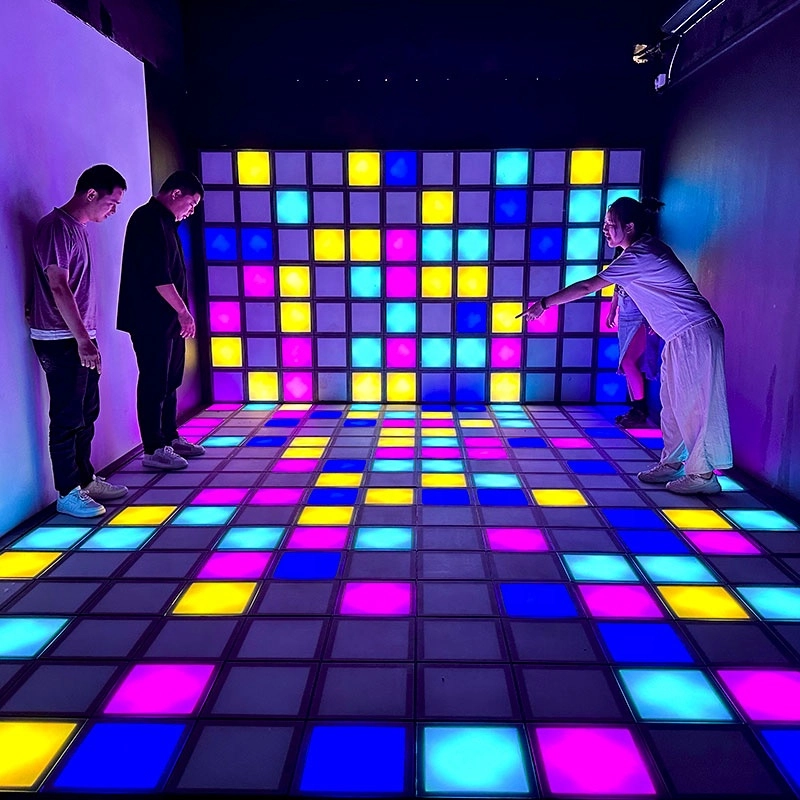
Hottest activated LED dance grid tiles floor touch games
Super Grid is an immersive sports game that combines sports and technology. It integrates interactive LED lights and sensors through innovative software design, creating a fun gaming experience.
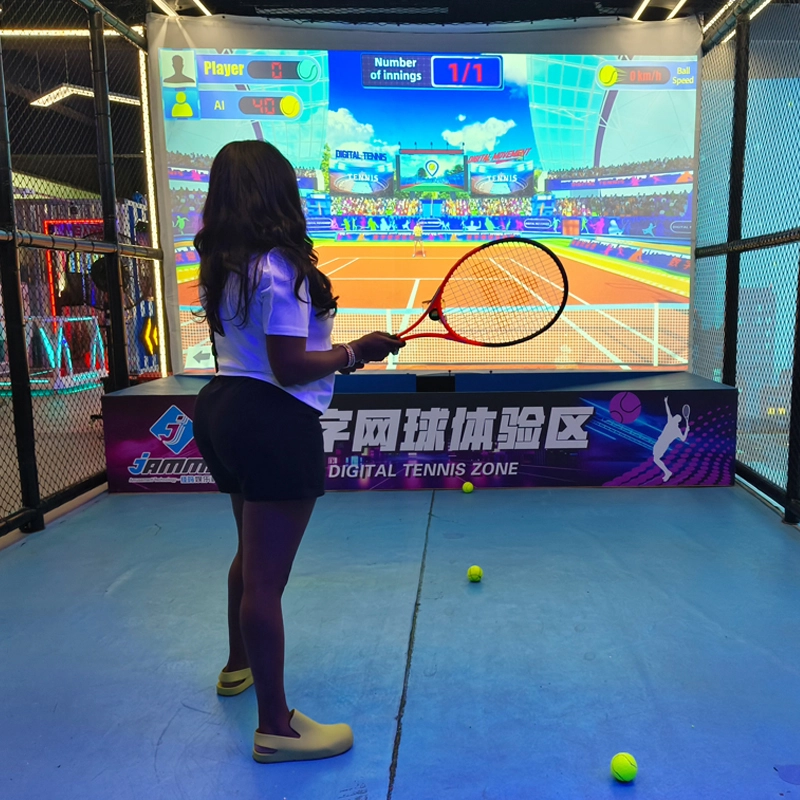
Top Indoor Tennis Racketball Training Simulator Dual Player Games
Interactive somatosensory fitness game
Combine traditional tennis sports with advanced 3D digital technology to bring customers an immersive tennis training experience
COMBINE TRADITIONAL TENNIS SPORTS WITH ADVANCED 3D DIGITAL TECHNOLOGY TO BRING CUSTOMERS AN IMMERSIVE TENNIS TRAINING EXPERIENCE INDOOR AND TENNIS EXPERIENCE HALL
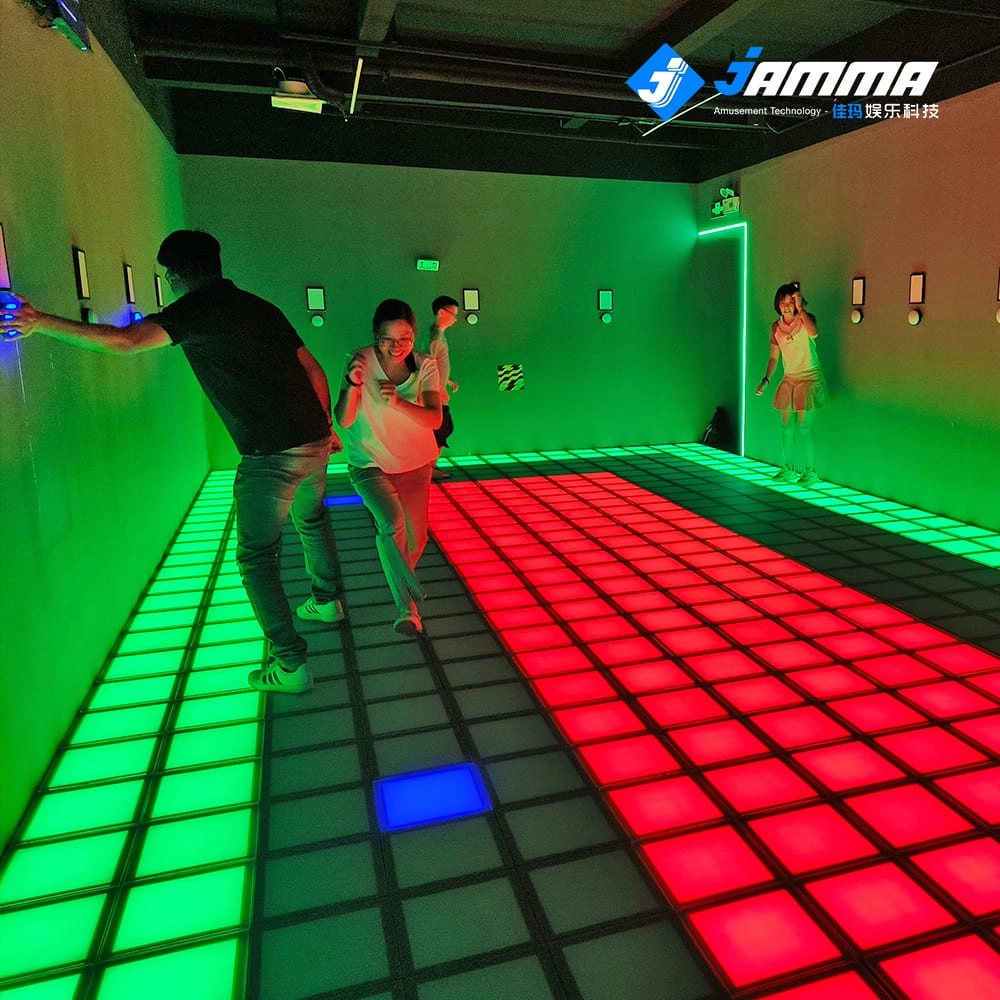
Super Grid Interactive LED Floor Activate Game Team Play
Super Grid is an immersive sports game that combines sports and technology. It integrates interactive LED lights and sensors through innovative software design, creating a fun gaming experience.
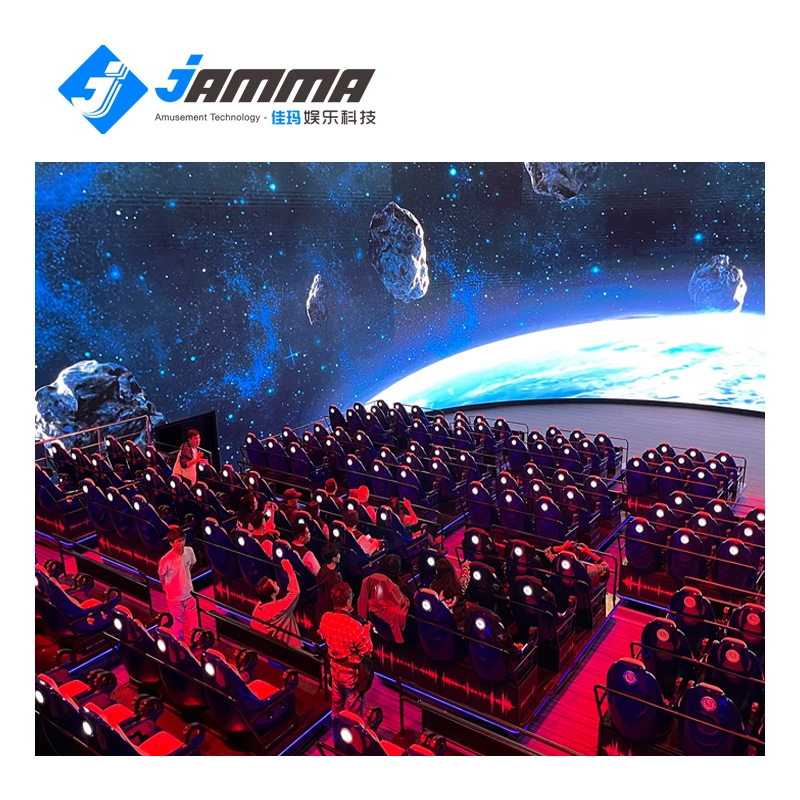
Immersive 5D/7D/9D cinema dynamic visual experience room
Compared with other types of theaters, 5D/7D/9D cinema have high technical content, prominent themes, and have a strong impact on the characteristics of the picture. With the increasing demand in the entertainment market and the continuous development of video entertainment technology, in the past, audiences would experience vibration, drop, rain, scratches and other effects in some 4D theaters, but now with 5D theaters, audiences can experience new Unique features, touch and feel effects such asreal smoke, water, snow, bubbles, smell, lightning, leg touch,camera system and more. When the audience is watching amovie, the seats and environmental effects will change into corresponding actions according to the development of the movie,allowing the audience to experience an immersive viewing experience.
