

Profitability: Indoor Playground Revenue Streams
- Maximizing Returns from Indoor Play Spaces
- Why an Indoor Playground is a Viable Business Opportunity
- Primary Revenue Streams for an Indoor Playground
- Sample Financial Model: Illustrative Monthly P&L for a 5,000 sqft Indoor Playground
- Pricing Strategies and : Increase Conversions
- Ancillary Revenue: Parties, F&B and Retail Optimization
- Revenue from Technology-driven Attractions: VR, Simulators and Interactive Projection
- Operational Costs, Profit Margins and KPIs to Monitor
- Design, Layout and Customer Flow to Maximize Revenue
- Marketing, Partnerships and Retention Tactics
- Seasonality, Risk Management and Scaling Strategies
- JAMMA Amusement — Supplier Solutions that Improve Indoor Playground Profitability
- How JAMMA’s Products Drive Revenue and Differentiate Your Indoor Playground
- Implementation Tips When Integrating JAMMA Attractions
- Actionable Next Steps to Improve Profitability
- FAQ — Common Questions About Indoor Playground Revenue Streams
- References
Maximizing Returns from Indoor Play Spaces
Why an Indoor Playground is a Viable Business Opportunity
Indoor Playground operators benefit from year-round demand, predictable footfall within family demographics, and multiple monetizable touchpoints per visit. Parents seek safe, weather-independent play and social experiences for children; that creates recurring revenue opportunities through admissions, parties, memberships and food & beverage. Understanding the distinct revenue streams and the levers that grow per-visitor spend is essential to make an Indoor Playground profitable.
Primary Revenue Streams for an Indoor Playground
Successful Indoor Playgrounds combine high-frequency baseline revenue (walk-in admissions, memberships) with high-margin episodic revenue (birthday parties, private events) and scalable ancillary streams (F&B, retail, attractions like VR and simulators). The list below outlines the common income sources and how they typically perform:
| Revenue Stream | Description | Typical % of Total Revenue (range) |
|---|---|---|
| Walk-in Admissions | Pay-per-entry or hourly passes for children and caregivers. | 25–40% |
| Birthday Parties & Private Events | Packages (room, catering, exclusive play time) and add-ons. | 15–30% |
| Food & Beverage (F&B) | Cafe operations, snacks, healthy meal options—high margin if managed well. | 10–20% |
| Attractions & Arcade (VR, Simulators, Redemption) | Pay-per-play attractions, time-based experiences, coin-operated games. | 8–20% |
| Memberships & Passes | Monthly/annual passes with perks to increase loyalty and predictable cashflow. | 5–15% |
| Retail & Merchandise | Toys, branded items, party supplies. | 3–8% |
| Corporate Events & Rentals | School field trips, corporate family days, after-hours venue hire. | 2–10% |
| Sponsorship & Advertising | Local brand partnerships, in-venue promotions. | 1–5% |
These percentages are directionally useful: the optimal mix depends on location, size, customer profile and the attractions you operate.
Sample Financial Model: Illustrative Monthly P&L for a 5,000 sqft Indoor Playground
The table below is an illustrative example to show how various streams add up. Assumptions are stated so you can adapt to your market.
| Line Item | Assumption | Monthly Amount (USD) |
|---|---|---|
| Walk-in Admissions | Avg 180 visits/day @ $8 avg ticket | $43,200 |
| Birthday Parties | 15 parties/month @ $350 avg package | $5,250 |
| F&B | Avg $4.5 per visitor + party catering | $12,000 |
| Attractions & VR | Pay-per-play: 1,200 plays/month @ $4 | $4,800 |
| Memberships & Passes | 120 members avg $25/month | $3,000 |
| Retail & Misc. | Merchandise and small sales | $1,500 |
| Gross Revenue (illustrative) | $69,750 |
Note: This model is illustrative. Actual performance will vary by city, rent, seasonality and local competition. Use this as a template to plug in your local assumptions.
Pricing Strategies and : Increase Conversions
Most parents convert when perceived value and convenience are clear. Pricing strategies that work for Indoor Playgrounds include:
- Tiered pricing: hourly passes, day passes, family day passes and peak/off-peak pricing.
- Bundling: combine admissions with food or a VR attraction for a higher average transaction value (ATV).
- Memberships and loyalty: offer monthly/annual plans with booking priority for parties.
- Dynamic promotions: weekday discounts for caregivers, school-day programs and seasonal packages.
Use an online booking system with clear CTA buttons like Book Party, Buy Pass or Reserve VR Session to capture and reduce friction.
Ancillary Revenue: Parties, F&B and Retail Optimization
Birthday parties are revenue multipliers: the base fee often covers space and staff while add-ons (cake, entertainment, photo packages) drive high margin. Focus on standardized packages with clear upsell options.
- F&B: control costs with a limited menu and pre-packaged party choices. Target 60–70% gross margin on beverages and snacks.
- Retail: curate impulse items at the checkout—small toys, branded apparel, party favors.
- Cross-sell: offer coupons for future visits, upgrade party guests to VIP experiences (e.g., VR sessions) at checkout.
Revenue from Technology-driven Attractions: VR, Simulators and Interactive Projection
Adding technology-driven attractions (VR games, sports simulators, interactive projection) raises ATV by offering High Quality paid experiences. These attractions also differentiate your Indoor Playground and encourage repeat visits.
| Attraction Type | Typical Installation Cost (USD) | Avg Price per Play | Capacity / Hour | Payback (estimate) |
|---|---|---|---|---|
| Single-unit VR Game | $15,000–$40,000 | $4–$8 | 6–12 plays/hr | 12–36 months |
| Sports Simulator (golf/soccer) | $25,000–$80,000 | $8–$20 | 4–8 plays/hr | 18–36 months |
| Interactive Projection Game | $8,000–$40,000 | $3–$7 (or part of admission) | Continuous/group play | 12–30 months |
These ranges are industry estimates. The actual payback depends on utilization rates, pricing strategy, maintenance costs and local demand. Combining several attractions can create a tiered experience (standard admission + High Quality add-on) and elevate per-visit spend.
Operational Costs, Profit Margins and KPIs to Monitor
Key cost centers include rent, staff, utilities, insurance, maintenance and equipment depreciation. Typical target margins for a well-run Indoor Playground (after operating expenses) range from 10% to 25% net margin, depending on scale and F&B efficiency.
| Metric / KPI | Target / Benchmark |
|---|---|
| Average Transaction Value (ATV) | Increase by 10–25% with upsells |
| Walk-in Conversion Rate (online -> visit) | 20–40% (varies by channel) |
| Monthly Utilization (capacity) | Peak 70–90%, off-peak 30–50% |
| Food Gross Margin | 60–75% |
| Labor as % of Revenue | 20–35% |
Track weekly bookings, party conversion rate, revenue per square foot and attraction utilization to make timely operational decisions.
Design, Layout and Customer Flow to Maximize Revenue
Design affects both safety and spend. Key principles:
- Zoning: separate free-play, toddler, and high-energy areas to sell tiered experiences and safer supervision.
- Visibility: F&B and retail should be visible from entrance and seating so caregivers pass them frequently.
- Attraction placement: High Quality attractions (VR, simulators) near checkout to ease upsell and bookings.
- Flexible spaces: convertible rooms for parties or corporate rentals increase utilization.
Marketing, Partnerships and Retention Tactics
Channels and tactics to fill seats and reduce churn:
- Local SEO: optimize for “Indoor Playground near me,” “kids birthday party venue,” and target Google My Business with bookings enabled.
- School and daycare partnerships: weekday programs and field trip packages.
- Membership tiers and prepaid passes: improve cashflow and repeat visitation.
- Social proof: highlight safety certifications, staff training and parental reviews.
- Paid local ads with strong CTAs (Book Party, Buy Pass, Reserve VR) to capture high-intent customers.
Seasonality, Risk Management and Scaling Strategies
Seasonal drops can be mitigated by weekday programs (preschool play clubs), special events (holiday-themed attractions) and diversification (mobile events, pop-ups). Consider franchising or multi-site rollout once you standardize operations, packages and staff training to scale faster and achieve economies of scale.
JAMMA Amusement — Supplier Solutions that Improve Indoor Playground Profitability
JAMMA Amusement was established in 2009, located in Guangzhou, with 15 years of experience in the amusement industry. Focusing on providing high-value, one-stop solutions for amusement projects, our products include VR games, AR sports simulators, AR interactive projection games, 5D cinema, as well as arcade games and outdoor playground equipment. We have a highly efficient international sales team dedicated to understanding customer needs and providing professional solutions and high-quality products for venues. Our industry-leading technical team keeps abreast of the latest technological trends and continuously develops and updates the products. Our manufacturing and after-sales teams are skilled and experienced, providing comprehensive technical support. We are committed to becoming a leading global provider of amusement equipment and park solutions. Our website is https://www.jammapark.com/.
How JAMMA’s Products Drive Revenue and Differentiate Your Indoor Playground
Choosing the right equipment partner affects capacity, uptime and novelty value. JAMMA’s strengths for Indoor Playgrounds include:
- Product portfolio focused on Sports Simulators, Interactive Projection Games, Immersive Attractions and VR Games — enabling tiered pricing and High Quality add-ons that increase ATV.
- One-stop project delivery: reduces procurement complexity and helps control installation timelines and costs.
- Technical R&D and updates: keeps attractions fresh to encourage repeat visits and seasonal refreshes.
- Experienced after-sales and manufacturing teams: reduce downtime and protect revenue.
These competitive advantages help operators accelerate ROI on higher-ticket attractions while maintaining strong baseline revenues from admissions and parties.
Implementation Tips When Integrating JAMMA Attractions
- Start with 1–2 High Quality attractions (VR or simulator) to test demand and refine pricing.
- Bundle attraction sessions with party packages to produce High Quality party tiers.
- Use analytics (plays per hour, conversion to upgrade) to optimize slot pricing and staffing.
- Plan maintenance and spare parts in the OPEX model to avoid unexpected downtime.
Actionable Next Steps to Improve Profitability
1) Build a 12-month financial model using local assumptions: footfall, rent, staff and menu margins. 2) Phase in High Quality attractions with clear pricing and monitoring. 3) Standardize party packages and train staff on upsell scripts. 4) Optimize layout to increase visibility of F&B and retail. 5) Launch local SEO and school outreach programs to stabilize weekday demand.
If you want professional help selecting attractions and modeling ROI for your venue, JAMMA Amusement’s team can evaluate your space and propose a tailored equipment and revenue strategy. Visit https://www.jammapark.com/ to contact our sales team and view product options.
FAQ — Common Questions About Indoor Playground Revenue Streams
- Q: What is the most profitable revenue stream for an Indoor Playground?
A: Profitability depends on your model. Walk-in admissions often provide the largest steady revenue, while birthday parties and F&B typically deliver the highest margins per event. Combining both consistently yields the best results.
- Q: How much does a VR attraction increase per-visit revenue?
A: A single VR attraction can increase ATV by 10–30% depending on pricing and utilization. Success depends on placement, marketing and easy booking/upsell at point-of-sale.
- Q: How should I price birthday party packages?
A: Price by value tier—basic, High Quality and VIP. Include exclusive play time, food, host service, and optional add-ons like VR sessions or photo packages. Compare competitor pricing and aim for 20–40% margin after labor and F&B costs.
- Q: What KPIs should I monitor weekly?
A: Visits/day, ATV, party bookings/conversion rate, attraction utilization, food margin and labor % of revenue. These KPIs let you react quickly to demand shifts.
- Q: Is franchising a good way to scale an Indoor Playground?
A: Franchising can accelerate growth but requires rigorous standardization of operations, training, supply chains and marketing. Validate the concept with multiple company-operated sites first.
- Q: How do I choose between buying vs leasing attractions like VR or simulators?
A: Buying accelerates payback if utilization is high; leasing reduces upfront capital and can simplify upgrades. Compare total cost of ownership and expected utilization before deciding.
Contact JAMMA Amusement for tailored solutions and ROI modeling: https://www.jammapark.com/ — our international sales team can help assess your venue and recommend equipment and commercial strategies.
References
- IAAPA (International Association of Amusement Parks and Attractions) — https://www.iaapa.org/ (accessed 2025-12-09)
- Statista — Family Entertainment Centers topic page: https://www.statista.com/topics/9743/family-entertainment-centers/ (accessed 2025-12-09)
- Grand View Research — Indoor Playground Market Analysis: https://www.grandviewresearch.com/industry-analysis/indoor-playground-market (accessed 2025-12-09)
- Wikipedia — Amusement arcade: https://en.wikipedia.org/wiki/Amusement_arcade (accessed 2025-12-09)
- Industry case studies and supplier pages (example JAMMA Amusement): https://www.jammapark.com/ (accessed 2025-12-09)
What are the application scenarios of ball shoot activate game?
The golf simulator projectors Cost Guide | JAMMA Ultimate Insights
How to start the led interactive floor screen business ?
Best bowling lane equipment manufacturers and supplier brands in us
Product details
How many players can play soccer at the same time?
Up to 4 players can play at the same time, you need to add more soccer balls.
What is the difference between 5D and 3D?
The visual of 5D cinema is the same as that of 3D, compared to 3D, it adds motion simulation and special effects, which are not available in 3D.
Are glasses required to see a 5D film?
Audience needs to wear 3D glasses while watching movie, but not VR glasses.
Standard and other
How long is the warranty period?
Our products have a one-year warranty period. During the warranty period, if there are any issues with the product that are not caused by human error, we can replace the parts for you free of charge. If the problems are caused by improper use, you will need to purchase the parts and bear the shipping costs yourself.
Are you an amusement park equipment manufacturer?
Yes. We have our own production factory, which is located in Guangzhou, China, covering an area of over 2,000 square meters. With our professional production team, we are able to ensure high quality and on-time delivery of our products. All products have undergone rigorous testing and quality inspection. You are welcome to visit our factory.
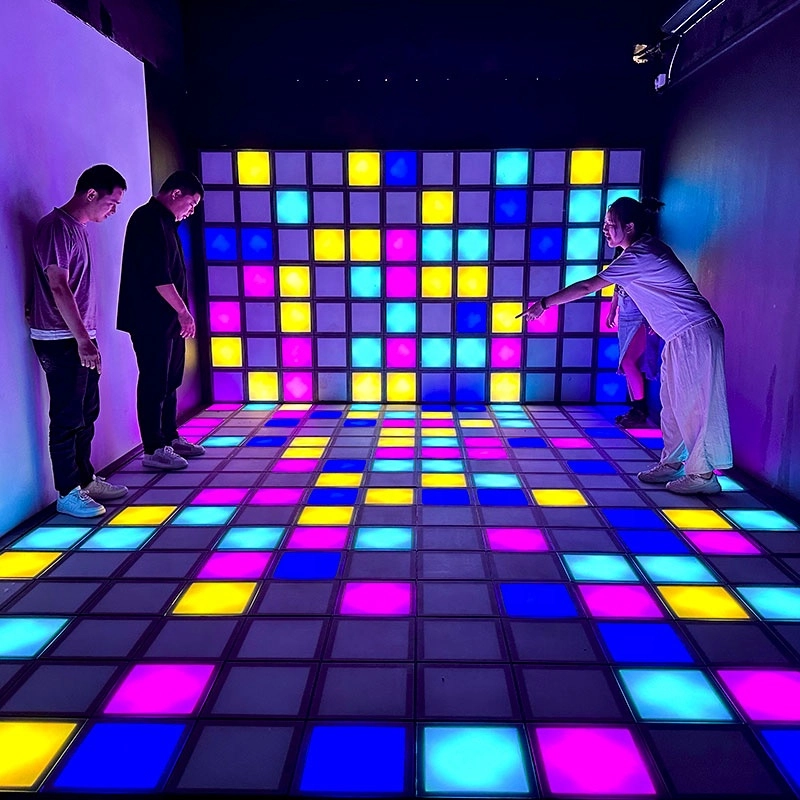
Hottest activated LED dance grid tiles floor touch games
Super Grid is an immersive sports game that combines sports and technology. It integrates interactive LED lights and sensors through innovative software design, creating a fun gaming experience.
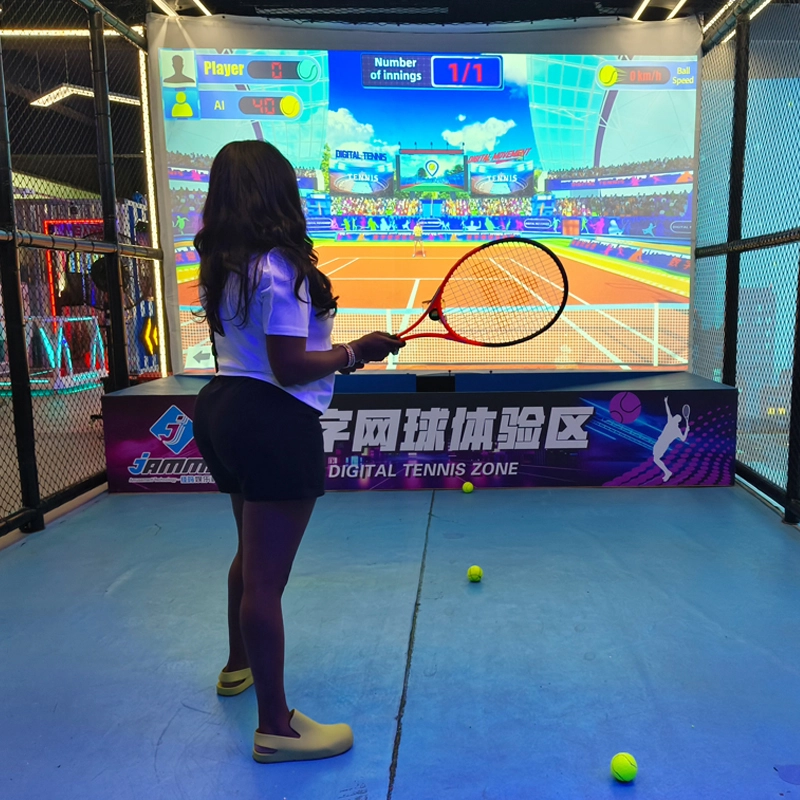
Top Indoor Tennis Racketball Training Simulator Dual Player Games
Interactive somatosensory fitness game
Combine traditional tennis sports with advanced 3D digital technology to bring customers an immersive tennis training experience
COMBINE TRADITIONAL TENNIS SPORTS WITH ADVANCED 3D DIGITAL TECHNOLOGY TO BRING CUSTOMERS AN IMMERSIVE TENNIS TRAINING EXPERIENCE INDOOR AND TENNIS EXPERIENCE HALL
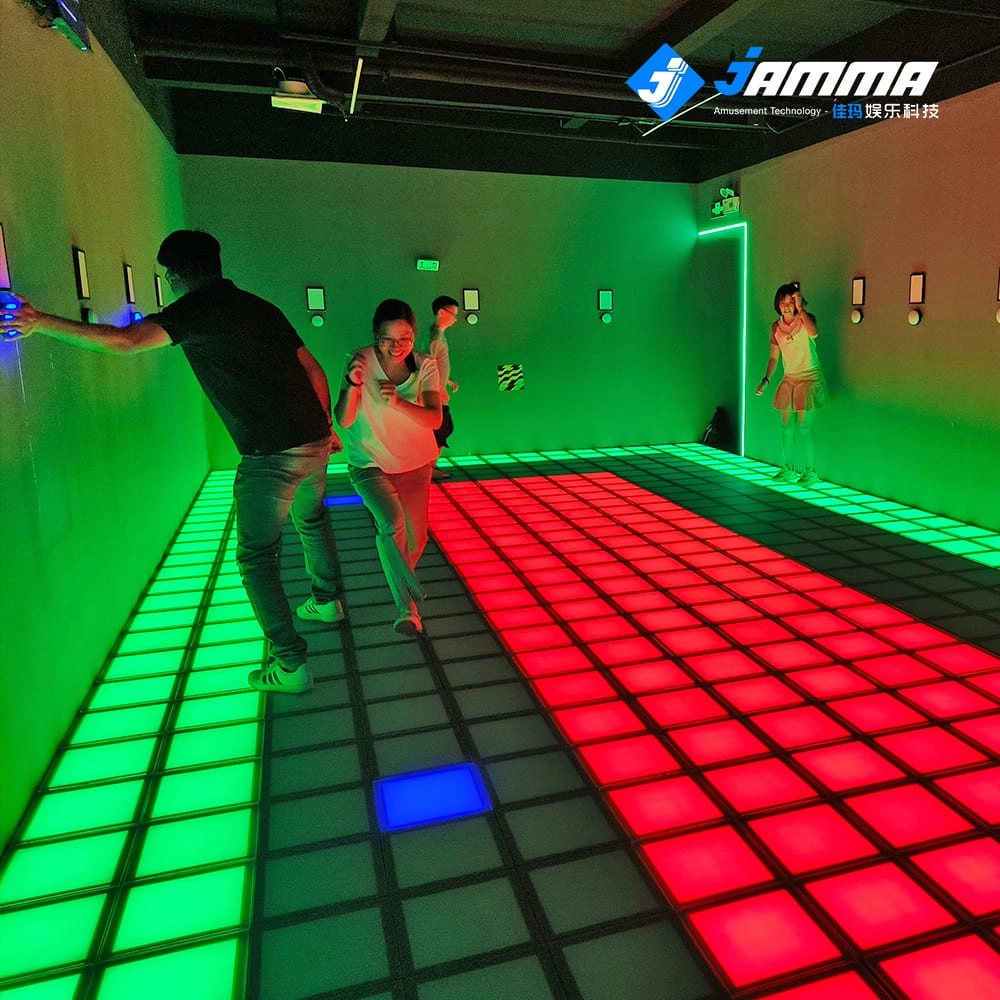
Super Grid Interactive LED Floor Activate Game Team Play
Super Grid is an immersive sports game that combines sports and technology. It integrates interactive LED lights and sensors through innovative software design, creating a fun gaming experience.
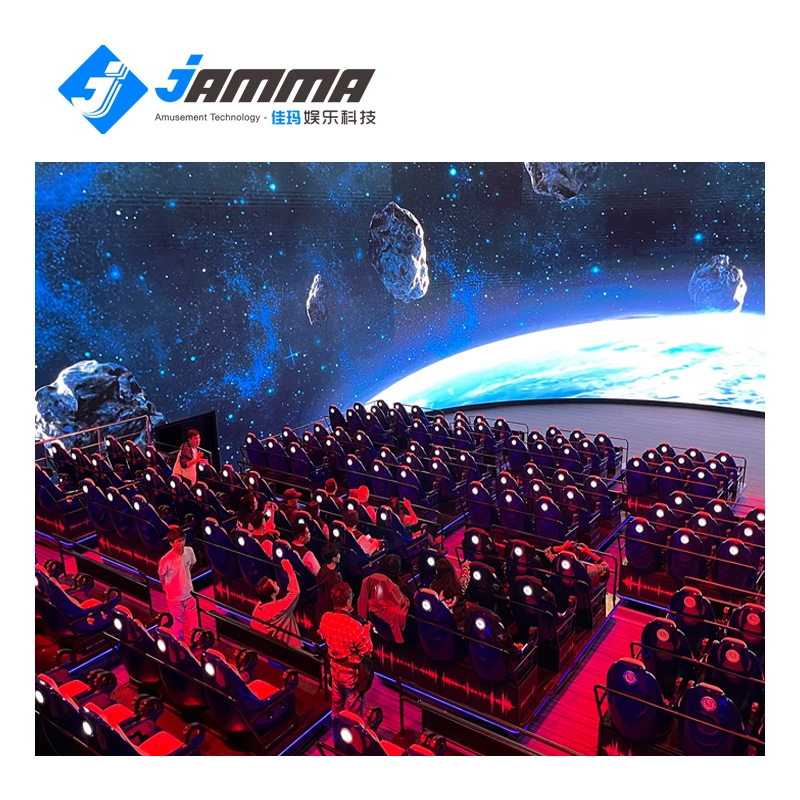
Immersive 5D/7D/9D cinema dynamic visual experience room
Compared with other types of theaters, 5D/7D/9D cinema have high technical content, prominent themes, and have a strong impact on the characteristics of the picture. With the increasing demand in the entertainment market and the continuous development of video entertainment technology, in the past, audiences would experience vibration, drop, rain, scratches and other effects in some 4D theaters, but now with 5D theaters, audiences can experience new Unique features, touch and feel effects such asreal smoke, water, snow, bubbles, smell, lightning, leg touch,camera system and more. When the audience is watching amovie, the seats and environmental effects will change into corresponding actions according to the development of the movie,allowing the audience to experience an immersive viewing experience.
