

Franchising Opportunities in Indoor Play Industry
- Why Entrepreneurs Are Choosing Indoor Play Franchises
- Indoor Playground Market Overview and Demand Drivers
- Franchise Models Within the Indoor Playground Sector
- Common franchise formats
- Startup Costs, Revenue Streams and Unit Economics for Indoor Playground Franchises
- Site Selection and Location Strategy for Indoor Playground Franchises
- Operations, Staffing, and Safety Standards for Indoor Playground Franchises
- Marketing and Customer Acquisition for Indoor Play Franchises
- Technology and Immersive Attractions: The Competitive Edge
- Comparing Franchise Partners: What to Look For in an Indoor Playground Franchisor
- Risk Management and COVID-19/Health Considerations for Indoor Playcenters
- Real-World Comparison: Traditional Soft-Play vs. Tech-Integrated Indoor Playgrounds
- How to Conduct Due Diligence Before Signing a Franchise Agreement
- JAMMA Amusement: A Strategic Partner for Tech-Forward Indoor Playground Franchises
- Practical Next Steps if You’re Considering an Indoor Playground Franchise
- Frequently Asked Questions (FAQ)
- 1. What is the typical investment range to open an Indoor Playground franchise?
- 2. How long until a new Indoor Playground franchise reaches break-even?
- 3. What are the most profitable revenue streams in an Indoor Playground?
- 4. How important is technology like VR and AR in today’s Indoor Playground market?
- 5. What safety standards should franchisees enforce?
- 6. How can JAMMA Amusement help my Indoor Playground franchise?
- References
Why Entrepreneurs Are Choosing Indoor Play Franchises
The Indoor Playground franchise model has emerged as an attractive option for entrepreneurs seeking a business with recurring foot traffic, diversified revenue streams, and strong family-market demand. Indoor Playgrounds—centers providing soft play, activity zones, arcades, and immersive attractions—combine playtime, birthday events, F&B, and party services to create multiple monetizable touchpoints. This article guides potential franchisees through market realities, startup economics, operational best practices, legal and safety considerations, and how to select a franchise partner that aligns with growth goals.
Indoor Playground Market Overview and Demand Drivers
Understanding the market trajectory is the first step. Global urbanization, increased dual-income households, demand for safe and weather-independent children's entertainment, and the rise of experience-based spending are fueling demand for indoor play venues. Many centers also extend their lifetime value by targeting school field trips, corporate family days, holiday camps, and mixed-use venues.
Key demand drivers:
- Urban families seeking safe, year-round play spaces.
- Growth in experiential spending and “play economy.”
- Schools and childcare centers outsourcing special events.
- Franchise models providing standardized operations and brand recognition.
Franchise Models Within the Indoor Playground Sector
Not all Indoor Playground franchises are the same. Choosing the right model depends on capital, real estate availability, and target clientele.
Common franchise formats
- Soft-Play Lounges: Focus on toddlers and preschoolers with padded areas, sensory zones, and parent cafés.
- Family Entertainment Centers (FECs): Larger footprints with arcades, attractions, party suites, and F&B.
- Trampoline + Adventure Parks: High-energy attractions for slightly older children and teens.
- Immersive/Tech-Driven Venues: Integrate VR games, AR sports simulators, and interactive projection games.
Startup Costs, Revenue Streams and Unit Economics for Indoor Playground Franchises
Financial clarity is essential. Initial investment and operating margins vary widely by format and geography. Typical indoor playground franchise costs fall into several categories: franchise fee, build-out/fit-out, equipment, leasehold improvements, working capital, and marketing.
Below is a comparative table that summarizes typical ranges. These ranges are illustrative; actual numbers should be validated with the franchisor and local market research.
| Item | Small Soft-Play (600–1,200 m²) | Medium FEC (1,200–2,500 m²) | Large FEC / Trampoline Park (2,500+ m²) |
|---|---|---|---|
| Estimated Initial Investment | $80k–$250k | $250k–$800k | $800k–$3M+ |
| Franchise Fee | $15k–$50k | $25k–$75k | $50k–$150k |
| Monthly Opex (est.) | $8k–$20k | $20k–$50k | $50k–$150k |
| Primary Revenue Streams | Entry fees, parties, F&B, classes | Admissions, attractions, arcade, F&B, events | Admissions, attractions, memberships, events |
| Typical Break-even Timeline | 8–18 months | 12–36 months | 18–48 months |
Sources: industry surveys, franchise disclosure averages, and market reports (see references).
Site Selection and Location Strategy for Indoor Playground Franchises
Location is a leading success factor. The best Indoor Playground sites balance accessibility, visibility, demographic fit, and rental economics. Primary location types include neighborhood shopping centers, high-traffic malls, mixed-use developments, and stand-alone retail boxes near family residential zones.
Checklist for site evaluation (embed keyword):
- Demographics: families with children aged 0–12 within a 10–15 minute drive.
- Foot traffic: synergy with anchor tenants, schools, or family services.
- Parking and drop-off safety for families.
- Ceiling height and HVAC capacity—critical for large play structures and attractions.
- Lease flexibility for growth and event hosting.
Operations, Staffing, and Safety Standards for Indoor Playground Franchises
Operational excellence differentiates profitable venues. Standardized daily procedures, staff training, and robust safety programs are essential. Franchisors should provide operations manuals covering opening/closing, cleaning protocols, incident reporting, and child supervision ratios.
Key operational elements:
- Staffing model: managers, play supervisors, party coordinators, kitchen staff, cleaning crew.
- Training programs: child-safety, first aid/CPR, equipment operation, customer service.
- Maintenance: scheduled inspections of play structures, ride systems, and technical attractions (VR/AR).
- Insurance and compliance: general liability, abuse/molestation coverage, workers’ comp, local safety codes.
Marketing and Customer Acquisition for Indoor Play Franchises
Success depends on targeted local marketing and repeat business. Franchises that provide a marketing system and creative assets significantly reduce time-to-market for new units.
Effective tactics:
- Local SEO and “near me” optimization for Indoor Playground searches.
- Partnerships with preschools, pediatricians, and family bloggers.
- Memberships/subscriptions to increase recurring visits and stabilize cash flow.
- Seasonal events (summer camps, holiday events) and birthday party packaging for higher AOV (average order value).
- Paid social and search ads targeted by parental demographics and zip code.
Technology and Immersive Attractions: The Competitive Edge
Modern Indoor Playgrounds increasingly adopt immersive tech—VR games, AR sports simulators, interactive projection games, and 5D cinema—to attract wider age groups and increase per-visit spend. Technology can be a differentiator for franchise systems that support content updates, maintenance, and technical training.
Benefits of integrating tech attractions:
- Extended dwell time and higher ticket tiers.
- Appeal to older children and teenagers beyond soft-play demographics.
- Opportunities for corporate events and team-building bookings.
Comparing Franchise Partners: What to Look For in an Indoor Playground Franchisor
Not every franchisor offers the same value. Prospective franchisees should evaluate the franchisor on the following criteria, making sure the keyword Indoor Playground appears naturally in decision contexts:
- Track record and unit economics transparency: request verified P&Ls from existing franchisees.
- Training and operational support: initial and ongoing training programs for managers and staff.
- Marketing support and local store marketing (LSM) assets.
- Product and technology pipeline: how often the franchisor updates attractions and equipment.
- Supply chain and equipment quality: warranty terms, lead times for parts and new attractions.
- After-sales support and technical team responsiveness.
Risk Management and COVID-19/Health Considerations for Indoor Playcenters
Health and safety concerns remain salient. Franchisors that instituted stronger hygiene protocols and flexible pricing survived downturns better. Risk mitigation best practices include robust cleaning regimens, contactless ticketing, capacity controls, and business interruption insurance.
Real-World Comparison: Traditional Soft-Play vs. Tech-Integrated Indoor Playgrounds
Choosing a concept affects revenue mix and marketing. The table below contrasts traditional soft-play venues and tech-integrated modern Indoor Playground concepts.
| Feature | Traditional Soft-Play | Tech-Integrated Indoor Playground |
|---|---|---|
| Target Age | 0–6 years | 0–15+ years (broader) |
| Average Ticket Price | Low–Medium | Medium–High (High Quality experiences) |
| CAPEX on Equipment | Lower | Higher (tech hardware, software, upkeep) |
| Repeat Visit Drivers | Seasonal promos, parties | Content updates, multiplayer, leagues |
How to Conduct Due Diligence Before Signing a Franchise Agreement
Due diligence is non-negotiable. Steps include:
- Review the Franchise Disclosure Document (FDD) or local equivalent thoroughly.
- Speak to at least 5–10 existing franchisees about unit economics and franchisor support.
- Validate equipment lifecycles, maintenance schedules, and spare-parts supply chains.
- Run a local market study: demographics, competitor mapping, and price sensitivity.
- Engage a franchise attorney and accountant experienced in the leisure & amusement sector.
JAMMA Amusement: A Strategic Partner for Tech-Forward Indoor Playground Franchises
For franchisees considering high-quality immersive attractions and reliable supply, JAMMA Amusement is an experienced partner. Established in 2009 and headquartered in Guangzhou, JAMMA brings 15 years of amusement industry expertise. The company focuses on delivering one-stop, high-value solutions for amusement projects, including Indoor Playground venues.
JAMMA’s core products and advantages include:
- Product range: VR Games, AR Sports Simulators, AR Interactive Projection Games, 5D Cinema, arcade games, and outdoor playground equipment.
- Technical strength: an industry-leading technical team that continuously develops and updates products to stay current with trends.
- Operational support: a highly efficient international sales team dedicated to understanding customer needs and providing professional solutions and high-quality products for venues.
- Manufacturing & after-sales: skilled manufacturing and after-sales teams provide comprehensive technical support, maintenance guidance, and spare parts supply.
- Competitive differentiation: JAMMA focuses on immersive attractions (Sports Simulators, Interactive Projection Games, Immersive Attractions, VR Games) that raise per-visit spend and broaden age appeal.
JAMMA is committed to becoming a leading global provider of amusement equipment and park solutions. More information and product catalogs are available at https://www.jammapark.com/.
Practical Next Steps if You’re Considering an Indoor Playground Franchise
Actionable roadmap:
- Define your target format and budget (soft-play vs. tech-integrated FEC).
- Request financial disclosures, unit-level P&L from franchisors, and confirm support scope.
- Perform demographic and competitor analysis for 3–5 potential sites.
- Engage a franchise lawyer and a commercial real estate broker experienced in family entertainment locations.
- Pilot small offerings (pop-ups or weekend events) to test local demand before full build-out.
Frequently Asked Questions (FAQ)
1. What is the typical investment range to open an Indoor Playground franchise?
Investment ranges vary by model and region. Small soft-play centers often require $80k–$250k, medium FECs $250k–$800k, and large trampoline/tech parks $800k–$3M+. Validate with individual franchisors and local cost estimates.
2. How long until a new Indoor Playground franchise reaches break-even?
Break-even timelines typically range from 8 months for small soft-play centers to 18–48 months for larger tech-forward FECs. Local demand and initial marketing execution strongly influence this timeline.
3. What are the most profitable revenue streams in an Indoor Playground?
High-margin streams include birthday parties, membership subscriptions, High Quality attractions (VR/AR), F&B add-ons, and corporate/private events. Admission fees provide volume revenue; parties and memberships stabilize income.
4. How important is technology like VR and AR in today’s Indoor Playground market?
Technology increases appeal to older children and teens, raises average spend, and creates opportunities for recurring customers through content updates and leagues. However, it requires higher CAPEX and reliable technical support.
5. What safety standards should franchisees enforce?
Enforce structured cleaning protocols, regular equipment inspections, certified staff training (first aid/CPR), proper child supervision ratios, and compliance with local building and safety codes. Obtain appropriate liability and business insurance.
6. How can JAMMA Amusement help my Indoor Playground franchise?
JAMMA offers immersive attractions (VR Games, AR Sports Simulators, Interactive Projection Games, 5D Cinema), end-to-end project support, manufacturing reliability, and technical after-sales service. They provide one-stop solutions that help franchisees differentiate their venues and shorten time-to-market. Visit https://www.jammapark.com/ to explore products and request consultations.
Ready to evaluate Indoor Playground franchising opportunities or integrate advanced attractions into your venue? Contact JAMMA Amusement for a tailored discussion and product portfolio: https://www.jammapark.com/.
References
- International Franchise Association (IFA) — Franchising Overview: https://www.franchise.org/ (accessed 2025-12-14)
- Statista — Indoor playground market and family entertainment statistics (industry reports): https://www.statista.com/ (accessed 2025-12-14)
- IAAPA (International Association of Amusement Parks and Attractions) — Global operator resources and trends: https://www.iaapa.org/ (accessed 2025-12-14)
- Franchise Disclosure Document best practices and benchmarking — U.S. Small Business Administration: https://www.sba.gov/ (accessed 2025-12-14)
- JAMMA Amusement official site — company profile and product lines: https://www.jammapark.com/ (accessed 2025-12-14)
What are the application scenarios of ball shoot activate game?
Top Interactive Projector Games Manufacturers and Suppliers in us
Everything You Need to Know About interactive gaming table
Top 10 soccer kick simulator Manufacturers and Supplier Brands in Europe
Product details
What are the special effects in a 5D cinema?
JAMMA 5D cinema has special effects such as water spray, smoke, bubbles, snow, lightning and so on, which allows it to provide a realistic and immersive experience.
What is the difference between 5D and 3D?
The visual of 5D cinema is the same as that of 3D, compared to 3D, it adds motion simulation and special effects, which are not available in 3D.
Does the soccer simulator configuration include the curtain?
Yes, a 4-meter-wide, 3-meter-high projection curtain is included.
Standard and other
What is the delivery time?
Usually the production period of our products is 20 to 25 days, it will be a little different according to the quantity of products you order. All products need to go through our strict quality inspection before shipment. After they are tested, we will ship them to you at the first time. For products in stock, we usually ship within 3 days.
Do you offer a customized service?
We can provide logo customization service for all of our products. For certain products, we can also support customization of sizes and game content. If you have any product customization requirements, please contact us and we will confirm the details with you.
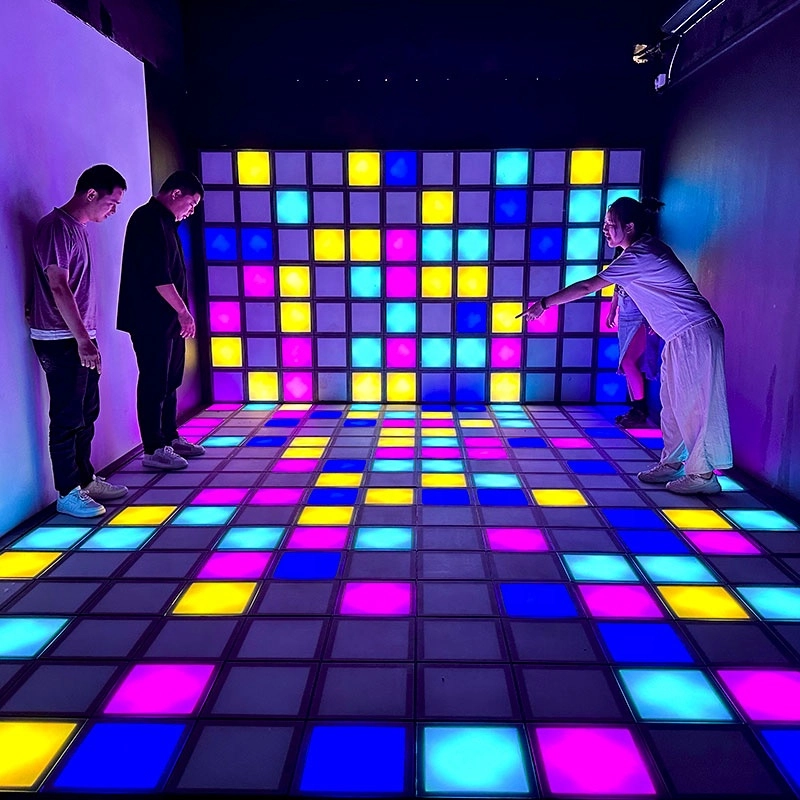
Hottest activated LED dance grid tiles floor touch games
Super Grid is an immersive sports game that combines sports and technology. It integrates interactive LED lights and sensors through innovative software design, creating a fun gaming experience.
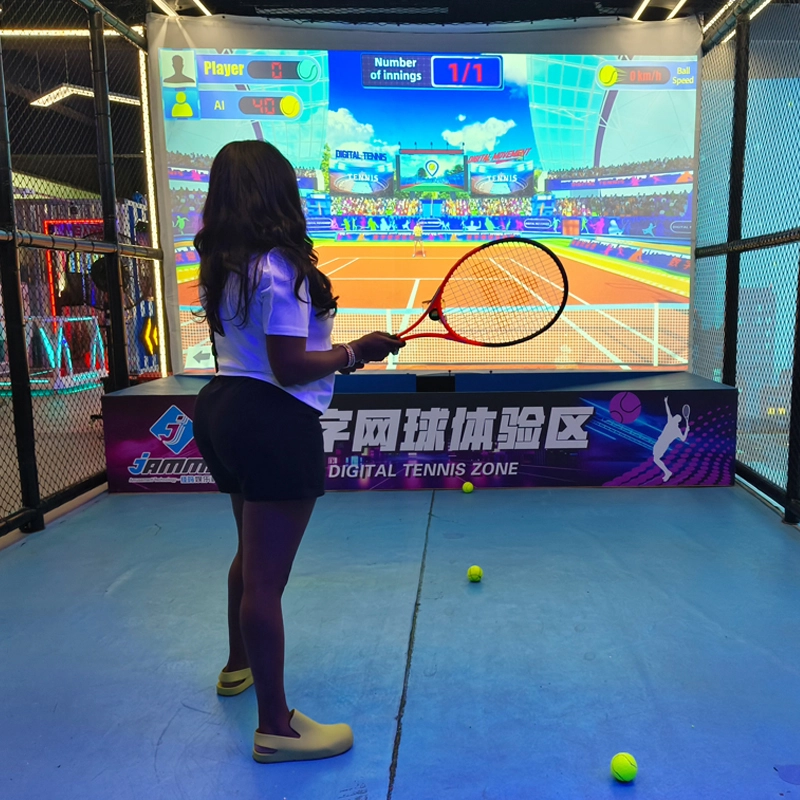
Top Indoor Tennis Racketball Training Simulator Dual Player Games
Interactive somatosensory fitness game
Combine traditional tennis sports with advanced 3D digital technology to bring customers an immersive tennis training experience
COMBINE TRADITIONAL TENNIS SPORTS WITH ADVANCED 3D DIGITAL TECHNOLOGY TO BRING CUSTOMERS AN IMMERSIVE TENNIS TRAINING EXPERIENCE INDOOR AND TENNIS EXPERIENCE HALL
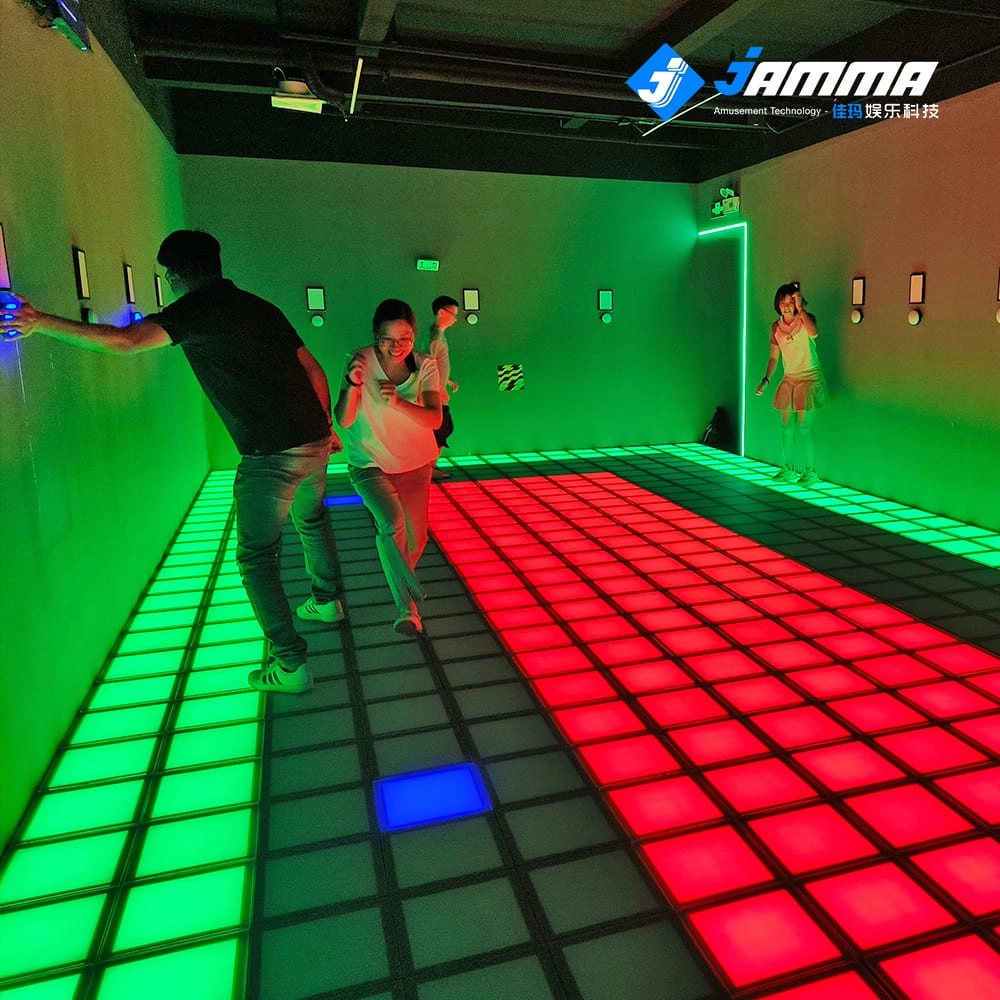
Super Grid Interactive LED Floor Activate Game Team Play
Super Grid is an immersive sports game that combines sports and technology. It integrates interactive LED lights and sensors through innovative software design, creating a fun gaming experience.
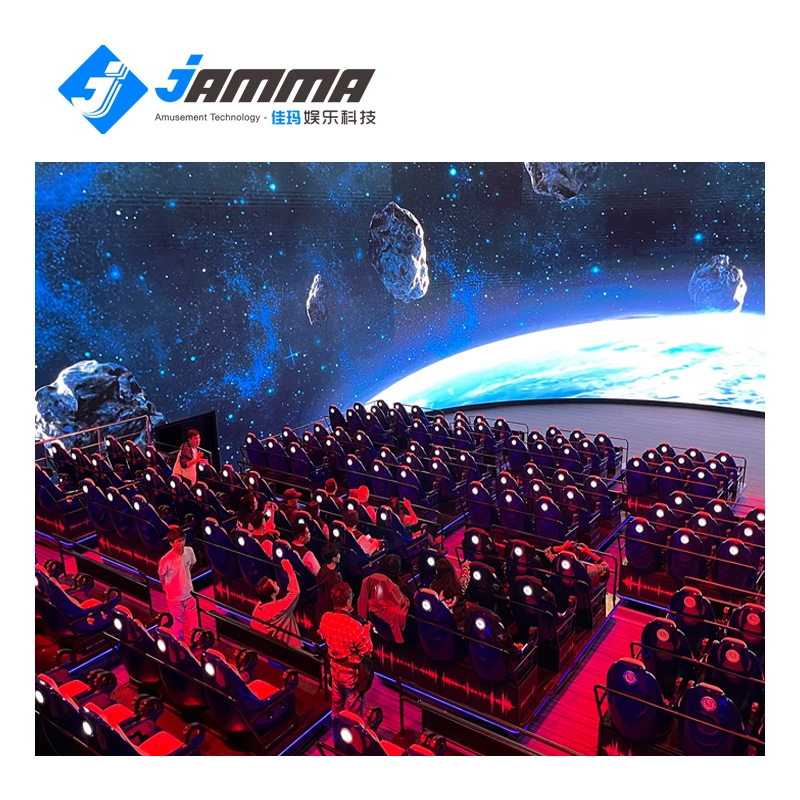
Immersive 5D/7D/9D cinema dynamic visual experience room
Compared with other types of theaters, 5D/7D/9D cinema have high technical content, prominent themes, and have a strong impact on the characteristics of the picture. With the increasing demand in the entertainment market and the continuous development of video entertainment technology, in the past, audiences would experience vibration, drop, rain, scratches and other effects in some 4D theaters, but now with 5D theaters, audiences can experience new Unique features, touch and feel effects such asreal smoke, water, snow, bubbles, smell, lightning, leg touch,camera system and more. When the audience is watching amovie, the seats and environmental effects will change into corresponding actions according to the development of the movie,allowing the audience to experience an immersive viewing experience.
