

Using Multi-sport Simulators for Sports Training and Rehab
- Harnessing Multi-sport Simulator Technology for Performance Gains
- What is a Multi-sport Simulator? — Multi-sport Simulator Definition
- Key components of a Multi-sport Simulator — Multi-sport Simulator Components
- Benefits for Sports Training — Multi-sport Simulator for Training
- Benefits for Rehabilitation — Multi-sport Simulator for Rehab
- Clinical application examples — Multi-sport Simulator Rehab Use-Cases
- Evidence and Outcomes — Multi-sport Simulator Effectiveness
- Comparing Methods: Simulator vs Traditional Training and Rehab — Multi-sport Simulator Comparison
- Design and Procurement Considerations — Multi-sport Simulator Specs
- Technical specs checklist — Multi-sport Simulator Procurement
- Implementation: Programming Training and Rehab Sessions — Multi-sport Simulator Programming
- Costs, ROI and Business Case — Multi-sport Simulator ROI
- Safety, Compliance and Data Governance — Multi-sport Simulator Safety
- Commercial Suppliers and JAMMA Solutions — Multi-sport Simulator Vendors
- Why JAMMA for Multi-sport Simulators — Multi-sport Simulator JAMMA Advantage
- Case Examples and Real-world Outcomes — Multi-sport Simulator Case Studies
- Practical Checklist for Getting Started — Multi-sport Simulator Deployment
- Frequently Asked Questions (FAQ) — Multi-sport Simulator FAQ
- 1. What is the difference between a Multi-sport Simulator and a single-sport simulator?
- 2. Can a Multi-sport Simulator be used for post-ACL rehabilitation?
- 3. How accurate are the performance metrics from simulators?
- 4. What space and technical infrastructure is required?
- 5. How do I measure ROI for a simulator installation?
- 6. Are simulators suitable for youth athletes?
- Contact & Product Inquiry
- References and Further Reading — Multi-sport Simulator References
Harnessing Multi-sport Simulator Technology for Performance Gains
Multi-sport Simulator systems are becoming essential tools for teams, clinics, and training centers that need controlled, repeatable, and sport-specific environments. This article examines how a Multi-sport Simulator can be integrated into both high-performance training and clinical rehabilitation programs, summarizes the evidence base, compares simulators with traditional methods, and gives practical guidance for procurement, implementation, and ROI.
What is a Multi-sport Simulator? — Multi-sport Simulator Definition
A Multi-sport Simulator is an integrated hardware-software platform that reproduces sporting environments (e.g., batting, golf, soccer shooting, tennis) using sensors, projection or screens, and physics-based game engines. These systems can be used for skill acquisition, tactical decision-making, conditioned practice, neuromuscular training, and post-injury rehabilitation. The term emphasizes cross-sport flexibility: one physical footprint supports multiple sports and training modes.
Key components of a Multi-sport Simulator — Multi-sport Simulator Components
- Input sensors: motion capture cameras, inertial sensors, pressure mats, and ball-tracking radars;
- Actuation and interface: hitting surfaces, projected courts/fields, haptic feedback, and force plates;
- Software: physics engines with sport-specific models, performance analytics, progress tracking, and rehab protocols;
- Data output: kinematics, accuracy, reaction time, load metrics, and session reports for coaches and clinicians.
Benefits for Sports Training — Multi-sport Simulator for Training
For coaches and athletes, Multi-sport Simulators offer several measurable advantages over conventional practice:
- High repetition with consistent stimuli: allows thousands of high-quality reps without travel or variable environmental conditions.
- Immediate objective feedback: accurate metrics (speed, spin, launch angle, reaction time) speed skill refinement and reduce guesswork.
- Controlled progression and variability: coaches can systematically manipulate difficulty, scenarios, or cognitive load to train decision-making under pressure.
- Data-driven periodization: session logs integrate into athlete monitoring systems to inform workload and readiness planning.
Practical example: baseball hitters using ball-tracking and high-speed replays show faster adjustments in swing plane and timing than with traditional net sessions alone (see evidence section below).
Benefits for Rehabilitation — Multi-sport Simulator for Rehab
Clinicians find Multi-sport Simulators valuable when bridging the gap between isolated therapeutic exercises and full on-field return-to-play:
- Task-specific training: simulating sport tasks (e.g., controlled catches, practice shots) helps restore neuromuscular patterns in context.
- Graded exposure: difficulty and intensity can be titrated to joint tolerance, cardiovascular status, and psychological readiness.
- Objective outcome measures: clinicians can quantify improvements (accuracy, reaction time, movement symmetry) and document safe progression.
- Motivation and adherence: gamified feedback and performance goals increase patient engagement compared to repetitive clinic exercises.
Clinical application examples — Multi-sport Simulator Rehab Use-Cases
Common uses include ACL post-op functional retraining, concussion vestibular work with visual motion tasks, and shoulder rehab with scaled throwing simulations. When integrated with validated criteria (strength, hop tests, movement quality), simulators support safer RTP decisions.
Evidence and Outcomes — Multi-sport Simulator Effectiveness
A growing body of literature supports VR/exergaming and simulator-based interventions for motor and cognitive outcomes. Key high-quality sources show benefit in targeted contexts:
- Cochrane review: virtual reality for stroke rehabilitation demonstrates improved upper-limb function versus conventional therapy in some trials (Laver et al., 2017).
- Stroke/neurological evidence: Saposnik et al. (2010) found that Wii-based virtual therapy yielded motor improvements when added to standard care.
- Sports training research: ball-tracking and simulation devices improve perceptual-cognitive skills (anticipation and decision-making) more efficiently than unstructured practice in certain study designs.
These studies indicate that while simulators are not a universal replacement, they are an effective adjunct—especially where repetitive, measurable, and task-specific practice matters.
Comparing Methods: Simulator vs Traditional Training and Rehab — Multi-sport Simulator Comparison
| Feature | Multi-sport Simulator | Traditional Field/Gym Methods |
|---|---|---|
| Repetition control | High, programmable, consistent | Variable, weather-dependent |
| Objective metrics | Detailed kinematics and analytics | Often subjective or limited to basic timing/distance |
| Safety for rehab | Graded exposures with monitoring | Harder to standardize, may pose higher reinjury risk without supervision |
| Space and cost | Higher initial cost, compact footprint | Lower equipment cost, larger area needed |
| Engagement | High (gamified), good adherence | Variable, depends on coach/therapist methods |
Design and Procurement Considerations — Multi-sport Simulator Specs
When selecting a Multi-sport Simulator, evaluate:
- Sport coverage and fidelity: which sports and skill types matter for your clientele?
- Sensor accuracy and sampling rate: higher fidelity yields more trustworthy metrics for high-level athletes.
- Software ecosystem: does the vendor provide customizable drills, rehab protocols, and cloud reporting?
- Interoperability: can data export integrate with athlete management systems (AMS) and EMR?
- Service and warranty: upfront cost must include training, updates, and technical support.
Technical specs checklist — Multi-sport Simulator Procurement
- Latency & frame rate (<30 ms recommended for reactive training)
- Markerless vs marker-based tracking (markerless reduces setup time)
- Maximum user throughput (sessions per day)
- Floor or mounting requirements, and power/space footprint
Implementation: Programming Training and Rehab Sessions — Multi-sport Simulator Programming
Successful integration hinges on program design:
- Define objectives: skill acquisition, return-to-play milestones, or neuromuscular control.
- Progress in phases: baseline assessment → targeted skill/recovery drills → integrated sport scenarios → on-field transfer testing.
- Measure and document: use predefined metrics and thresholds tied to RTP or performance KPIs.
- Combine with manual therapy and strength work: simulators complement, they rarely replace, traditional strength and conditioning or manual rehab.
Costs, ROI and Business Case — Multi-sport Simulator ROI
Building a business case should consider direct revenue (training fees, clinic packages, memberships) and indirect value (reduced injury recurrence, faster athlete readiness, increased venue footfall). Typical ROI drivers:
- High Quality hourly rental for simulator sessions vs standard court/field rates.
- Clinic upsells: rehabilitation packages combining therapist time and simulator access.
- Marketing differentiation: attraction-based sales for entertainment venues can subsidize sport-focused operations.
Example metric: a simulator used 6–8 hours per day for mixed training/entertainment can generate higher per-sqm revenue than an idle practice net in many urban facilities.
Safety, Compliance and Data Governance — Multi-sport Simulator Safety
Key safety practices include:
- Clinical oversight for rehab clients—protocols signed off by physiotherapists;
- Regular calibration and sensor validation to ensure measurement accuracy;
- Clear user consent and data protection policies for performance and health data in line with local regulations (e.g., GDPR where applicable).
Commercial Suppliers and JAMMA Solutions — Multi-sport Simulator Vendors
Choosing a vendor requires assessing product maturity, after-sales support, and industry reputation. JAMMA Amusement (est. 2009, Guangzhou) brings 15 years of amusement industry experience and offers integrated solutions that bridge training, rehab, and entertainment. JAMMA's value proposition includes one-stop project delivery, ongoing R&D, and a global sales and technical team to support venue deployment and operation.
Why JAMMA for Multi-sport Simulators — Multi-sport Simulator JAMMA Advantage
JAMMA focuses on high-value project solutions. Key strengths:
- Product portfolio: Sports Simulators, Interactive Projection Games, Immersive Attractions, VR Games;
- Technical capability: in-house R&D keeps software and physical designs updated with latest interaction technologies;
- Operational support: manufacturing and after-sales teams provide installation, training, and maintenance;
- Commercial experience: 15 years in the amusement sector provides venue design and revenue optimization know-how.
For more details and product inquiries, visit JAMMA’s official website: https://www.jammapark.com/.
Case Examples and Real-world Outcomes — Multi-sport Simulator Case Studies
Examples where simulators added measurable value:
- Pro clubs integrating simulators for situational repetition saw improved decision-making under pressure with fewer external variables;
- Rehab clinics reported improved adherence and faster functional milestones when simulator tasks were embedded in programs;
- Family entertainment centers using multi-sport modules increased dwell time and cross-spend per visitor, subsidizing training hours for sports customers.
Practical Checklist for Getting Started — Multi-sport Simulator Deployment
- Clarify primary use: training, rehab, entertainment, or hybrid.
- Define performance and clinical metrics required for your programs.
- Run vendor demos with your end-users (coaches, therapists, athletes) and test data exports.
- Plan space, power, and workflow to allow rapid turnover between users and sports modules.
- Train staff in both technical operation and program design.
Frequently Asked Questions (FAQ) — Multi-sport Simulator FAQ
1. What is the difference between a Multi-sport Simulator and a single-sport simulator?
Multi-sport Simulators support multiple sports and drill types through software modules and configurable hardware, offering greater venue flexibility and higher utilization than single-sport systems dedicated to one discipline.
2. Can a Multi-sport Simulator be used for post-ACL rehabilitation?
Yes—when integrated into a clinician-led protocol. Simulators enable graded sport-specific tasks, objective measurement of symmetry and control, and functional progressions that aid return-to-play decisions.
3. How accurate are the performance metrics from simulators?
Accuracy depends on sensor quality and calibration. High-end systems provide reliable kinematic and ball-flight data; verify sampling frequency, validation studies, and vendor calibration procedures before purchase.
4. What space and technical infrastructure is required?
Requirements vary by product: many systems fit within 4–8 m length and standard ceiling heights; check for power, Internet, and mounting needs. JAMMA and other vendors provide site planning guidance.
5. How do I measure ROI for a simulator installation?
Track direct revenues (session bookings, rehab packages) and indirect metrics (increased memberships, venue visits). Compare against capital and operational costs including maintenance and software licenses.
6. Are simulators suitable for youth athletes?
Yes—when content is age-appropriate and monitored. Gamified modules are highly engaging for youth but should be combined with physical literacy and supervised coaching.
Contact & Product Inquiry
For consultation, product specifications, and project proposals, contact JAMMA Amusement via https://www.jammapark.com/. Our team can provide tailored recommendations for Sports Simulators, Interactive Projection Games, Immersive Attractions, and VR Games to meet training, rehab, or entertainment objectives.
References and Further Reading — Multi-sport Simulator References
- Laver KE, Lange B, George S, et al. Virtual reality for stroke rehabilitation. Cochrane Database Syst Rev. 2017;11:CD008349. https://www.cochranelibrary.com/cdsr/doi/10.1002/14651858.CD008349.pub4/full (Accessed 2025-11-15).
- Saposnik G, Levin M; Outcome Research Canada (SORCan) Working Group. Virtual reality in stroke rehabilitation: a meta-analysis and implications for clinical practice. Stroke. 2011;42(5):1380-1386. https://www.ncbi.nlm.nih.gov/pmc/articles/PMC2981203/ (Accessed 2025-11-15).
- Statista — Global augmented and virtual reality (AR/VR) market size. https://www.statista.com/statistics/591181/global-augmented-and-virtual-reality-market-size/ (Accessed 2025-11-20).
- Grand View Research — Virtual Reality Market Size & Trends. https://www.grandviewresearch.com/industry-analysis/virtual-reality-vr-market (Accessed 2025-11-20).
- American College of Sports Medicine (ACSM) — Guidelines and position statements. https://www.acsm.org/ (Accessed 2025-11-10).
- JAMMA Amusement official site — company overview and product portfolio. https://www.jammapark.com/ (Accessed 2025-11-25).
Top 5 interactive basketball game Company List and Products Compared in Europe
Why choose JAMMA as your immersive escape room london supplier
JAMMA Best professional bowling alley equipment prices manufacturers and supplier brands in France
Top 10 bowling equipment cost Manufacturers and Supplier Brands in America
Standard and other
What is the delivery time?
Usually the production period of our products is 20 to 25 days, it will be a little different according to the quantity of products you order. All products need to go through our strict quality inspection before shipment. After they are tested, we will ship them to you at the first time. For products in stock, we usually ship within 3 days.
Are you an amusement park equipment manufacturer?
Yes. We have our own production factory, which is located in Guangzhou, China, covering an area of over 2,000 square meters. With our professional production team, we are able to ensure high quality and on-time delivery of our products. All products have undergone rigorous testing and quality inspection. You are welcome to visit our factory.
Product details
What is the difference between 5D and 3D?
The visual of 5D cinema is the same as that of 3D, compared to 3D, it adds motion simulation and special effects, which are not available in 3D.
How many players can play soccer at the same time?
Up to 4 players can play at the same time, you need to add more soccer balls.
Does the soccer simulator configuration include the curtain?
Yes, a 4-meter-wide, 3-meter-high projection curtain is included.
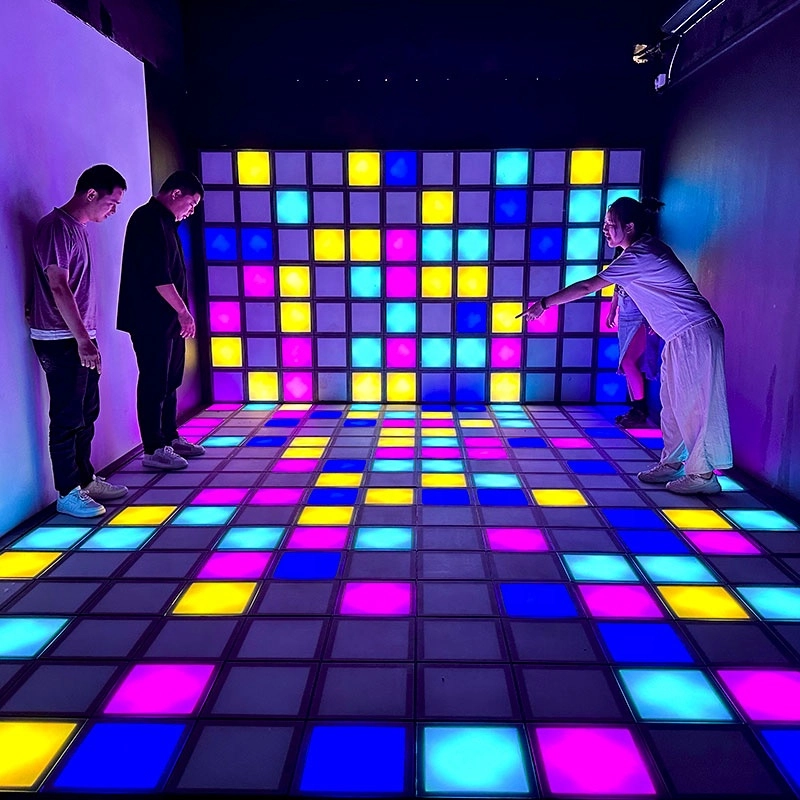
Hottest activated LED dance grid tiles floor touch games
Super Grid is an immersive sports game that combines sports and technology. It integrates interactive LED lights and sensors through innovative software design, creating a fun gaming experience.
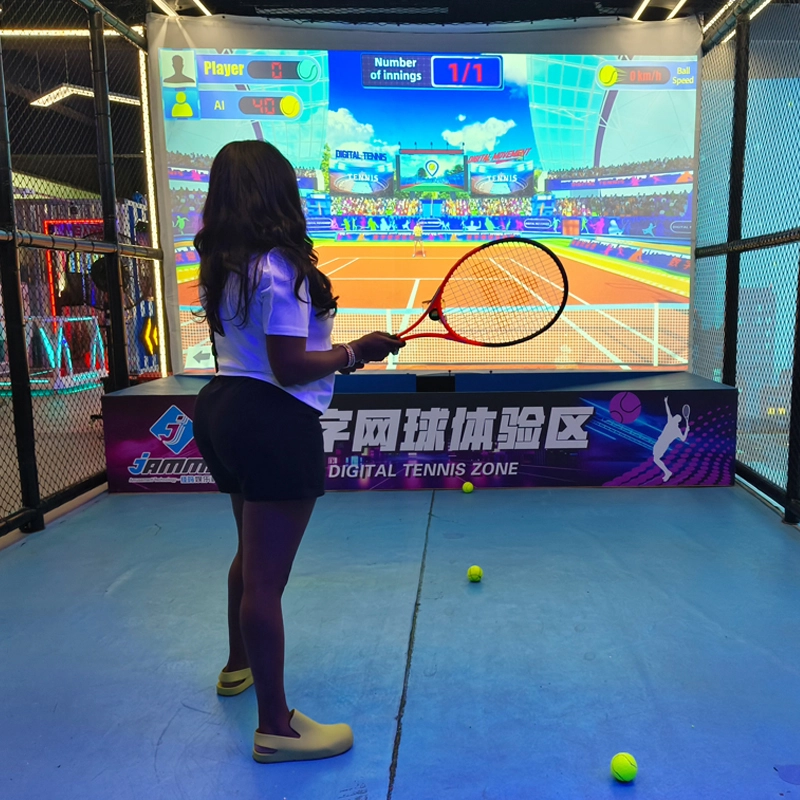
Top Indoor Tennis Racketball Training Simulator Dual Player Games
Interactive somatosensory fitness game
Combine traditional tennis sports with advanced 3D digital technology to bring customers an immersive tennis training experience
COMBINE TRADITIONAL TENNIS SPORTS WITH ADVANCED 3D DIGITAL TECHNOLOGY TO BRING CUSTOMERS AN IMMERSIVE TENNIS TRAINING EXPERIENCE INDOOR AND TENNIS EXPERIENCE HALL
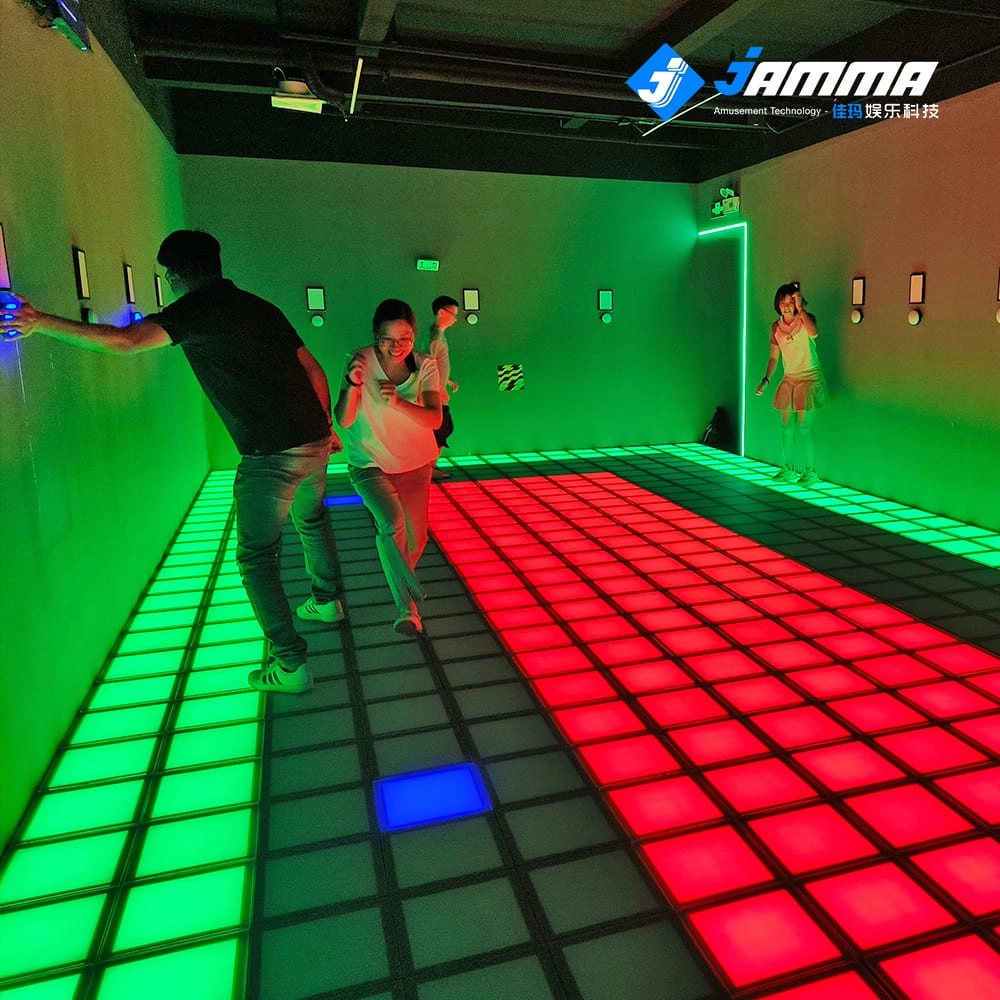
Super Grid Interactive LED Floor Activate Game Team Play
Super Grid is an immersive sports game that combines sports and technology. It integrates interactive LED lights and sensors through innovative software design, creating a fun gaming experience.
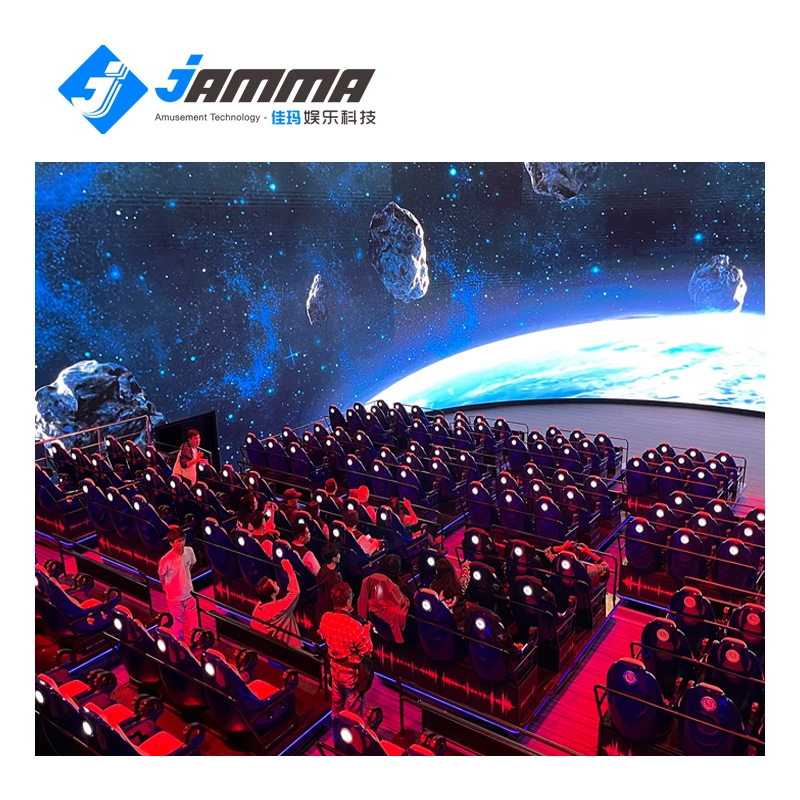
Immersive 5D/7D/9D cinema dynamic visual experience room
Compared with other types of theaters, 5D/7D/9D cinema have high technical content, prominent themes, and have a strong impact on the characteristics of the picture. With the increasing demand in the entertainment market and the continuous development of video entertainment technology, in the past, audiences would experience vibration, drop, rain, scratches and other effects in some 4D theaters, but now with 5D theaters, audiences can experience new Unique features, touch and feel effects such asreal smoke, water, snow, bubbles, smell, lightning, leg touch,camera system and more. When the audience is watching amovie, the seats and environmental effects will change into corresponding actions according to the development of the movie,allowing the audience to experience an immersive viewing experience.
