

Designing an Engaging Indoor Playground Layout
- Why Layout Matters for Family Entertainment Venues
- Start with the customer journey: target audiences and commercial goals (Indoor Playground design)
- Zoning for safety, supervision and revenue (indoor playground zoning)
- Circulation and sightlines: the backbone of supervision (indoor playground sightlines)
- Surface and safety standards: reduce risk, ensure compliance (indoor playground safety)
- Accessibility and inclusivity (indoor playground ADA and inclusive play)
- Equipment selection and layout strategies (indoor playground equipment)
- Layout strategy comparison
- Operational design: staffing, queuing, maintenance (indoor playground operations)
- Tech and interactive attractions: increasing dwell time and spend (Indoor Playground Attractions)
- Case study: applying principles to a 500–800 sqm Indoor Playground
- Costs, ROI and KPIs to track (indoor playground ROI)
- Maintenance and lifecycle planning (indoor playground maintenance)
- Integrating JAMMA Amusement solutions into your layout
- Implementation checklist: from concept to opening (indoor playground checklist)
- Common pitfalls and how to avoid them (indoor playground pitfalls)
- FAQ
- 1. What is the ideal ratio of open play space to structured attractions in an Indoor Playground?
- 2. How do I ensure my Indoor Playground meets safety regulations?
- 3. How much space do I need for a multi-level play structure?
- 4. Can technology attractions like VR and interactive projection be integrated into a family-oriented playground?
- 5. How should I design party rooms and private event spaces?
- 6. What KPIs should an operator track after opening?
- Contact & Next Steps
- References
Why Layout Matters for Family Entertainment Venues
Designing an Indoor Playground is more than arranging slides and ball pits. A thoughtful layout balances safety, operational efficiency, customer experience and revenue optimization. This guide distills industry best practices, applicable standards and operator-focused decision frameworks so you can create a high-performing indoor play venue that delights families and supports sustainable business results.
Start with the customer journey: target audiences and commercial goals (Indoor Playground design)
Before placing equipment, map the customer journey. Identify primary user profiles (toddlers with caregivers, preschool groups, mixed-age families, birthday parties, school groups) and the commercial goals (admission-driven revenue, hourly rental, F&B spend, birthday/event packages, memberships). The layout should enable multiple simultaneous experiences: free play, structured attractions, party spaces and passive seating for caregivers. Planning with in mind prevents costly rework and improves per-visitor spend.
Zoning for safety, supervision and revenue (indoor playground zoning)
Effective zoning separates activities by intensity and age while creating natural sightlines for caregivers and staff. Typical zones include:
- Baby/Toddler soft play (0–3 years)
- Preschool motor skills and imaginative play (3–6 years)
- Active climb-and-slide structures (6+ years)
- Skill-based attractions (arcade, sports simulators)
- Party and event rooms
- F&B and seating zones
Locate quiet and toddler areas away from high‑energy attractions. Place party rooms adjacent to F&B and toilets for efficient servicing. Zoned layouts reduce supervision burden, lower incident risk and can increase dwell time by offering age-appropriate experiences as families grow.
Circulation and sightlines: the backbone of supervision (indoor playground sightlines)
Circulation paths must allow caregivers and staff to see into play zones with minimal obstructions. Consider these rules of thumb:
- Main circulation width: at least 1.8–2.4 m (6–8 ft) in high-traffic corridors.
- Perimeter seating with clear sightlines into play fields.
- Elevated platforms and two-level structures positioned to preserve lines of sight—use transparent barriers or low walls where possible.
- Locate staff stations at choke points to observe entries/exits and key play areas.
Good sightlines reduce staffing needs and improve perceived safety for guests.
Surface and safety standards: reduce risk, ensure compliance (indoor playground safety)
Choose impact-attenuating surfacing and comply with applicable standards for public and commercial play equipment. Key references for operators include CPSC guidance and ASTM standards. Use certified surfacing systems under elevated equipment and maintain minimum fall zones as specified by manufacturers and standards bodies.
Common surfacing options and considerations:
| Surface Type | Pros | Cons | Typical Use |
|---|---|---|---|
| Rubber tiles/ poured-in-place (PIP) | Excellent impact attenuation, durable, low maintenance | Higher upfront cost | Under high structures, toddler areas |
| EVA foam mats | Low cost, easy to replace | Wear faster, can gap | Toddler zones, temporary areas |
| Carpet or artificial turf | Comfortable, aesthetic | Poor fall protection for high structures | Seating zones, soft play perimeter |
Maintain surfacing per manufacturer guidance and schedule routine inspections. Certification programs like IPEMA can verify surfacing performance.
Accessibility and inclusivity (indoor playground ADA and inclusive play)
Incorporate accessible paths, sensory play elements and inclusive equipment. ADA considerations are both regulatory and commercial — inclusive venues attract broader audiences and group bookings. Features to include: wheelchair-friendly circulation, transfer platforms, quiet rooms for neurodiverse guests, and multi-sensory panels. Inclusive design improves community reputation and often qualifies venues for broader institutional partnerships.
Equipment selection and layout strategies (indoor playground equipment)
Select equipment that meets your business model and space constraints. Options range from soft play modules to immersive attractions and VR games. Consider modular systems that can be reconfigured to refresh offerings without major CAPEX. When mixing free play with ticketed attractions (e.g., VR simulators, interactive projection games), place ticketed experiences near entrance or F&B to optimize discoverability and impulse purchases.
Layout strategy comparison
| Layout Strategy | Best for | Pros | Cons |
|---|---|---|---|
| Zoned / Modular | Family centers, schools | Flexible, easy to supervise, scalable | Requires careful initial planning |
| Free-flow (open-plan) | Large multi-age spaces | High throughput, feels spacious | Harder to supervise; potential safety conflicts |
| Themed immersive | Destination attractions | High engagement, High Quality pricing | Higher CAPEX and maintenance |
Operational design: staffing, queuing, maintenance (indoor playground operations)
Layout must support operations: clear staff routes, equipment access for maintenance, storage and efficient queuing. Design points to reduce friction and labor cost:
- Separate entry and exit with controlled turnstiles or reception counters.
- Visible staff stations that double as check-in and supervision points.
- Storage rooms near party areas and F&B for rapid turnover.
- Service corridors or back-of-house access for cleaning and technical teams.
Good operational design reduces wait times and improves the guest experience.
Tech and interactive attractions: increasing dwell time and spend (Indoor Playground Attractions)
Interactive digital attractions—AR/VR, projection games and sports simulators—boost repeat visitation and enable High Quality pricing. Consider balanced placement:
- Ticketed immersive attractions near exits or F&B to capture post-play spend.
- Projection and soft-interactive games inside active zones to enhance engagement without added staffing.
Plan for power, data connectivity and climate control when installing tech-rich attractions.
Case study: applying principles to a 500–800 sqm Indoor Playground
Example layout outline for a 700 sqm venue:
- Entrance & reception (50 sqm) with clear queue and merchandising.
- F&B and caregiver seating (120 sqm) overlooking play zones.
- Toddler area (80 sqm) adjacent to restrooms.
- Modular multi-level play structure (220 sqm) with soft surfacing beneath.
- Interactive projection zone and two VR/game booths (80 sqm).
- Two private party rooms (80 sqm total) with nearby storage/kitchen pass-through.
- Staff/maintenance/back-of-house (70 sqm).
This allocation prioritizes sightlines, adjacencies and operational flow, while leaving space to add seasonal or revenue-driving pop-ups.
Costs, ROI and KPIs to track (indoor playground ROI)
Track metrics that link layout decisions to business outcomes: average dwell time, per-guest spend (admission + F&B + attractions), capacity utilization, incident rate and staff-to-guest ratio. Layout changes should be measured with baseline KPIs over 90–180 days to quantify ROI. Typical drivers of ROI from layout improvements include increased event bookings, higher F&B attachment and improved repeat visitation.
Maintenance and lifecycle planning (indoor playground maintenance)
Durability expectations differ by area: high-impact zones (slides, climbing) need robust materials and scheduled inspections; soft play padding and ball pits need frequent sanitization and component replacement planning. Allocate CAPEX reserves for 5–7 year refresh cycles on major attractions and annual consumable budgets for surfacing and soft goods.
Integrating JAMMA Amusement solutions into your layout
When planning a modern Indoor Playground, partnering with experienced suppliers shortens the design-to-launch timeline and assures compatibility between attractions and operational needs. JAMMA Amusement was established in 2009 and is located in Guangzhou, bringing 15 years of experience in the amusement industry. JAMMA focuses on delivering high-value, one-stop solutions for amusement projects with a product portfolio that includes VR games, AR sports simulators, AR interactive projection games, 5D cinema, arcade games and outdoor playground equipment.
Why consider JAMMA for your layout and attraction mix:
- Comprehensive product range: Sports Simulators, Interactive Projection Games, Immersive Attractions and VR Games allow operators to combine free play and High Quality ticketed attractions in the same footprint.
- Technical leadership: an industry-leading technical team continuously develops and updates attractions, ensuring compatibility with modern venue infrastructure (power, data, HVAC).
- Operational support: efficient international sales and after-sales teams provide pre-sales layout consultation, installation guidance and ongoing technical support.
- Manufacturing and service capability: in-house production enables customization and predictable lead times, plus experienced maintenance teams for lifecycle support.
These strengths make JAMMA a strong partner for operators seeking interactive and immersive attractions that fit optimized indoor playground layouts. Learn more at https://www.jammapark.com/.
Implementation checklist: from concept to opening (indoor playground checklist)
- Define target markets and revenue mix (admission, F&B, ticketed attractions).
- Produce a schematic layout with zoning, sightlines and circulation paths.
- Select certified surfacing and equipment compliant with standards.
- Plan utilities and technical infrastructure for immersive attractions.
- Design staffing model and back-of-house routing.
- Run a safety review and complete required inspections prior to opening.
- Implement KPI dashboards for first 6 months and plan staged improvements.
Common pitfalls and how to avoid them (indoor playground pitfalls)
Avoid these frequent mistakes:
- Overcrowding the floor with attractions—maintain circulation widths and sightlines.
- Underestimating power/data requirements for AR/VR attractions—spec infrastructure early.
- Mixing incompatible age zones without clear separation—leads to injury risk and caregiver dissatisfaction.
- Neglecting maintenance access—design for easy component replacement and cleaning.
FAQ
1. What is the ideal ratio of open play space to structured attractions in an Indoor Playground?
There is no one-size-fits-all ratio; however, a starting guideline is 50–65% open/structured play for multi-age family centers, with 15–25% allocated to ticketed attractions (VR/Simulators) and 15–25% to F&B and seating. Adjust based on your revenue model and target customer behavior.
2. How do I ensure my Indoor Playground meets safety regulations?
Follow national and international standards (e.g., ASTM public playground standards, CPSC guidance) and use certified surfacing (IPEMA-certified where applicable). Work with manufacturers that provide installation instructions and safety documentation, and schedule routine inspections and staff training.
3. How much space do I need for a multi-level play structure?
Small multi-level structures can fit in 80–150 sqm; larger destination structures require 200+ sqm plus fall zones. Always include recommended clearance and fall surfacing in your footprint calculations.
4. Can technology attractions like VR and interactive projection be integrated into a family-oriented playground?
Yes. Place tech attractions as distinct ticketed experiences or blended into active zones as low-supervision interactive elements. Ensure adequate ventilation, staff oversight and queuing space for ticketed attractions.
5. How should I design party rooms and private event spaces?
Locate party rooms near F&B and restrooms, with direct access to the main play area or a supervised viewing point. Provide storage for party supplies, AV hookups and flexible partitioning to accommodate group sizes.
6. What KPIs should an operator track after opening?
Track average dwell time, per-guest spend, capacity utilization, incident/near-miss rates and repeat visitation. Use these to evaluate layout performance and prioritize changes.
Contact & Next Steps
If you are planning or renovating an Indoor Playground and want a partner who can supply immersive attractions, consult on layout or provide turnkey solutions, contact JAMMA Amusement. With 15 years in the amusement industry, JAMMA offers Sports Simulators, Interactive Projection Games, Immersive Attractions and VR Games that integrate into efficient, revenue-focused layouts. Visit https://www.jammapark.com/ to request a consultation, view products or download technical specifications.
References
- U.S. Consumer Product Safety Commission (CPSC), Public Playground Safety Handbook, https://www.cpsc.gov/s3fs-public/325.pdf (accessed 2024-06-10).
- ASTM International, F1487 - Standard Consumer Safety Performance Specification for Playground Equipment for Public Use, https://www.astm.org/Standards/F1487.htm (accessed 2024-05-20).
- International Play Equipment Manufacturers Association (IPEMA), Certification Programs and Surfacing Guidance, https://www.ipema.org/ (accessed 2024-06-01).
- UNICEF, Why play is important for children, https://www.unicef.org/stories/importance-play (accessed 2024-04-15).
- JAMMA Amusement official site, company and product information, https://www.jammapark.com/ (accessed 2024-11-01).
Best professional immersive tech escape room manufacturers and supplier brands in US
Everything You Need to Know About orbit 360 cinema
What is cinema 7d ?
Where to Buy virtual archery simulator in UK
Product details
Are glasses required to see a 5D film?
Audience needs to wear 3D glasses while watching movie, but not VR glasses.
What are the special effects in a 5D cinema?
JAMMA 5D cinema has special effects such as water spray, smoke, bubbles, snow, lightning and so on, which allows it to provide a realistic and immersive experience.
Can I customize the number of seats of 5D cinema?
Yes, we generally have options for six, nine, eighteen, twenty-four, and thirty-six seats, and the quantity of seats also can be customized.
Standard and other
What is the delivery time?
Usually the production period of our products is 20 to 25 days, it will be a little different according to the quantity of products you order. All products need to go through our strict quality inspection before shipment. After they are tested, we will ship them to you at the first time. For products in stock, we usually ship within 3 days.
How will it be transported?
For large items, we usually use sea freight, while for small items, we use air freight or services like DHL, FedEx, or UPS. We can also accommodate specific shipping methods based on your requirements.
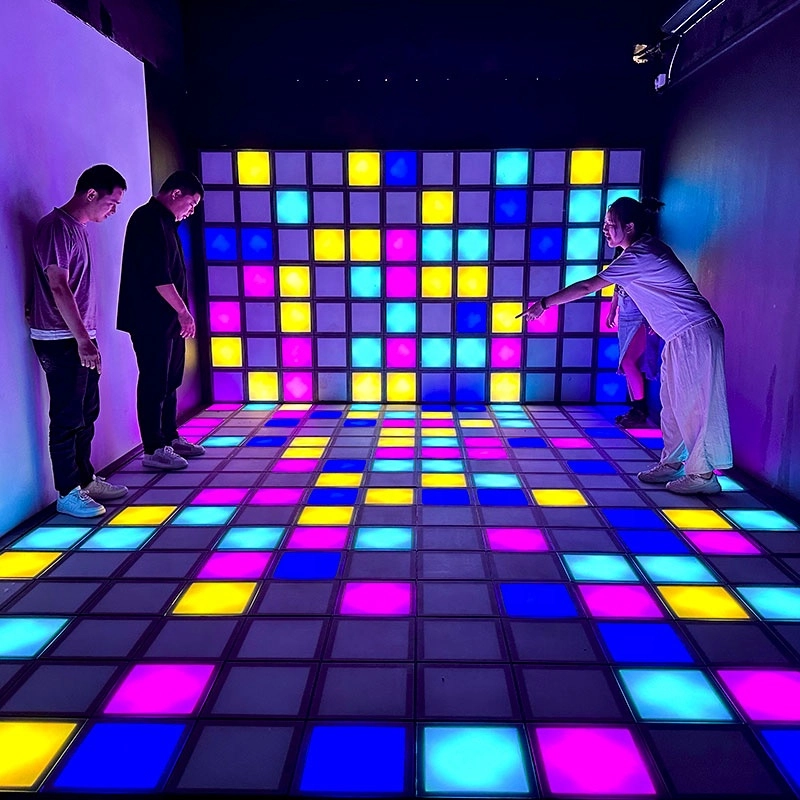
Hottest activated LED dance grid tiles floor touch games
Super Grid is an immersive sports game that combines sports and technology. It integrates interactive LED lights and sensors through innovative software design, creating a fun gaming experience.
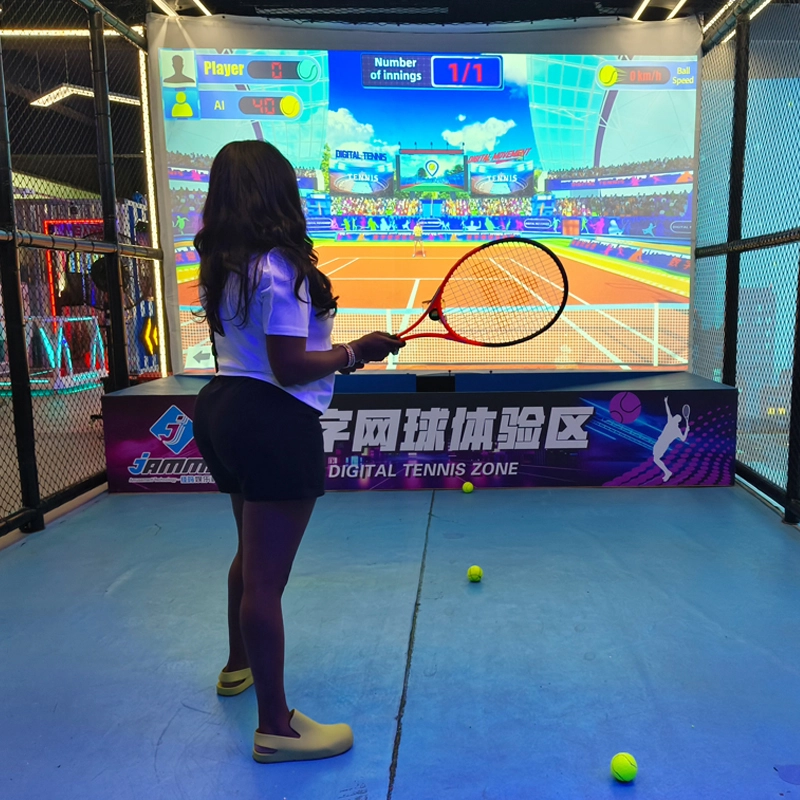
Top Indoor Tennis Racketball Training Simulator Dual Player Games
Interactive somatosensory fitness game
Combine traditional tennis sports with advanced 3D digital technology to bring customers an immersive tennis training experience
COMBINE TRADITIONAL TENNIS SPORTS WITH ADVANCED 3D DIGITAL TECHNOLOGY TO BRING CUSTOMERS AN IMMERSIVE TENNIS TRAINING EXPERIENCE INDOOR AND TENNIS EXPERIENCE HALL
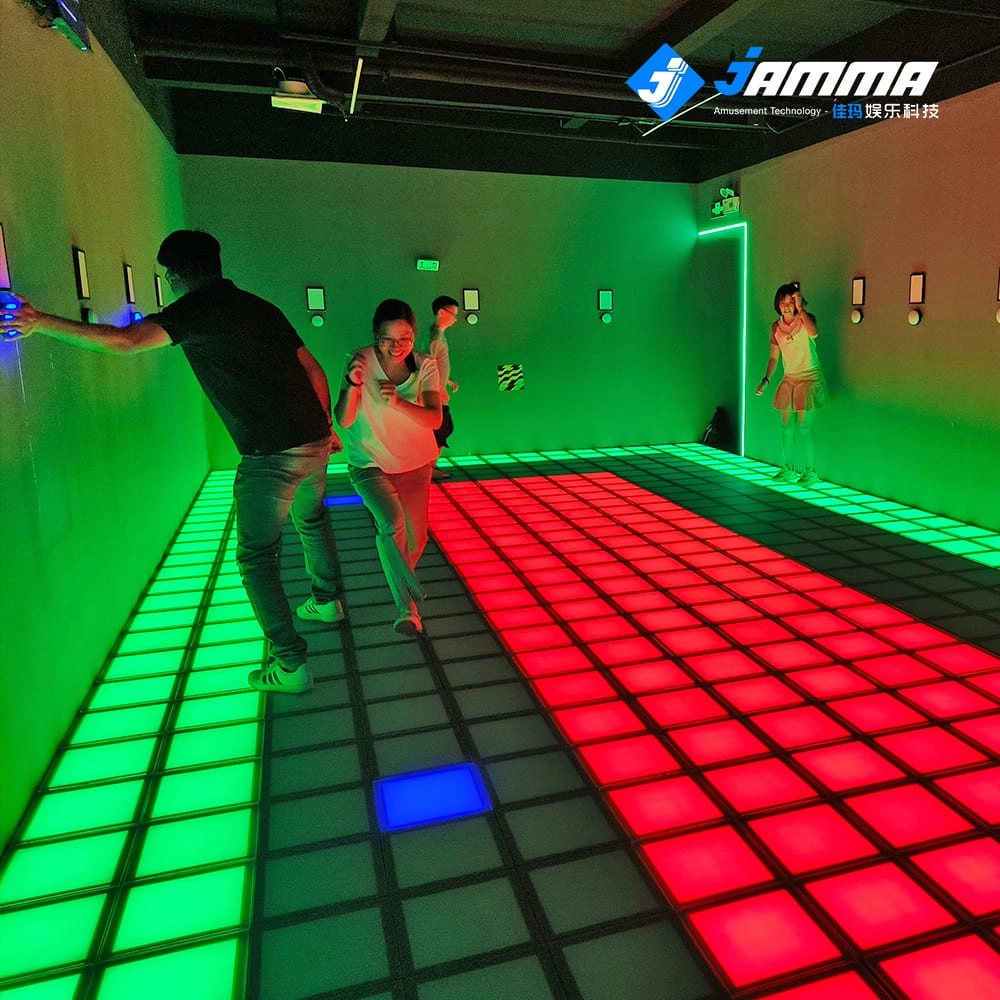
Super Grid Interactive LED Floor Activate Game Team Play
Super Grid is an immersive sports game that combines sports and technology. It integrates interactive LED lights and sensors through innovative software design, creating a fun gaming experience.
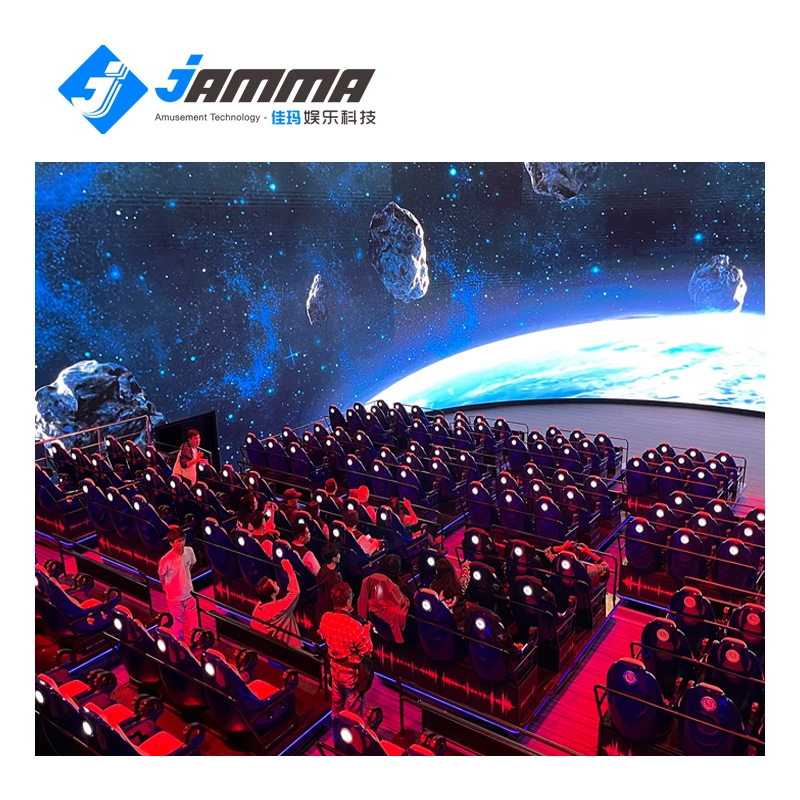
Immersive 5D/7D/9D cinema dynamic visual experience room
Compared with other types of theaters, 5D/7D/9D cinema have high technical content, prominent themes, and have a strong impact on the characteristics of the picture. With the increasing demand in the entertainment market and the continuous development of video entertainment technology, in the past, audiences would experience vibration, drop, rain, scratches and other effects in some 4D theaters, but now with 5D theaters, audiences can experience new Unique features, touch and feel effects such asreal smoke, water, snow, bubbles, smell, lightning, leg touch,camera system and more. When the audience is watching amovie, the seats and environmental effects will change into corresponding actions according to the development of the movie,allowing the audience to experience an immersive viewing experience.
