

What is the difference between interactive wall projector games and floor systems? | JAMMA Guide
- What is the difference between interactive wall projector games and floor systems?
- Overview: Interactive Wall Projector Games vs. Floor Systems
- Key Technical Differences
- User Experience & Engagement
- Operational Considerations
- Industry Applications
- Choosing the Right System for Your Venue
- Authoritative Sources
What is the difference between interactive wall projector games and floor systems?
Industry professionals often seek clarity on the difference between interactive wall projector games and floor systems. These technologies innovate the amusement industry, but their unique operational features and user experiences matter when choosing the right solution for your venue. Below, you’ll find the essential facts to help inform your investment and design choices.
Overview: Interactive Wall Projector Games vs. Floor Systems
- Interactive Wall Projector Games:
- Project gaming or educational content onto vertical surfaces.
- Users engage by touching, tapping, or gesturing against the wall.
- Widely adopted for limited-space venues or attraction zones with vertical access.
- Interactive Floor Systems:
- Project content on horizontal surfaces (floors).
- Participants interact by stepping, jumping, or running on projected areas.
- Ideal for play zones where children can move freely.
Key Technical Differences
- Interactivity Methods
- Walls: Often use high-precision touch sensors or gesture detection.
- Floors: Commonly rely on motion and pressure sensors for step-based input.
- Projection Angles & Setup
- Walls: Require specific wall-mounting and stable ambient lighting.
- Floors: Overhead projectors or floor units; ambient light can affect visibility.
- Content Suitability
- Walls: Great for digital art, educational games, interactive storytelling.
- Floors: Suited for physically active games, group activities, and exercise-based gameplay.
User Experience & Engagement
- Audience Age Range
- Walls: Attracts a wider range of ages—infants, children, teens, and adults.
- Floors: Primarily designed for children, especially in arcade or soft play settings.
- Accessibility
- Walls: Easier for inclusive design (wheelchair accessibility, height adjustment).
- Floors: Can pose access challenges for individuals with mobility limitations.
- Immersion & Learning
- Walls: Facilitates cognitive engagement; effective for edutainment.
- Floors: Boosts physical activity, social play, and team-based challenges.
Operational Considerations
- Maintenance & Durability
- Walls: Lower risk of wear—protection from foot traffic, but risk from contact/handprints.
- Floors: Requires durable projection and sensor hardware due to heavy use.
- Space Optimization
- Walls: Leverages underused vertical space—suited to narrow or compact venues.
- Floors: Requires open, obstruction-free floor areas for safe play.
Industry Applications
- Popular Venues
- Walls: Museums, learning centers, themed attractions, retail displays.
- Floors: Trampoline parks, children’s entertainment centers, family fun centers.
- Market Trends
- The interactive amusement market is set to grow at 7.7% CAGR through 2027, driven by rising demand for hands-on engagement (Allied Market Research).
- Venues are increasingly integrating both wall and floor systems to diversify guest experiences and maximize usage across demographics (IAAPA).
Choosing the Right System for Your Venue
- Evaluate Foot Traffic: Floor systems excel in open spaces; wall systems fit tighter layouts.
- Define Target Audience: Consider age, group size, and accessibility needs.
- Assess Content Goals: Choose walls for interactive storytelling; floors for kinetic play.
Authoritative Sources
- (https://www.alliedmarketresearch.com/interactive-entertainment-market-A13787)
- (https://www.iaapa.org/expos/education/attractions-industry-trends)
*For the amusement industry, understanding the difference between interactive wall projector games and floor systems is critical for meeting user expectations and maximizing revenue. Choose solutions that align with your venue’s space, demographic, and engagement goals.*

What Are the Best Solutions for Game with Projector in Park Squares?
What Factors Determine the Price of Custom Interactive Floor Projector?
How to Choose a Custom VR Game Machine Manufacturer in China 2026
How Do AR Motion Simulators and VR Machines Transform Digital Interactive Game Zones?
How Can You Enhance the Experience of Activate LED Floor & Laser Maze Games at Home Smart Entertainment Spaces?
Standard and other
How long is the warranty period?
Our products have a one-year warranty period. During the warranty period, if there are any issues with the product that are not caused by human error, we can replace the parts for you free of charge. If the problems are caused by improper use, you will need to purchase the parts and bear the shipping costs yourself.
Do you offer a customized service?
We can provide logo customization service for all of our products. For certain products, we can also support customization of sizes and game content. If you have any product customization requirements, please contact us and we will confirm the details with you.
What is the delivery time?
Usually the production period of our products is 20 to 25 days, it will be a little different according to the quantity of products you order. All products need to go through our strict quality inspection before shipment. After they are tested, we will ship them to you at the first time. For products in stock, we usually ship within 3 days.
Product details
How many players can play soccer at the same time?
Up to 4 players can play at the same time, you need to add more soccer balls.
What is the difference between 5D and 3D?
The visual of 5D cinema is the same as that of 3D, compared to 3D, it adds motion simulation and special effects, which are not available in 3D.
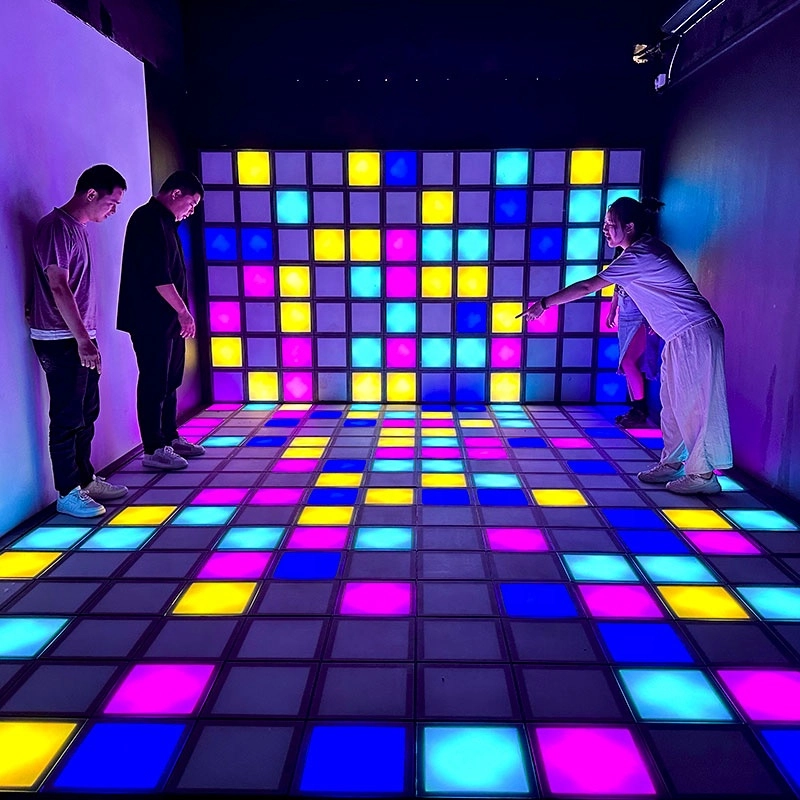
Hottest activated LED dance grid tiles floor touch games
Super Grid is an immersive sports game that combines sports and technology. It integrates interactive LED lights and sensors through innovative software design, creating a fun gaming experience.
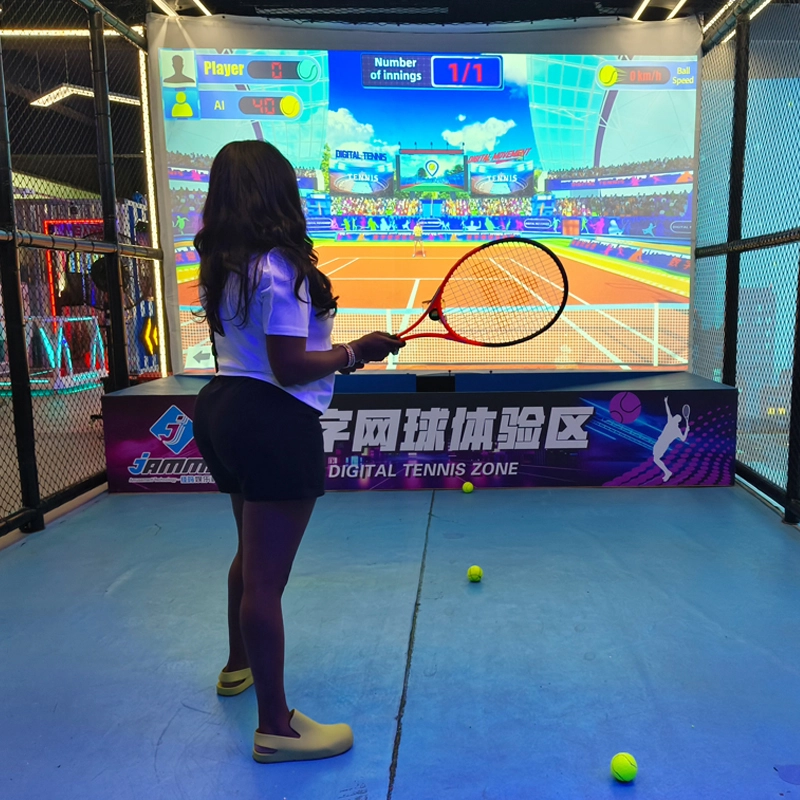
Top Indoor Tennis Racketball Training Simulator Dual Player Games
Interactive somatosensory fitness game
Combine traditional tennis sports with advanced 3D digital technology to bring customers an immersive tennis training experience
COMBINE TRADITIONAL TENNIS SPORTS WITH ADVANCED 3D DIGITAL TECHNOLOGY TO BRING CUSTOMERS AN IMMERSIVE TENNIS TRAINING EXPERIENCE INDOOR AND TENNIS EXPERIENCE HALL
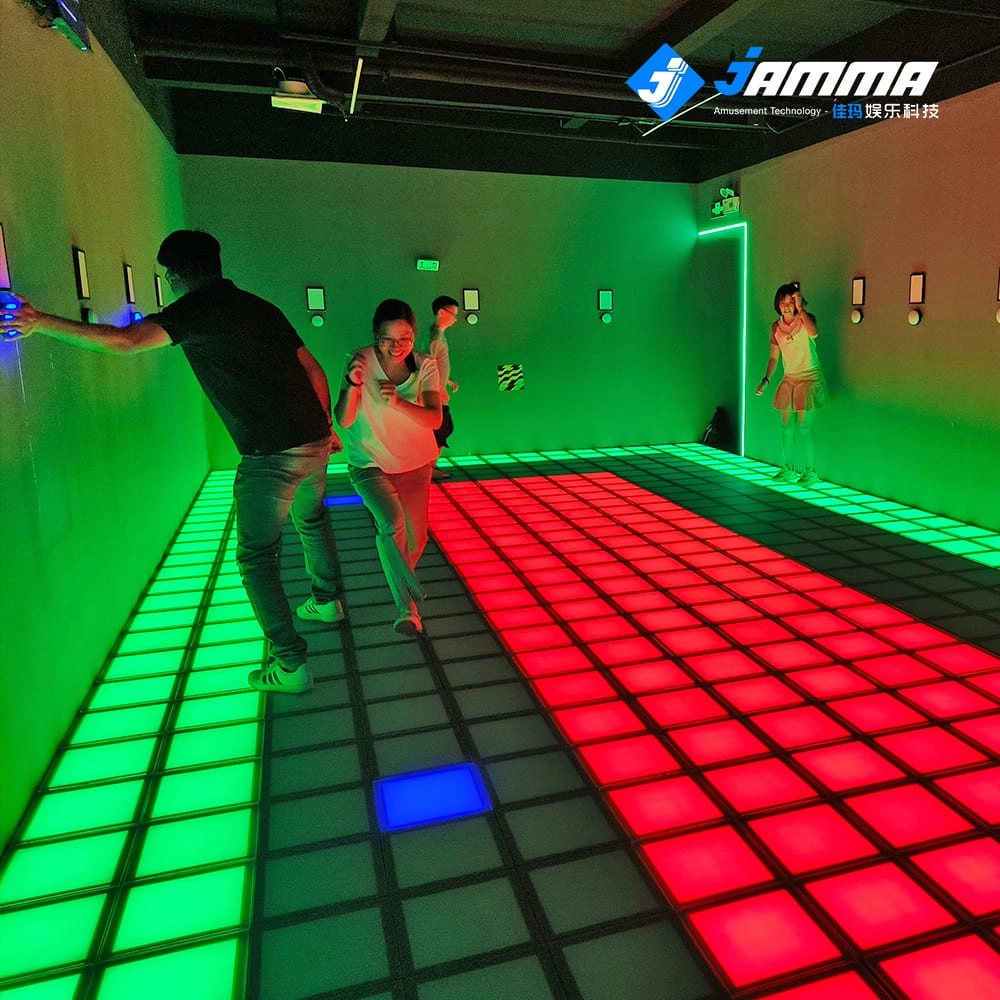
Super Grid Interactive LED Floor Activate Game Team Play
Super Grid is an immersive sports game that combines sports and technology. It integrates interactive LED lights and sensors through innovative software design, creating a fun gaming experience.
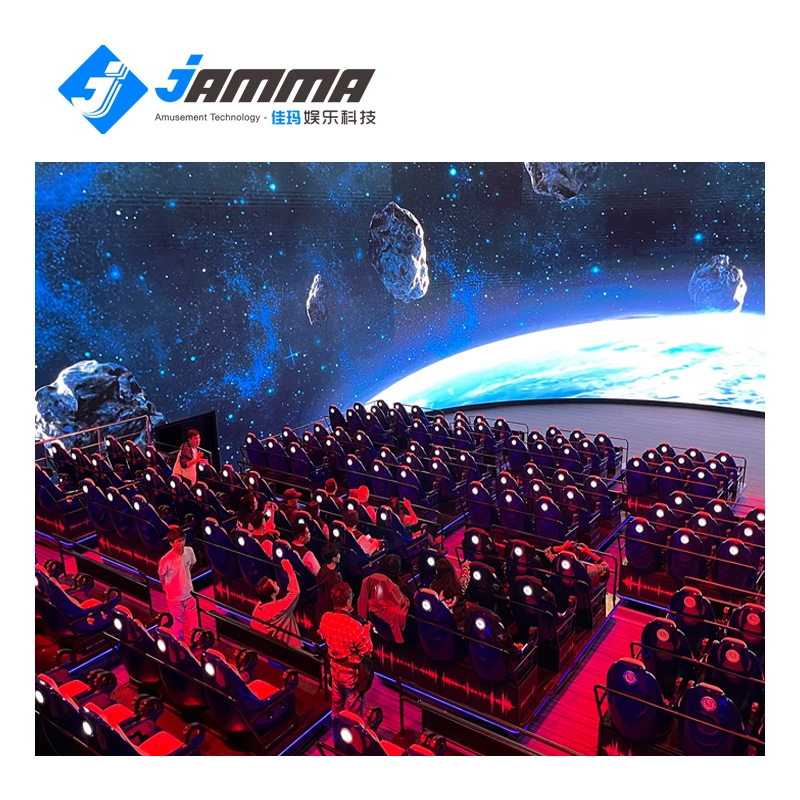
Immersive 5D/7D/9D cinema dynamic visual experience room
Compared with other types of theaters, 5D/7D/9D cinema have high technical content, prominent themes, and have a strong impact on the characteristics of the picture. With the increasing demand in the entertainment market and the continuous development of video entertainment technology, in the past, audiences would experience vibration, drop, rain, scratches and other effects in some 4D theaters, but now with 5D theaters, audiences can experience new Unique features, touch and feel effects such asreal smoke, water, snow, bubbles, smell, lightning, leg touch,camera system and more. When the audience is watching amovie, the seats and environmental effects will change into corresponding actions according to the development of the movie,allowing the audience to experience an immersive viewing experience.
Get in Touch With JAMMA
Would you like to learn more about indoor & outdoor playground equipment?
We would be happy to help you and find the best solution for your needs.
