

VR Arcade Equipment Buying Guide: 5 Costly Mistakes Every New Owner Makes (2026 Edition)
- Quick Summary: The Essentials of VR Arcade Equipment
- What is the Essential Equipment Checklist for a Modern VR Arcade?
- Mistake #1: Investing in Consumer Headsets Instead of Enterprise HMDs
- Mistake #2: Skipping 'Anchor Attractions' (Motion Simulators & Free Roam)
- Mistake #3: Underestimating the 'Invisible' Hardware (Network & PC Specs)
- Mistake #4: Ignoring Software-Hardware Compatibility & Licensing
- Mistake #5: Neglecting Maintenance, Spare Parts, and Support Contracts
- Future-Proofing Your Arcade: 2026 Trends & Beyond
- Conclusion
- FAQ
Quick Summary: The Essentials of VR Arcade Equipment
A profitable VR arcade relies on a mix of durable enterprise hardware, high-throughput motion simulators, and strict adherence to commercial software licensing. Don't just buy what looks cool; buy what survives Saturday night crowds.
For the busy entrepreneur, success hinges on balancing "Anchor Attractions" that draw crowds with standard stations that keep them playing. Below are the five most critical procurement errors that drain budgets and kill VR arcade ROI calculation projections, along with the mandatory equipment categories you need to launch:
- Head-Mounted Displays (HMDs): Commercial-grade units only.
- Motion Platforms: Commercial VR simulators like 360-degree chairs or racing rigs.
- Computing Core: High-spec PCs or local rendering nodes.
- Peripherals: Haptic vests, gun controllers, and sanitation stations.
What is the Essential Equipment Checklist for a Modern VR Arcade?
A complete VR arcade setup requires commercial-grade Head-Mounted Displays (HMDs), high-performance PCs or local server rendering nodes, motion simulation platforms (treadmills, egg chairs), management software (launcher/licensing), and hygiene sanitation stations. This ecosystem must work seamlessly to minimize downtime.
One of the most frequent questions we receive at JAMMA Amusement Technology is regarding the difference between home setups and location-based entertainment hardware. The distinction is critical: LBE gear is built for 12+ hours of continuous daily operation, whereas consumer gear often overheats or breaks under such stress. To ensure a robust facility, your checklist must include:
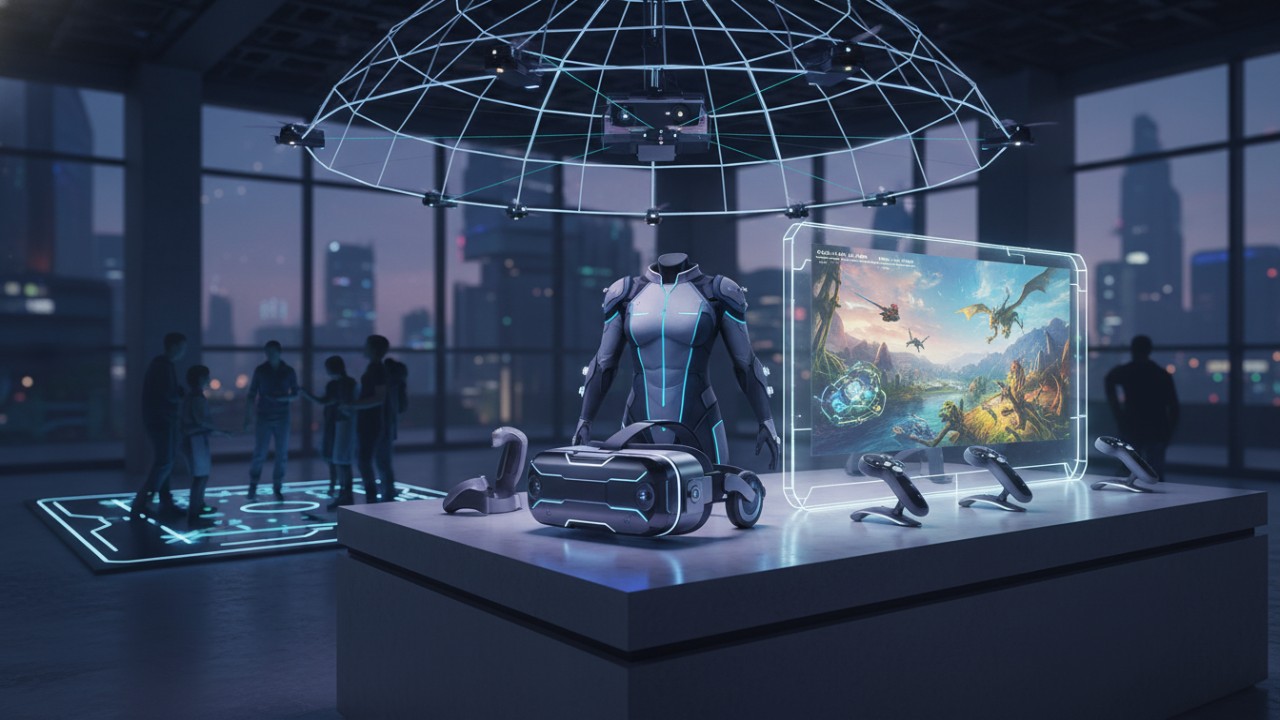
- VR Headsets: 6DOF Enterprise models (HTC VIVE Focus 3, Pico 4 Enterprise).
- Control Systems: Centralized operator tablets to launch games remotely.
- Sanitation: UV-C cleaning boxes and disposable masks.
- Network: Wi-Fi 6E/7 routers dedicated solely to VR streaming.
Mistake #1: Investing in Consumer Headsets Instead of Enterprise HMDs
Buying consumer-grade headsets (like the standard Meta Quest 3) for a commercial venue is a financial trap due to voided warranties, non-replaceable batteries, and hygiene components that cannot withstand public use. You need hardware designed for the "swappable" workflow of a busy arcade.
While the upfront cost of a consumer unit is lower, the operational costs skyrocket within months. In our 15 years of experience at JAMMA, we have seen venue owners forced to replace entire fleets of headsets because the charging ports failed or the face foam absorbed sweat that couldn't be cleaned. Enterprise headsets feature magnetic, easy-clean gaskets and back-mounted batteries that can be hot-swapped without shutting down the device.
- Hygiene & Durability: Enterprise materials resist alcohol wipes; consumer plastics often degrade.
- Warranty protection: Commercial use often voids standard consumer warranties immediately.
- Battery Lifecycle: Enterprise units allow continuous play via battery swapping; consumer units require downtime to charge.
Mistake #2: Skipping 'Anchor Attractions' (Motion Simulators & Free Roam)
Relying solely on standard standing VR stations offers a low barrier to entry but fails to provide the high-ticket "Wow Factor" needed to compete with home VR gaming systems. To drive true foot traffic, you must offer experiences customers cannot replicate in their living rooms.
According to a 2026 market report by Research and Markets, the location-based entertainment hardware market is projected to grow significantly, driven specifically by immersive, heavy-hardware attractions. JAMMA Amusement Technology specializes in these high-ROI units, such as 9D VR egg chairs and 360-degree flight simulators. These "Anchors" act as billboards for your venue, justifying higher ticket prices and increasing repeat visits.
- Visual Appeal: Large, moving machines attract onlookers and social media shares.
- Higher Throughput: Turnkey VR arcade solutions often automate the ride, reducing staff workload.
- Exclusivity: Motion simulation is physically impossible for 99% of home users to replicate.
Mistake #3: Underestimating the 'Invisible' Hardware (Network & PC Specs)
The most common technical failure point is not the headset itself, but the insufficient network infrastructure and thermal throttling of pre-built consumer PCs running in enclosed cabinets. VR rendering requires sustained peak performance that standard gaming rigs often cannot maintain without custom cooling.
Wireless VR is the standard in 2026, but it demands a flawless network. A single stutter can cause motion sickness for a paying customer. Furthermore, cabling presents a massive liability risk if not managed with ceiling retractors. Proper infrastructure planning is just as vital as the games you offer.
- Dedicated Bandwidth: Use Wi-Fi 6E or 7 routers isolated from the public guest Wi-Fi.
- Thermal Management: PCs in arcade cabinets need industrial-grade airflow, not just stock fans.
- Cable Safety: Install overhead cable management systems to prevent tripping hazards and cable fatigue.
Mistake #4: Ignoring Software-Hardware Compatibility & Licensing
Purchasing hardware without verifying its compatibility with commercial licensing platforms (like SynthesisVR or SpringboardVR) or failing to secure proper site licenses is a legal risk that can shut down your business. You cannot simply use a personal Steam account for commercial operations.
As clearly outlined in the Steamworks Documentation, standard Steam Subscriber Agreements only cover personal, non-commercial use. To operate legally, you must utilize the Steam PC Café Program or similar commercial licensing options. At JAMMA, we pre-configure our commercial VR simulators to be compatible with major launchers, ensuring you don't face the "black screen" of incompatibility on opening day.
- Kiosk Mode: Ensure your headsets support "Kiosk Mode" to lock users into the game launcher.
- API Support: Motion platforms need specific API drivers to sync movement with the game; not all games support all chairs.
- Legal Compliance: Avoid fines by securing commercial rights for every title in your library.
Mistake #5: Neglecting Maintenance, Spare Parts, and Support Contracts
A failure to budget for ongoing maintenance and spare parts results in immediate revenue loss when a controller breaks or a headset malfunctions during peak operating hours. Hardware downtime is the silent killer of arcade profitability.
We advise all our clients to follow the "10% Rule": Budget 10% of your CapEx specifically for spare controllers, cables, and face gaskets. Furthermore, sourcing from a partner with a dedicated after-sales team is crucial. JAMMA Amusement Technology maintains a skilled support team to troubleshoot issues remotely, ensuring your turnkey VR arcade solutions remain operational.
- Spare Inventory: Keep backup controllers and 3-in-1 cables on-site at all times.
- Routine Checks: Schedule weekly lens inspections and PC dust cleaning.
- Vendor Support: Choose suppliers that offer video-call technical support, not just email ticketing.
Future-Proofing Your Arcade: 2026 Trends & Beyond
To future-proof your venue, you must prepare for the integration of Mixed Reality (MR) arenas, AI-driven NPCs, and advanced peripherals like haptic feedback suits. The industry is moving from passive viewing to active, full-body engagement.
Market analysis from Mordor Intelligence indicates a massive surge in the adoption of advanced wearables and gesture-tracking devices in the LBE sector through 2031. Incorporating Haptic feedback suits for LBE into your premium packages can differentiate your arcade from competitors who are still stuck in 2023. Technology evolves rapidly; your infrastructure must be flexible enough to adapt.
- Mixed Reality: Pass-through cameras allow players to see the real world and digital enemies simultaneously.
- Haptics: Vests that allow players to "feel" shots add a premium layer to the experience.
- 5G Integration: Preparing for cloud-rendered content to reduce reliance on local heavy PCs.
Conclusion
Building a successful VR arcade requires more than just renting space and buying headsets. It demands a strategic approach to equipment selection, avoiding the pitfalls of consumer-grade gear, and investing in high-ROI commercial VR simulators that drive repeat business. By securing proper commercial licensing, planning for maintenance, and partnering with experienced manufacturers like JAMMA Amusement Technology, you protect your investment and ensure a seamless experience for your customers.
Remember to calculate your VR arcade ROI calculation based on the total cost of ownership—including downtime and repairs—rather than just the initial purchase price. The right equipment stack is the foundation of a thriving entertainment business.
Contact JAMMA Amusement Technology today to optimize your VR arcade strategy.
FAQ
What is the cost of starting a VR arcade in 2026?
Startup costs vary significantly based on scale, but a small venue typically starts around $50,000, while full-scale LBE centers with motion simulators can range from $150,000 to $500,000+ depending on equipment quality.
Do I need a PC for every VR headset?
Not necessarily. While high-fidelity PC VR experiences require dedicated GPUs, modern standalone enterprise headsets can run lighter arcade games directly. However, premium motion simulators almost always require a connected PC.
What are the best VR headsets for commercial use?
Top choices for 2026 include the HTC VIVE Focus series (for durability), Pico Enterprise models (for cost-efficiency), and specialized LBE headsets from manufacturers like DPVR for seated experiences.
How much space is needed for a VR motion simulator?
Space varies by unit. A single VR egg chair needs about 2-3 square meters, while free-roam arenas or 6-player racing setups can require 20-50 square meters or more.
Can I use SteamVR games in my arcade?
You cannot use a personal Steam account. You must use a commercial licensing platform (like SynthesisVR or SpringboardVR) or obtain direct site licenses from developers to legally operate commercially.
What is the lifespan of VR arcade equipment?
Commercial-grade equipment typically lasts 2-3 years of heavy daily use. Consumer gear used commercially may fail within 6-9 months without rigorous maintenance.
What is a 9D VR cinema?
9D VR combines 3D visuals with motion (the platform moves) and environmental effects (wind, rain, leg ticklers) to create a fully immersive passive experience, popular in malls and FECs.
Is insurance required for VR arcade equipment?
Yes, specialized business insurance is recommended to cover theft, accidental damage by customers, and liability. Standard business property insurance may not fully cover high-tech simulator electronics.
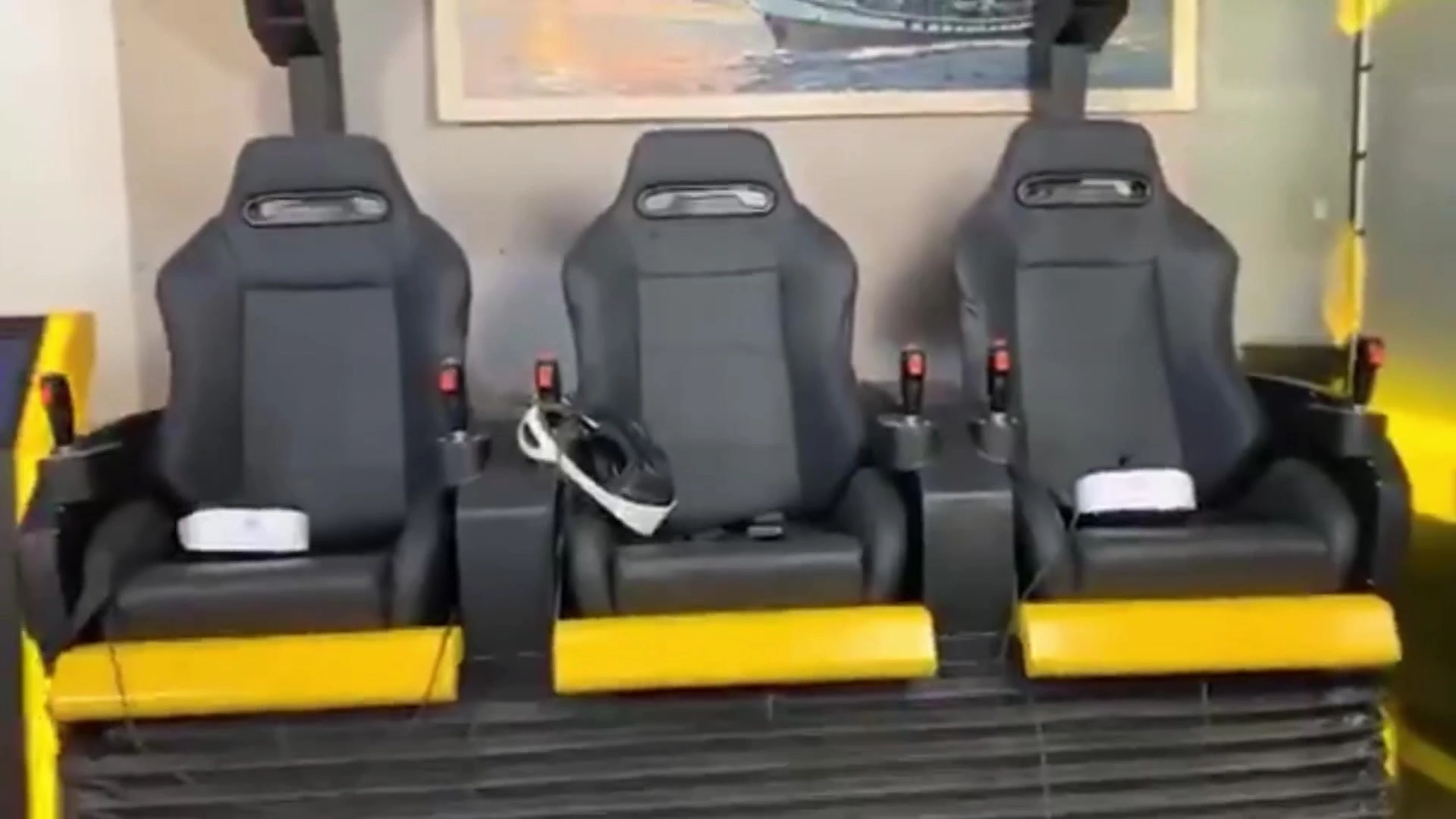
What Is the Configuration, Structure, and Working Principle of VR Dynamic 7D Cinema?
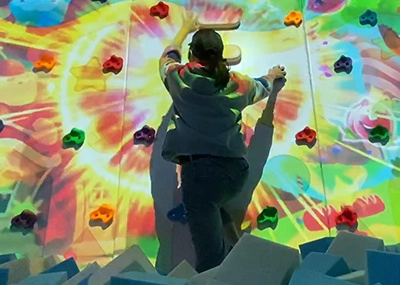
Projector Configuration Requirements for Parent-Child Interactive Play Areas: What Do You Really Need to Get It Right?

How Do Indoor Football Simulators Enable Real Interaction Through Sensors?
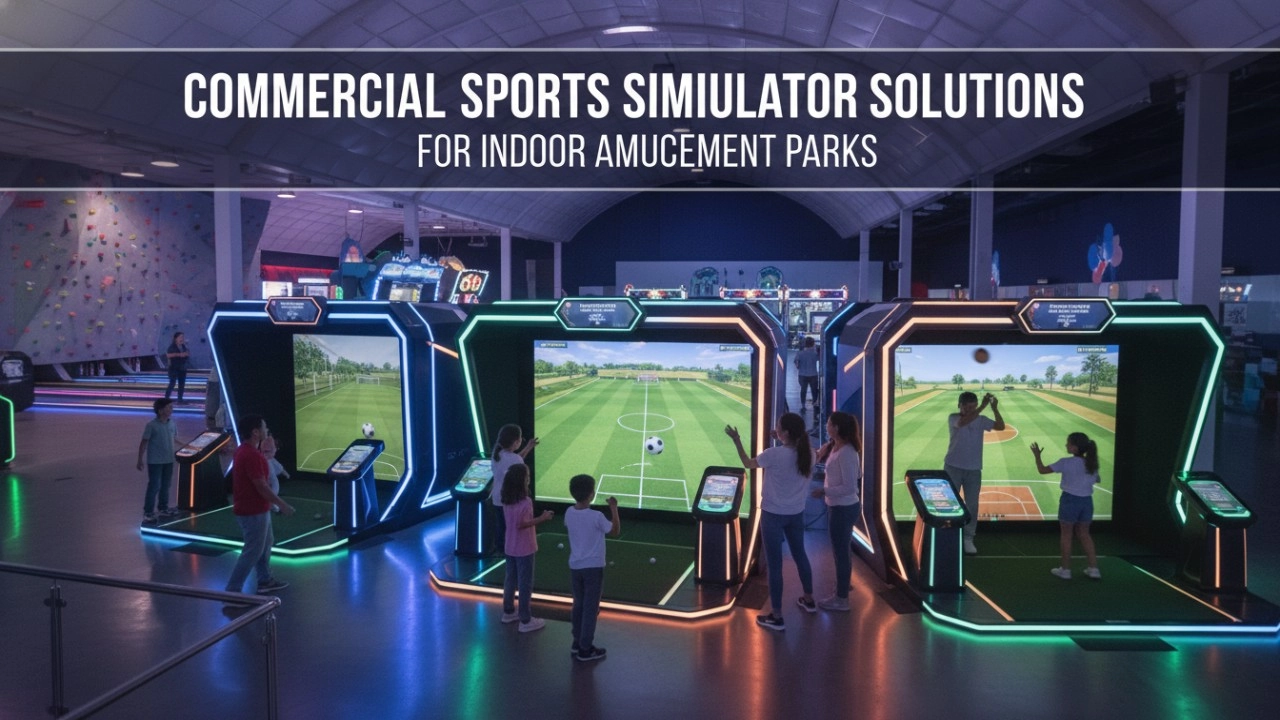
Which Sports and Entertainment Game Equipment Is Suitable for Investment in Amusement Park Projects?
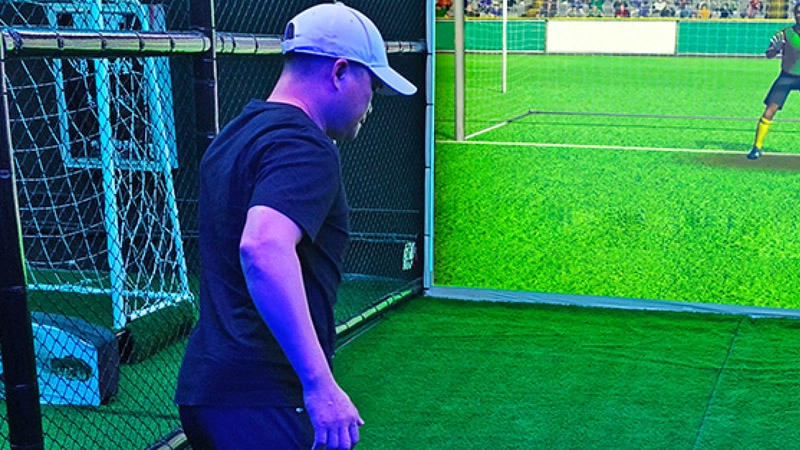
Can an AR Multiplayer Baseball Simulator with a High-Impact Projector Screen Transform Indoor Sports Entertainment?
Product details
Are glasses required to see a 5D film?
Audience needs to wear 3D glasses while watching movie, but not VR glasses.
Standard and other
How long is the warranty period?
Our products have a one-year warranty period. During the warranty period, if there are any issues with the product that are not caused by human error, we can replace the parts for you free of charge. If the problems are caused by improper use, you will need to purchase the parts and bear the shipping costs yourself.
Do you offer a customized service?
We can provide logo customization service for all of our products. For certain products, we can also support customization of sizes and game content. If you have any product customization requirements, please contact us and we will confirm the details with you.
Are you an amusement park equipment manufacturer?
Yes. We have our own production factory, which is located in Guangzhou, China, covering an area of over 2,000 square meters. With our professional production team, we are able to ensure high quality and on-time delivery of our products. All products have undergone rigorous testing and quality inspection. You are welcome to visit our factory.
How will it be transported?
For large items, we usually use sea freight, while for small items, we use air freight or services like DHL, FedEx, or UPS. We can also accommodate specific shipping methods based on your requirements.
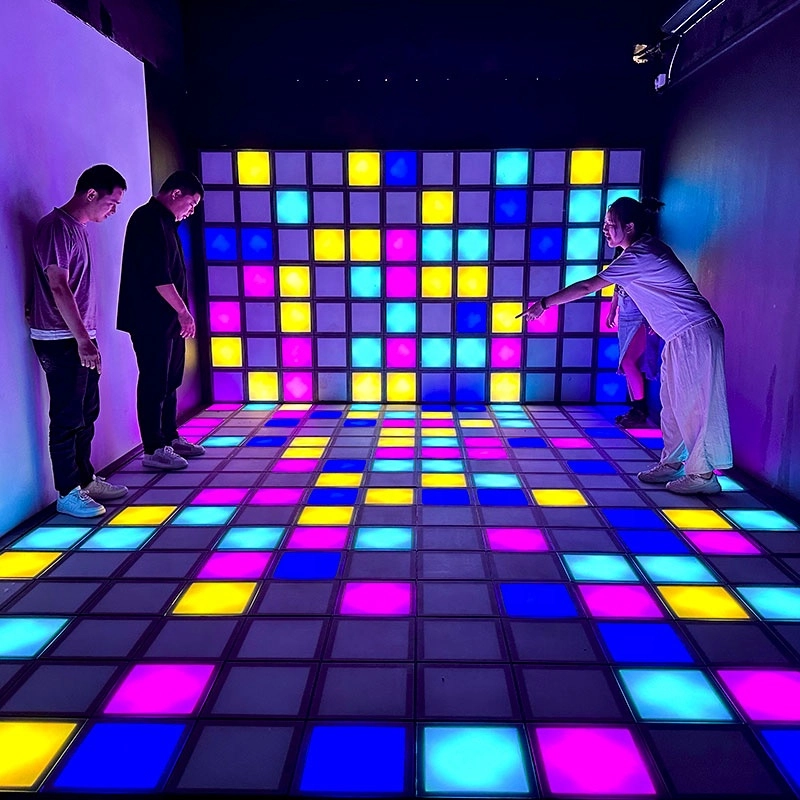
Hottest activated LED dance grid tiles floor touch games
Super Grid is an immersive sports game that combines sports and technology. It integrates interactive LED lights and sensors through innovative software design, creating a fun gaming experience.
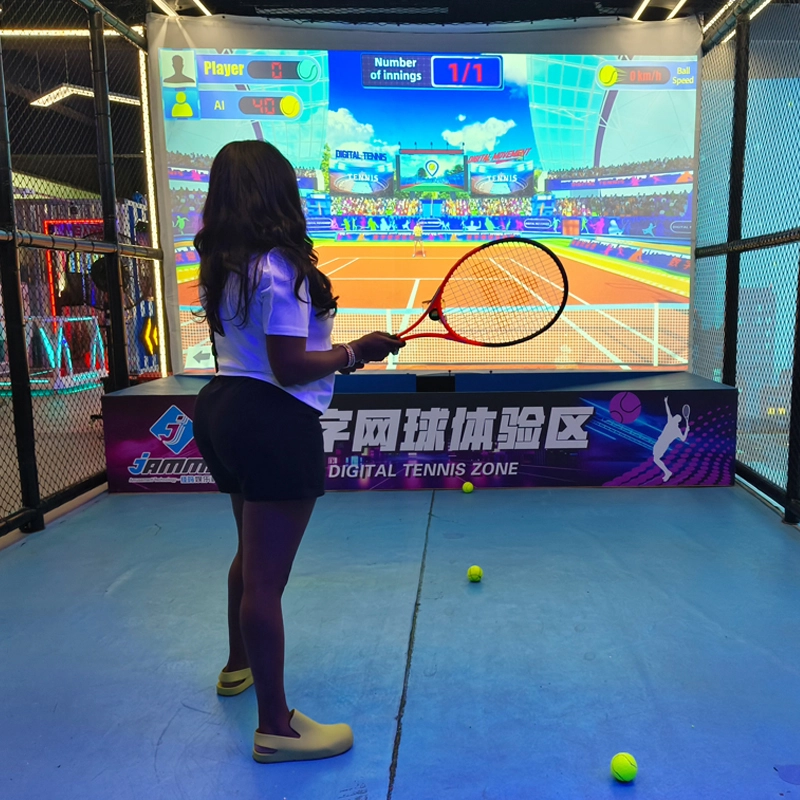
Top Indoor Tennis Racketball Training Simulator Dual Player Games
Interactive somatosensory fitness game
Combine traditional tennis sports with advanced 3D digital technology to bring customers an immersive tennis training experience
COMBINE TRADITIONAL TENNIS SPORTS WITH ADVANCED 3D DIGITAL TECHNOLOGY TO BRING CUSTOMERS AN IMMERSIVE TENNIS TRAINING EXPERIENCE INDOOR AND TENNIS EXPERIENCE HALL
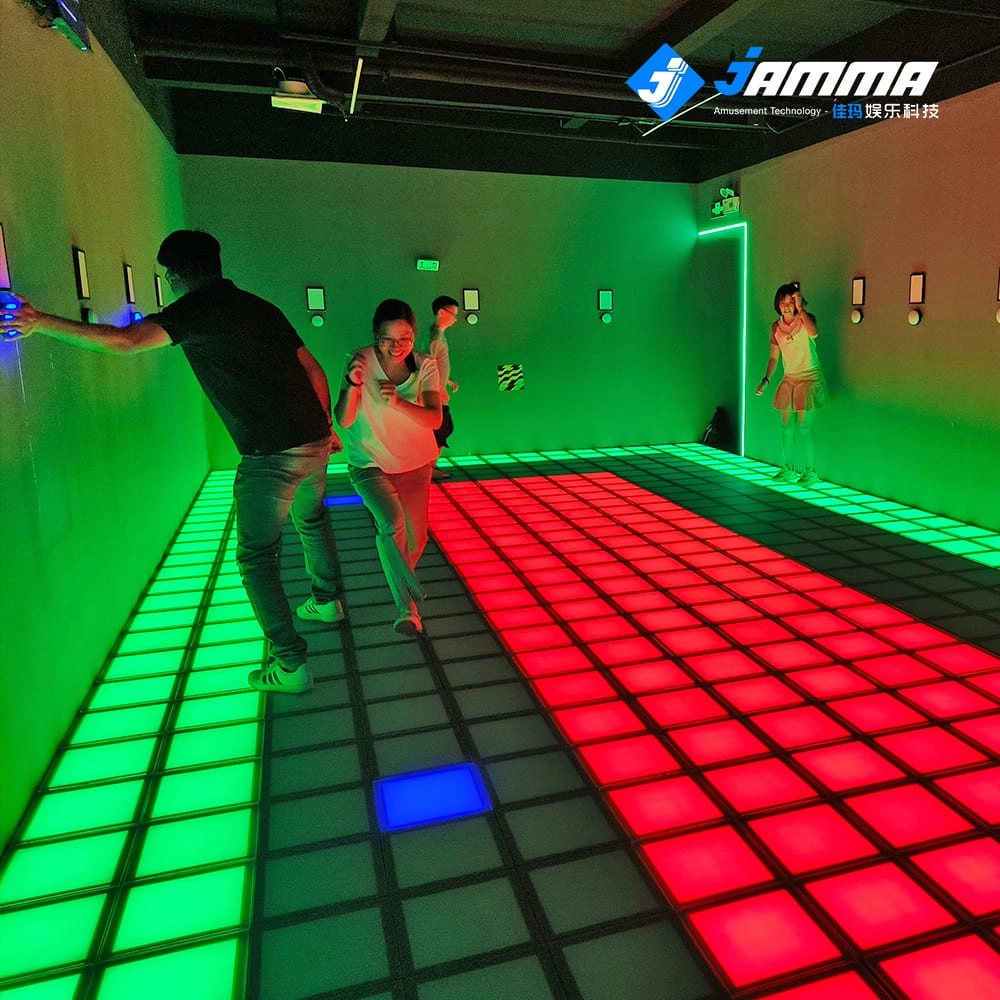
Super Grid Interactive LED Floor Activate Game Team Play
Super Grid is an immersive sports game that combines sports and technology. It integrates interactive LED lights and sensors through innovative software design, creating a fun gaming experience.
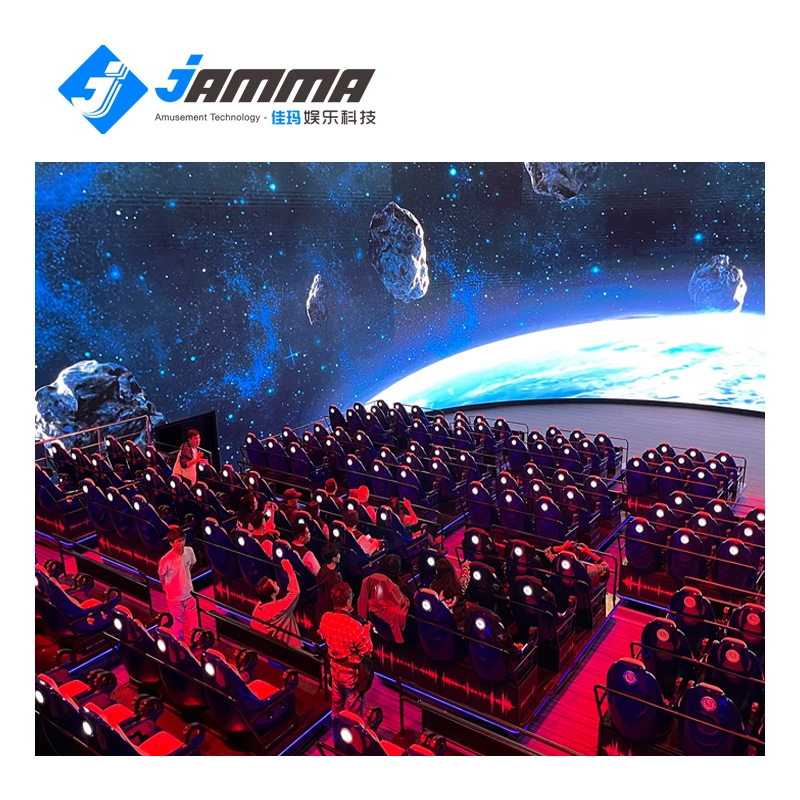
Immersive 5D/7D/9D cinema dynamic visual experience room
Compared with other types of theaters, 5D/7D/9D cinema have high technical content, prominent themes, and have a strong impact on the characteristics of the picture. With the increasing demand in the entertainment market and the continuous development of video entertainment technology, in the past, audiences would experience vibration, drop, rain, scratches and other effects in some 4D theaters, but now with 5D theaters, audiences can experience new Unique features, touch and feel effects such asreal smoke, water, snow, bubbles, smell, lightning, leg touch,camera system and more. When the audience is watching amovie, the seats and environmental effects will change into corresponding actions according to the development of the movie,allowing the audience to experience an immersive viewing experience.
Get in Touch With JAMMA
Would you like to learn more about indoor & outdoor playground equipment?
We would be happy to help you and find the best solution for your needs.
