

Staff Training for Operating Sports Simulation Units
- Preparing Your Team for High-Performance Simulation Operations
- Why structured staff training matters for sports simulation
- Define measurable training objectives tied to business KPIs (include sports simulation)
- Core curriculum components for sports simulation operators (embed keywords)
- Training modalities: hands-on, e-learning, VR practice labs — what works best for sports simulation
- Designing competency assessments and certification
- Onboarding checklist: first 30/60/90 day plan for sports simulation staff (embed sports simulation)
- Maintenance, spare parts logistics, and vendor coordination
- Safety protocols and regulatory compliance for sports simulation
- Using data to measure training ROI and operational performance
- Troubleshooting workflows and escalation paths (practical templates)
- Behavioral training for upsells and league management with sports simulation
- Case study snapshot: Expected benefits from a structured training program
- How JAMMA Amusement supports venues with training and high-value sports simulation solutions
- JAMMA advantages for sports simulation operations
- Operational checklist for venues buying sports simulation units from JAMMA
- Practical next steps: implementing your training program
- Frequently Asked Questions (FAQ)
- 1. How long does it take to train a staff member to operate sports simulation units?
- 2. What are the most common issues new operators face with sports simulation?
- 3. Should training include manufacturer-led sessions?
- 4. How often should staff be re-certified?
- 5. Can VR-based training replace hands-on practice?
- 6. What KPIs should managers track to evaluate training effectiveness?
- Contact & product inquiry
- References
Preparing Your Team for High-Performance Simulation Operations
Why structured staff training matters for sports simulation
Operating sports simulation units requires more than basic customer service skills. Sports simulation systems combine electronics, software, mechanical components, and guest interaction design. Properly trained staff reduce downtime, improve guest satisfaction, increase per-session revenue, and protect equipment lifespan. In venues where sports simulation drives both entertainment and competitive leagues, staff competency directly affects safety, throughput, and repeat business. This article focuses on creating practical, measurable training programs that align with venue commercial objectives while ensuring operational safety and consistent guest experiences.
Define measurable training objectives tied to business KPIs (include sports simulation)
Begin by translating commercial goals into measurable staff competencies. Use the following mapping:
- Goal: Increase availability of simulation units to 95% uptime. Training objective: Technicians achieve first-time repair rate ≥ 85% for common faults within 30 minutes.
- Goal: Improve guest throughput by 20%. Training objective: Operators complete pre-session setup checks in ≤ 90 seconds and reduce session transition time by 30%.
- Goal: Increase upsell conversion to coaching packages. Training objective: Front-line staff convert ≥ 15% of users through scripted consults and product demos.
Make objectives SMART (Specific, Measurable, Achievable, Relevant, Time-bound) and link them to compensation or recognition where appropriate.
Core curriculum components for sports simulation operators (embed keywords)
A standard curriculum for sports simulation staff should include the following modules:
- System basics and user flow: hardware overview, software UI, session lifecycle, payment and ticketing.
- Guest interaction & sales: demo scripts, upsell opportunities (coaching, tournaments), accessibility accommodations.
- Safety & compliance: emergency stop procedures, physical safety checks, hygiene and sanitation between sessions.
- Technical troubleshooting: common error codes, cable and sensor checks, reboot sequences, escalation protocols.
- Preventive maintenance: daily/weekly checklists, firmware update process, logging and parts inventory.
- Data and reporting: interpreting session logs, basic analytics to optimize pricing and scheduling.
Each module should include learning outcomes and a checklist for competency verification.
Training modalities: hands-on, e-learning, VR practice labs — what works best for sports simulation
Different learning methods serve different needs. For technical skills and guest-facing behavior, combine methods into a blended program.
| Method | Pros | Cons | Recommended use |
|---|---|---|---|
| Hands-on (real units) | Best for troubleshooting, muscle memory, real-world timing | Requires physical units and downtime for training | Initial onboarding and periodic refreshers |
| Instructor-led classroom | Good for standard procedures, sales techniques, and compliance | Less effective for mechanical skills | Policy, guest service scripts, safety briefings |
| VR/Simulation-based training | Scalable, repeatable scenarios for guest interactions and emergency drills | Requires content development; may not replicate hardware faults | Customer service roleplay, crowd management, emergency response |
| E-learning & microlearning | Efficient for updates, refresher knowledge, and spaced repetition | Lower engagement if poorly designed | Firmware change notes, policy updates, short knowledge checks |
Sources: Industry best practices on blended learning and spaced repetition have proven to improve retention and on-the-job performance (see references).
Designing competency assessments and certification
Assessments should verify both knowledge and practical ability. Use a tiered certification approach:
- Operator Level 1 — Safe basic operation, guest onboarding, payment handling (suitable for casual attendants).
- Technician Level 2 — Basic troubleshooting, preventive maintenance, parts replacement.
- Technician Level 3 — Firmware updates, complex diagnostics, reporting to manufacturer support.
Assessment methods: written quizzes (open-book for policies), timed practical tasks on a unit (repair scenarios), and observed guest interactions scored with a rubric. Re-certify annually or after major software/hardware updates.
Onboarding checklist: first 30/60/90 day plan for sports simulation staff (embed sports simulation)
Provide a clear, time-based onboarding plan:
- Day 1–7: Safety briefing, system overview, shadow experienced operator, sell-and-demo script practice.
- Day 8–30: Supervised hands-on shifts, basic troubleshooting, complete e-learning modules, pass Level 1 assessment.
- Day 31–60: Solo shifts with technical backup, preventive maintenance practice, begin Level 2 technical training.
- Day 61–90: Lead small training segments, complete Level 2 assessment, learn escalation to Level 3 and manufacturer support.
Document progress in a digital LMS or simple spreadsheet so managers can see readiness at a glance.
Maintenance, spare parts logistics, and vendor coordination
Effective training includes logistics planning. Document common failure modes and maintain a minimal spare-parts kit on-site (sensors, cables, fuses, control board connectors). Create an SLA with the supplier for parts and remote troubleshooting turnaround times. Train staff to collect diagnostic logs and screenshots before contacting vendor support — this reduces mean time to repair.
Safety protocols and regulatory compliance for sports simulation
Safety procedures must be embedded in every shift. Key items include:
- Daily physical checks: cables secured, sensors aligned, emergency stop functional.
- Sanitation between sessions: wipe points of contact, helmet/handle cleaning where applicable.
- Incident reporting workflow: immediate first aid, incident log, escalation to management and manufacturer.
- Compliance training: align with local electrical and amusement ride regulations. Keep certificates and inspection reports on file.
Reference OSHA and local amusement device regulations for staff safety training requirements (see references).
Using data to measure training ROI and operational performance
Track KPIs that align with earlier objectives. Key metrics include:
- Unit uptime (%) and mean time to repair (MTTR).
- Average session transition time (seconds).
- Upsell conversion rate and average revenue per user (ARPU).
- Customer satisfaction scores and repeat visit rate.
- Number of incidents per 1,000 sessions.
Compare metrics pre- and post-training rollouts. Best-practice venues update training based on data trends every quarter.
Troubleshooting workflows and escalation paths (practical templates)
Provide step-by-step flowcharts for common issues. Example: Unit won't start
- Check power: confirm outlet and fuse — log timestamp.
- Inspect emergency stop and safety interlocks — reset if clear.
- Reboot system following documented sequence — watch boot logs.
- If error code appears, consult error-code manual and attempt listed fix.
- If unresolved after 20 minutes, escalate to Level 3 support and open manufacturer ticket with logs and photos.
Having clear escalation contact information (phone, email, ticket portal) reduces confusion in live-service environments.
Behavioral training for upsells and league management with sports simulation
Sales and event management training should be role-play heavy. Teach staff:
- How to perform a quick skills demo emphasizing value (e.g., performance tracking, coaching options).
- How to explain league or event value and encourage sign-ups during peak traffic moments.
- How to handle objections and offer bundles (session + coaching + merchandise).
Scripts and measured incentives (commission or recognition) help align staff behaviors with commercial goals.
Case study snapshot: Expected benefits from a structured training program
Example projection for a mid-size arcade implementing a 6-week blended training program for two sports simulation units:
| Metric (baseline) | Post-training (6 months) |
|---|---|
| Unit uptime 85% | 95% (reduced downtime via faster repairs) |
| Average sessions/day 60 | 72 (20% increase from faster transitions & better selling) |
| Upsell rate 8% | 15% (improved demo and sales scripts) |
These improvements typically pay back training investment within 3–9 months depending on venue size.
How JAMMA Amusement supports venues with training and high-value sports simulation solutions
JAMMA Amusement was established in 2009, located in Guangzhou, with 15 years of experience in the amusement industry. Focusing on providing high-value, one-stop solutions for amusement projects, our products include VR games, AR sports simulators, AR interactive projection games, 5D cinema, as well as arcade games and outdoor playground equipment. We have a highly efficient international sales team dedicated to understanding customer needs and providing professional solutions and high-quality products for venues. Our industry-leading technical team keeps abreast of the latest technological trends and continuously develops and updates the products. Our manufacturing and after-sales teams are skilled and experienced, providing comprehensive technical support. We are committed to becoming a leading global provider of amusement equipment and park solutions. Our website is https://www.jammapark.com/.
JAMMA advantages for sports simulation operations
When choosing a supplier, venues should prioritize partners who provide not just hardware but operational support. JAMMA's competitive advantages include:
- Complete product range: Sports Simulators, Interactive Projection Games, Immersive Attractions, VR Games—allowing venues to source integrated attractions from one manufacturer.
- Technical depth: an R&D team that delivers regular firmware/software updates and supports remote diagnostics to speed up MTTR.
- After-sales and training: dedicated teams providing on-site commissioning, operator training packages, and documentation tailored to venue workflows.
- International sales and logistics experience: helps with customs, spares distribution, and localized training materials.
These capabilities enable venues to implement the structured training programs described earlier with vendor-backed technical support.
Operational checklist for venues buying sports simulation units from JAMMA
- Request a training package with equipment purchase: include onboarding training hours, digital manuals, and vendor contact SLA.
- Plan for spares: order a recommended spare-parts kit at installation.
- Schedule recurring update sessions: quarterly remote reviews and annual on-site audits.
- Document local troubleshooting and escalation tailored to JAMMA’s support flows.
Practical next steps: implementing your training program
Follow this condensed implementation plan:
- Audit current skills and equipment status.
- Define 3–5 measurable training objectives tied to KPIs.
- Choose blended modalities and build a 90-day onboarding plan.
- Create assessment rubrics and certification tiers.
- Coordinate with your equipment vendor (e.g., JAMMA) for onboarding support and parts provisioning.
- Monitor KPIs and iterate training quarterly.
Frequently Asked Questions (FAQ)
1. How long does it take to train a staff member to operate sports simulation units?
Typical onboarding to basic operator competency is 2–4 weeks with blended training; technical competency for maintenance ranges from 6–12 weeks depending on prior experience and the complexity of the system.
2. What are the most common issues new operators face with sports simulation?
Common problems include sensor misalignment, software freezes from improper shutdowns, network/authentication issues with POS integrations, and guest-flow delays due to inadequate pre-session checks.
3. Should training include manufacturer-led sessions?
Yes. Manufacturer-led initial commissioning and training ensure staff learn vendor-recommended maintenance and escalation steps, reducing warranty disputes and repair times.
4. How often should staff be re-certified?
Annually for standard operations, or immediately after major software or hardware updates. For safety-critical functions, consider semi-annual refreshers and tabletop emergency drills.
5. Can VR-based training replace hands-on practice?
VR training complements but does not fully replace hands-on experience. VR excels for scenario-based guest interactions and safety drills; physical hardware practice is essential for troubleshooting mechanical/electrical faults.
6. What KPIs should managers track to evaluate training effectiveness?
Unit uptime, MTTR, session throughput, upsell conversion, ARPU, incident rate per 1,000 sessions, and customer satisfaction scores are essential KPIs.
Contact & product inquiry
If you are planning to install or optimize sports simulation units, JAMMA Amusement offers tailored training packages, commissioning services, and lifecycle support. Visit our products and solutions at jammapark.com or contact our sales team through the website to request a proposal and training plan.
References
- Occupational Safety and Health Administration (OSHA) — Training Resources. https://www.osha.gov/training (accessed 2025-11-20).
- Statista — Virtual Reality (VR) users and market indicators. https://www.statista.com/topics/2532/virtual-reality-vr/ (accessed 2025-10-05).
- Cepeda, N.J., Pashler, H., Vul, E., Wixted, J.T., Rohrer, D. (2008). Distributed practice in verbal recall tasks: A review and quantitative synthesis. Psychological Science. https://journals.sagepub.com/doi/10.1111/j.1467-9280.2008.02164.x (accessed 2024-12-01).
- International Association of Amusement Parks and Attractions (IAAPA) — Industry insights and reports. https://www.iaapa.org/ (accessed 2025-01-10).
How to Choose the cycling kit simulator manufacturer and supplier ?
Top 10 diy golf simulator Manufacturers and Supplier Brands in Germany
Custom football simulator game Manufacturers and Suppliers in Asia
Tips for Wholesale bowling center equipment for sale in Africa
Product details
Are glasses required to see a 5D film?
Audience needs to wear 3D glasses while watching movie, but not VR glasses.
What are the special effects in a 5D cinema?
JAMMA 5D cinema has special effects such as water spray, smoke, bubbles, snow, lightning and so on, which allows it to provide a realistic and immersive experience.
How many players can play soccer at the same time?
Up to 4 players can play at the same time, you need to add more soccer balls.
What is the difference between 5D and 3D?
The visual of 5D cinema is the same as that of 3D, compared to 3D, it adds motion simulation and special effects, which are not available in 3D.
Standard and other
How will it be transported?
For large items, we usually use sea freight, while for small items, we use air freight or services like DHL, FedEx, or UPS. We can also accommodate specific shipping methods based on your requirements.
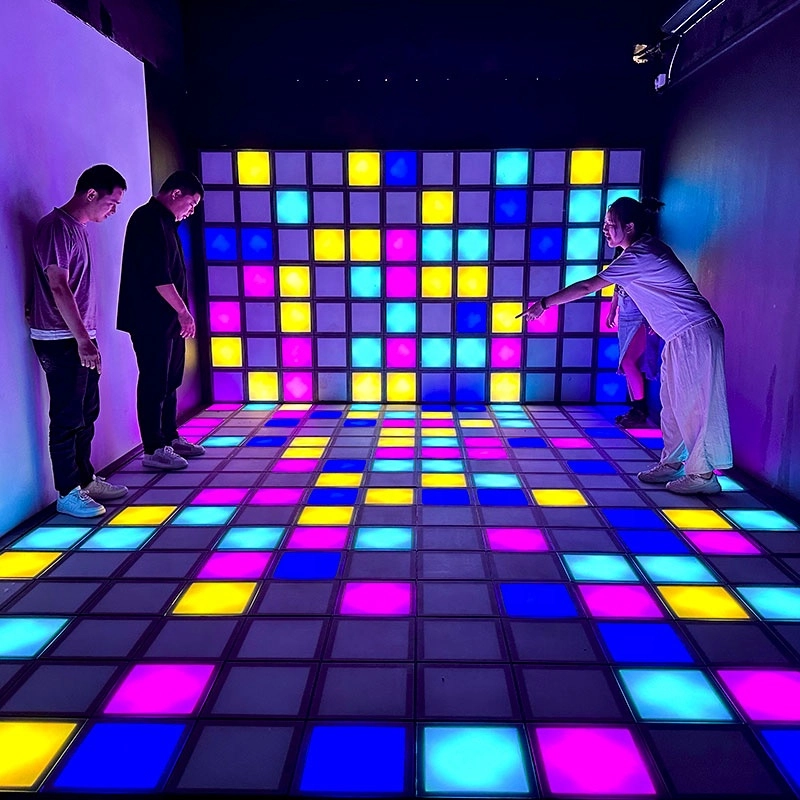
Hottest activated LED dance grid tiles floor touch games
Super Grid is an immersive sports game that combines sports and technology. It integrates interactive LED lights and sensors through innovative software design, creating a fun gaming experience.
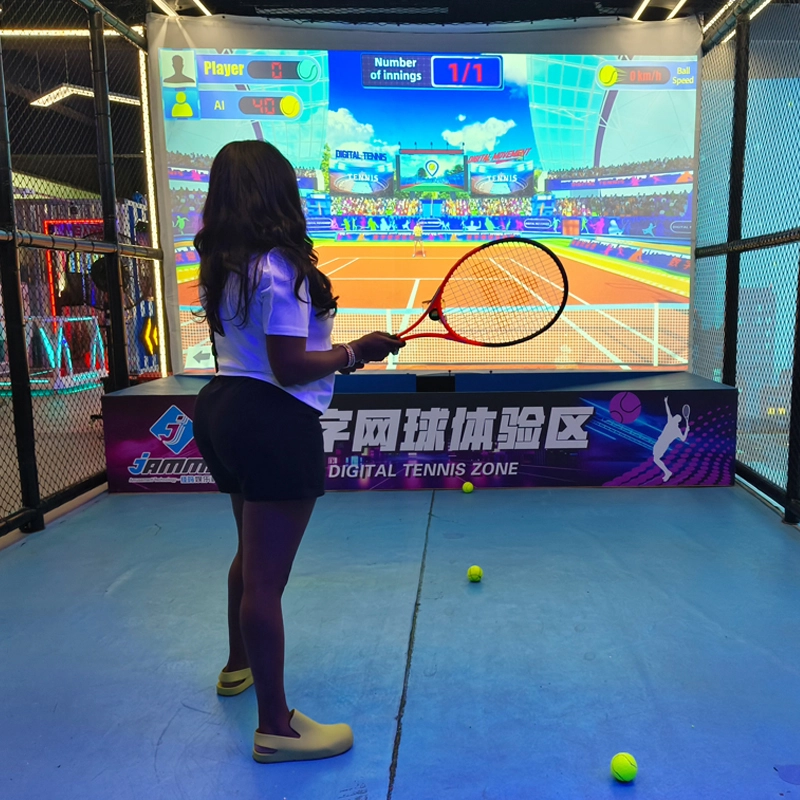
Top Indoor Tennis Racketball Training Simulator Dual Player Games
Interactive somatosensory fitness game
Combine traditional tennis sports with advanced 3D digital technology to bring customers an immersive tennis training experience
COMBINE TRADITIONAL TENNIS SPORTS WITH ADVANCED 3D DIGITAL TECHNOLOGY TO BRING CUSTOMERS AN IMMERSIVE TENNIS TRAINING EXPERIENCE INDOOR AND TENNIS EXPERIENCE HALL
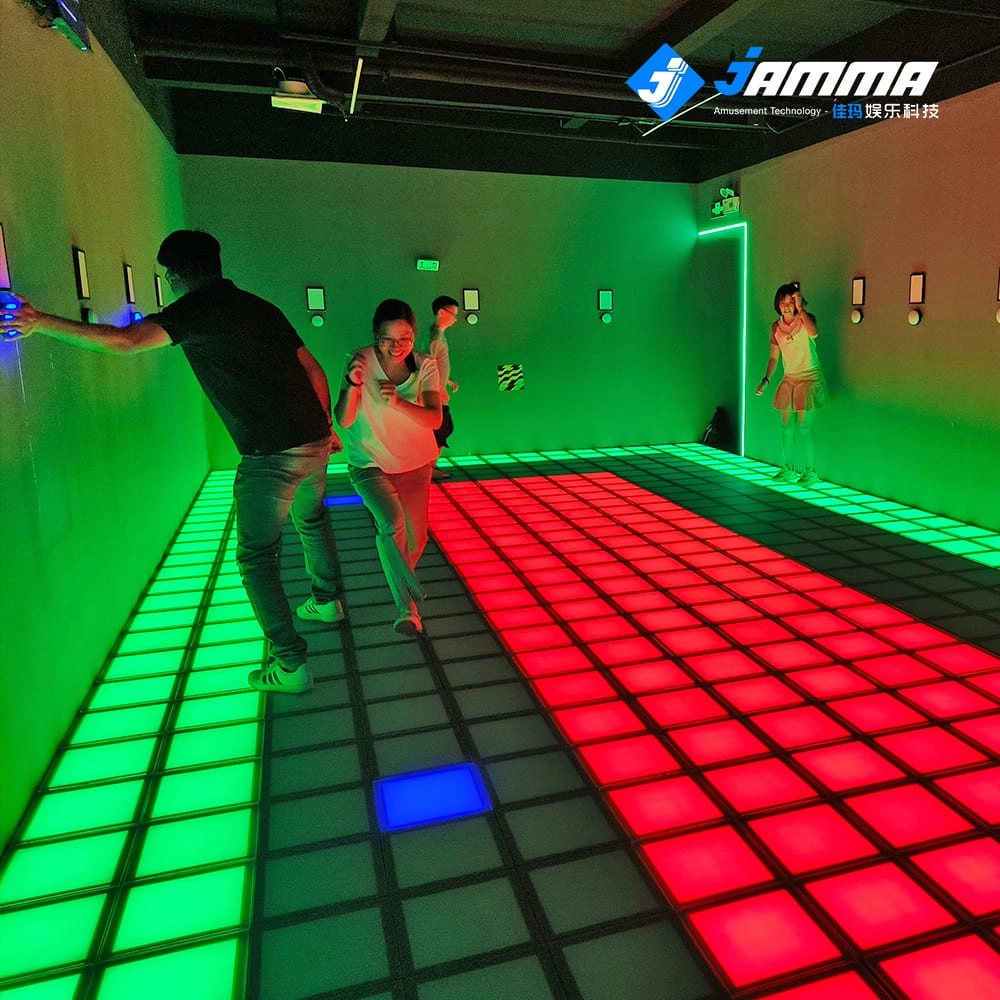
Super Grid Interactive LED Floor Activate Game Team Play
Super Grid is an immersive sports game that combines sports and technology. It integrates interactive LED lights and sensors through innovative software design, creating a fun gaming experience.
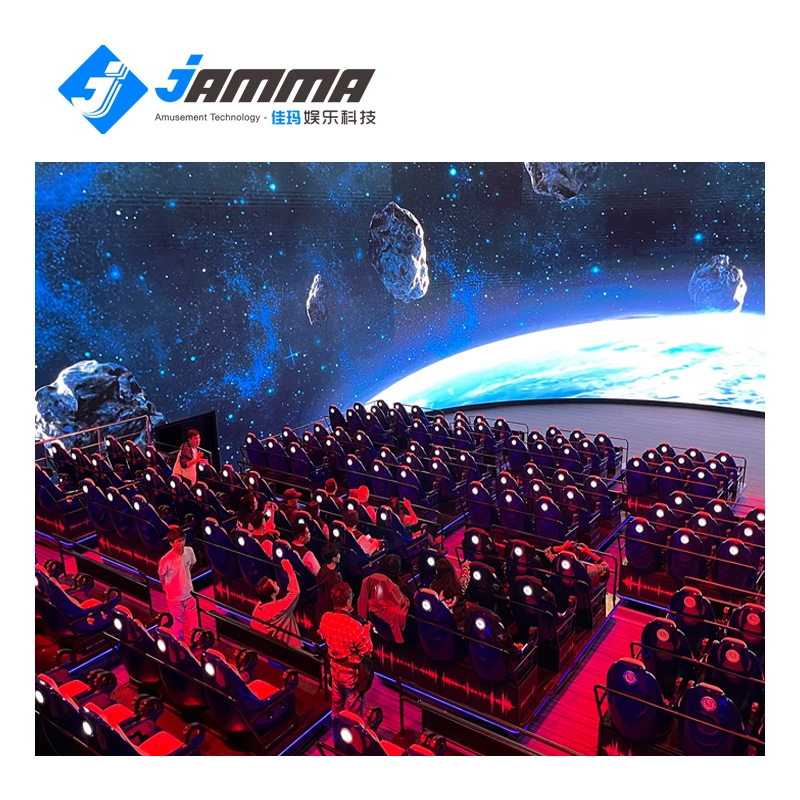
Immersive 5D/7D/9D cinema dynamic visual experience room
Compared with other types of theaters, 5D/7D/9D cinema have high technical content, prominent themes, and have a strong impact on the characteristics of the picture. With the increasing demand in the entertainment market and the continuous development of video entertainment technology, in the past, audiences would experience vibration, drop, rain, scratches and other effects in some 4D theaters, but now with 5D theaters, audiences can experience new Unique features, touch and feel effects such asreal smoke, water, snow, bubbles, smell, lightning, leg touch,camera system and more. When the audience is watching amovie, the seats and environmental effects will change into corresponding actions according to the development of the movie,allowing the audience to experience an immersive viewing experience.
