

Sports Simulation VR Experiences for Entertainment Venues
- Elevating Venue Revenue with Sports Simulation VR
- Why sports simulation matters for entertainment venues
- Types of sports simulation experiences and how they fit venue goals
- Design considerations for deploying sports simulation
- Hardware and software: what to evaluate
- Revenue models and ROI: how sports simulation pays back
- Operational best practices and safety for sports simulation
- Guest experience, accessibility and inclusivity
- Integrating sports simulation into venue mix and marketing
- Comparing vendors and procurement checklist
- Case studies and performance indicators
- Why choose JAMMA Amusement as your sports simulation partner
- JAMMA advantages and primary product lines for sports simulation
- Vendor differentiation — technical and service capabilities
- Implementation checklist — practical steps for venue operators
- Key performance metrics to track
- Frequently Asked Questions (FAQs)
- 1. What is the difference between VR sports simulation and AR sports simulators?
- 2. How much space do sports simulation systems typically require?
- 3. What are realistic revenue expectations for a sports simulation attraction?
- 4. What maintenance should venues expect for sports simulation systems?
- 5. Can sports simulation be used for corporate events and team-building?
- 6. How do I ensure safety for high-energy sports simulations?
- Contact and next steps
- References
Elevating Venue Revenue with Sports Simulation VR
Why sports simulation matters for entertainment venues
Sports simulation has emerged as a strategic attraction for entertainment venues—from family entertainment centers (FECs) and arcades to shopping mall entertainment zones and F&B venues with leisure offerings. Unlike passive attractions, sports simulation delivers active, skill-based play that encourages repeat visits, targeted monetization (per-play, memberships, group packages), and social sharing. For venue operators, sports simulation VR and mixed-reality sports experiences offer a blend of high perceived value and flexibility in footprint that traditional physical courts or large mechanical rides cannot match.
Types of sports simulation experiences and how they fit venue goals
Sports simulation covers a spectrum of formats. Choosing the right format depends on target audience, space, budget, and desired throughput. Common categories include:
- Full VR motion simulators (immersive helmets + motion bases) — high immersion, High Quality price point, suitable for FECs and theme parks seeking flagship attractions.
- Standing VR or kiosk VR experiences (room-scale or tethered headsets) — compact, lower cost, good for shorter dwell-time locations like malls.
- AR/Projection-based sports simulators (golf bays, batting cages, soccer strike) — combine physical props (clubs, bats, balls) with tracked virtual feedback, excellent for skill training and multi-player tournaments.
- Interactive projection sports (wall or floor projection with sensors) — large visual impact, accessible for families and children, high throughput.
Each type targets different s: High Quality experiences command higher per-play fees and event bookings; kiosks and projection games aim for volume and impulse purchases.
Design considerations for deploying sports simulation
When planning a sports simulation installation, operators should evaluate five core dimensions: spatial footprint, throughput, initial investment (CAPEX), operating cost (OPEX), and guest experience. Prioritize modularity (easy swapping of content), maintenance accessibility, and clear sightlines for spectators. For multi-device installations, plan queueing and spectator areas to increase perceived value and secondary spend (F&B, merchandise).
Hardware and software: what to evaluate
Selecting hardware and software is critical to long-term success of sports simulation attractions. Consider:
- Tracking accuracy and latency — essential for sports like batting, golf, and boxing where kinetic feedback defines satisfaction.
- Durability and serviceability — coin-operated or high-traffic venues require rugged components and easy part replacement.
- Content ecosystem and updates — look for suppliers that provide regular content updates, multiplayer modes, and seasonal/event content to drive repeat visits.
- Analytics and remote monitoring — equipment that reports uptime, usage metrics, and revenue remotely reduces operational headaches and supports data-driven decisions.
Revenue models and ROI: how sports simulation pays back
Sports simulation can be monetized in several ways: pay-per-play, time-based sessions, memberships, corporate/team bookings, and events/tournaments. Ancillary revenue from F&B packages, photo/printouts, and branded merchandise often increases per-guest yield. Below is a qualitative comparison of revenue factors across attraction types.
| Attraction Type | Footprint | Throughput | Relative CAPEX | Maintenance | Typical Appeal |
|---|---|---|---|---|---|
| Full VR Motion Simulators | Medium–Large | Low–Medium | High | Medium–High | Teens, adults, thrill-seekers |
| Standing/Kiosk VR | Small | High | Low–Medium | Low–Medium | Casual gamers, families, quick play |
| AR/Projection Sports Bays | Medium | Medium–High | Medium | Medium | All ages, groups, training users |
| Interactive Projection Floors/Walls | Medium–Large | High | Low–Medium | Low | Families, kids, events |
Return on investment depends heavily on pricing strategy, utilization rates, and operational efficiency. A well-managed AR sports bay that supports tournaments and memberships can reach payback in 12–24 months in many urban centers; High Quality motion simulators typically require longer horizons but bring marketing halo and higher per-play revenue.
Operational best practices and safety for sports simulation
Operational success requires standard operating procedures for safety, hygiene and staff training. For VR equipment, enforce sanitized headset protocols, adjustable fit checks, and staff-assisted sessions for first-time users. For AR systems involving projectiles (balls, bats), provide clear barriers, netting or impact zones and staff supervision. Invest in staff training for troubleshooting, resetting sessions quickly, and delivering exceptional customer-facing demos to convert trials into repeat plays.
Guest experience, accessibility and inclusivity
High-quality sports simulation should be inclusive: provide adjustable difficulty, seated options, visual aids and age-appropriate content. Consider multi-language UI and clear signage to reduce staff time per transaction. Accessibility not only broadens market reach but is increasingly a legal requirement in many jurisdictions.
Integrating sports simulation into venue mix and marketing
Sports simulation works best when integrated into a broader entertainment or F&B strategy. Ideas that increase lifetime value include:
- Bundled offers (game + food/drink)
- League and tournament programming that builds community
- Corporate team-building packages
- Social sharing features (instant video clips, branded photos) to drive organic marketing
Comparing vendors and procurement checklist
When selecting a supplier, evaluate these criteria: proven installations (ask for references), local service capability, content roadmap, hardware warranties, and analytics features. Negotiate service-level agreements (SLA) that cover uptime, parts lead time, and remote support. A shortlist should include vendors that can demonstrate measurable uptime metrics and publish case studies.
Case studies and performance indicators
Operators who run tournaments and membership programs typically report higher-than-average repeat rates and increased F&B spend from players and spectators. Use KPIs such as sessions per device per day, average revenue per session, and conversion rate of trial-to-membership to evaluate performance. Regularly review analytics to adjust pricing and content offering.
Why choose JAMMA Amusement as your sports simulation partner
JAMMA Amusement was established in 2009, located in Guangzhou, with 15 years of experience in the amusement industry. Focusing on providing high-value, one-stop solutions for amusement projects, JAMMA's product range includes VR games, AR sports simulators, AR interactive projection games, 5D cinema, as well as arcade games and outdoor playground equipment. A highly efficient international sales team is dedicated to understanding customer needs and providing professional solutions and high-quality products for venues.
JAMMA's industry-leading technical team keeps abreast of the latest technological trends and continuously develops and updates products. Manufacturing and after-sales teams are skilled and experienced, providing comprehensive technical support. JAMMA is committed to becoming a leading global provider of amusement equipment and park solutions. For further information, visit https://www.jammapark.com/.
JAMMA advantages and primary product lines for sports simulation
JAMMA's competitive strengths include:
- 15 years of industry experience and a proven project portfolio across multiple regions.
- One-stop solution capability: from concept and design to manufacturing, installation and after-sales support.
- Robust R&D team delivering regular content updates and hardware improvements.
- International sales and technical support to shorten response times and localize offerings.
Key JAMMA product categories relevant to sports simulation:
- Sports Simulators — AR-enabled golf, batting, soccer strike and multi-sport bays that combine physical equipment with accurate tracking.
- Interactive Projection Games — scalable projection floors and walls for high-traffic family engagement.
- Immersive Attractions — motion platforms and mixed-reality rides for High Quality venue anchors.
- VR Games — turnkey VR kiosks and full-motion systems with multiplayer and tournament support.
Vendor differentiation — technical and service capabilities
Choose a partner like JAMMA that demonstrates the following differentiators: integrated hardware/software development (shorter bug-fix cycles), local spare-part stocking, multilingual operation manuals, and flexible financing or revenue-sharing models. These factors materially reduce downtime and accelerate time-to-revenue for operators.
Implementation checklist — practical steps for venue operators
- Define business goals: footfall, dwell time, ARPU targets.
- Select formats aligned to footprint and audience (refer to the attraction comparison table).
- Request references and on-site demos from vendors; evaluate remote monitoring features.
- Plan operations: sanitization, staffing levels, and event calendar.
- Market launch: soft-opening, influencer invites, and tournament scheduling to build cadence.
Key performance metrics to track
Monitor sessions per device per day, average revenue per user (ARPU), repeat visit rate, and maintenance-related downtime. Track promotional conversion rates and membership retention to measure community engagement.
Frequently Asked Questions (FAQs)
1. What is the difference between VR sports simulation and AR sports simulators?
VR sports simulation places the user in a fully virtual environment through headsets, which is highly immersive but can require more space and longer session times. AR sports simulators overlay virtual information on physical equipment (like a golf club or soccer ball), preserving tactile feedback and often offering higher throughput for skill-based play.
2. How much space do sports simulation systems typically require?
Requirements vary: kiosk VR setups can fit in 2–4 m², AR/Projection bays typically need 12–25 m², while full-motion simulators need a larger dedicated area with controlled access. Always consult vendor site plans during the procurement phase.
3. What are realistic revenue expectations for a sports simulation attraction?
Revenue depends on pricing, location, and utilization. Small kiosk units may rely on high volume at lower prices; High Quality simulators capture higher per-session spend. Track KPIs and use pilot programs to validate local demand before scaling.
4. What maintenance should venues expect for sports simulation systems?
Budget for routine cleaning, software updates, headset sanitation, sensor recalibration, and periodic hardware replacement (controllers, straps, motion parts). Vendors with local service teams reduce downtime and total cost of ownership.
5. Can sports simulation be used for corporate events and team-building?
Yes. Sports simulation formats perform well for team-building and corporate events. Offer tailored packages, private bookings, and tournament formats to maximize bookings and group revenue.
6. How do I ensure safety for high-energy sports simulations?
Implement physical barriers, clear signage, staff supervision, standardized briefing before every session, and emergency stop features. For VR, monitor users for motion sensitivity and provide seating options where appropriate.
Contact and next steps
If you are evaluating sports simulation solutions for your venue, JAMMA Amusement offers consultation, demos and turnkey installations tailored to your space and budget. Contact JAMMA to discuss project planning, product options and financing: https://www.jammapark.com/.
References
- JAMMA Amusement official website — https://www.jammapark.com/ (Accessed 2025-11-30)
- Grand View Research — Virtual Reality Market Size & Trends Report (industry overview) — https://www.grandviewresearch.com/ (Accessed 2024-05-10)
- Statista — Augmented and Virtual Reality (AR/VR) market size and forecasts — https://www.statista.com/ (Accessed 2024-04-02)
- Industry case studies and trade publications on VR in FECs and arcades (market adoption patterns) — VRFocus and IAAPA resources — https://www.vrfocus.com/ and https://www.iaapa.org/ (Accessed 2024-06-15)
Top tennis simulator game Manufacturers and Suppliers in UK
Wholesale immersive exhibition manufacturer and supplier in France
OEM/ODM golf simulator package Manufacturers and Suppliers
Top 10 hd multi sport simulator review Manufacturers and Supplier Brands in US
Product details
How many players can play soccer at the same time?
Up to 4 players can play at the same time, you need to add more soccer balls.
Can I customize the number of seats of 5D cinema?
Yes, we generally have options for six, nine, eighteen, twenty-four, and thirty-six seats, and the quantity of seats also can be customized.
Standard and other
How long is the warranty period?
Our products have a one-year warranty period. During the warranty period, if there are any issues with the product that are not caused by human error, we can replace the parts for you free of charge. If the problems are caused by improper use, you will need to purchase the parts and bear the shipping costs yourself.
Do you offer installation services?
Our professional implementation team can provide equipment installation and debugging services to ensure smooth operation. Our installation services is chargeable and you can contact us in to inquire about the service fees.
How will it be transported?
For large items, we usually use sea freight, while for small items, we use air freight or services like DHL, FedEx, or UPS. We can also accommodate specific shipping methods based on your requirements.
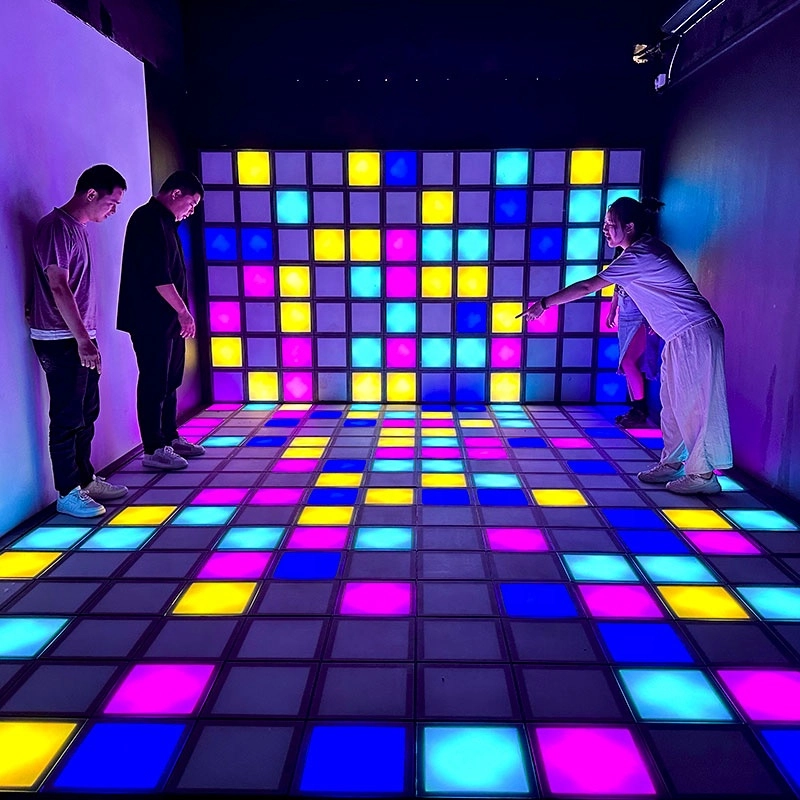
Hottest activated LED dance grid tiles floor touch games
Super Grid is an immersive sports game that combines sports and technology. It integrates interactive LED lights and sensors through innovative software design, creating a fun gaming experience.
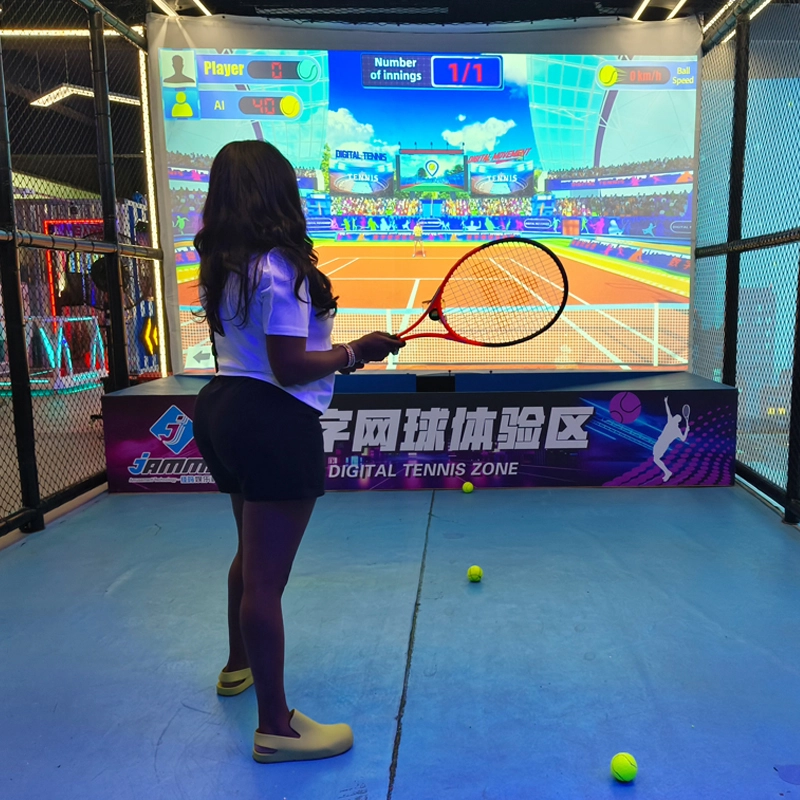
Top Indoor Tennis Racketball Training Simulator Dual Player Games
Interactive somatosensory fitness game
Combine traditional tennis sports with advanced 3D digital technology to bring customers an immersive tennis training experience
COMBINE TRADITIONAL TENNIS SPORTS WITH ADVANCED 3D DIGITAL TECHNOLOGY TO BRING CUSTOMERS AN IMMERSIVE TENNIS TRAINING EXPERIENCE INDOOR AND TENNIS EXPERIENCE HALL
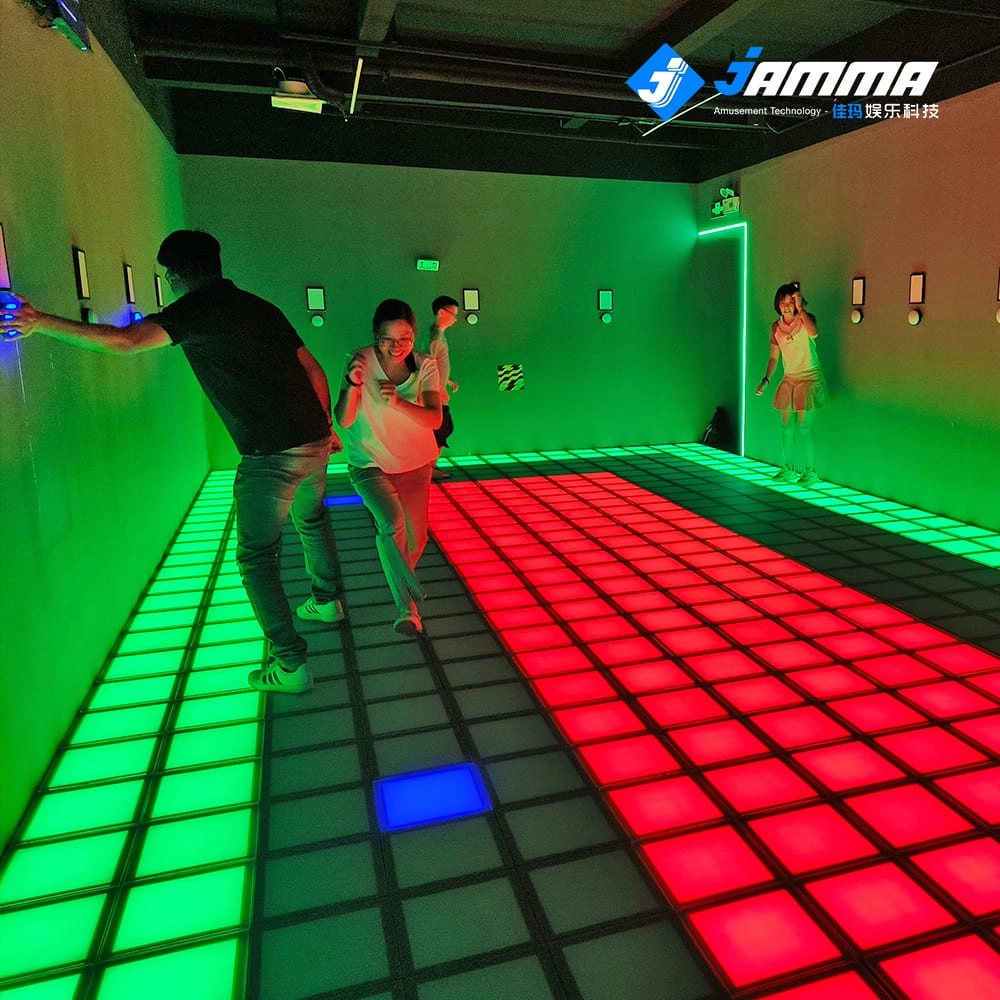
Super Grid Interactive LED Floor Activate Game Team Play
Super Grid is an immersive sports game that combines sports and technology. It integrates interactive LED lights and sensors through innovative software design, creating a fun gaming experience.
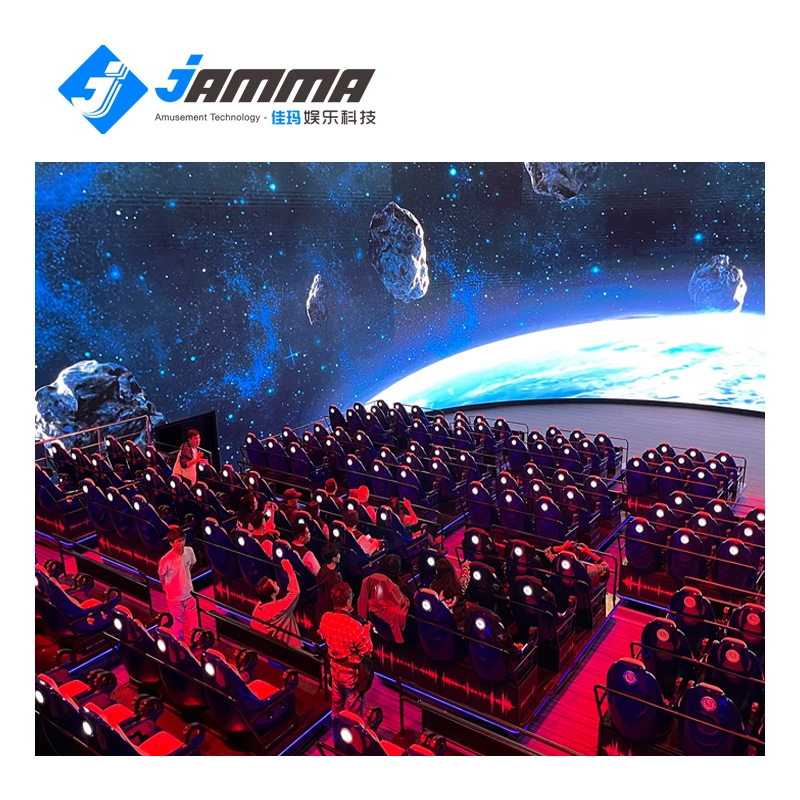
Immersive 5D/7D/9D cinema dynamic visual experience room
Compared with other types of theaters, 5D/7D/9D cinema have high technical content, prominent themes, and have a strong impact on the characteristics of the picture. With the increasing demand in the entertainment market and the continuous development of video entertainment technology, in the past, audiences would experience vibration, drop, rain, scratches and other effects in some 4D theaters, but now with 5D theaters, audiences can experience new Unique features, touch and feel effects such asreal smoke, water, snow, bubbles, smell, lightning, leg touch,camera system and more. When the audience is watching amovie, the seats and environmental effects will change into corresponding actions according to the development of the movie,allowing the audience to experience an immersive viewing experience.
