

ROI of Sports Simulation in Amusement Venues
- Maximizing Returns: Why Sports Simulation Matters for Venues
- Understanding the business case for sports simulation in amusement venues
- Key revenue drivers for sports simulation
- Typical cost components and capital outlay for sports simulation
- ROI model: transparent assumptions and scenarios (sports simulation)
- Comparing sports simulation against alternative attractions (per square meter economics)
- Operational levers to maximize ROI for sports simulation
- Site selection and layout best practices for sports simulation
- Technology selection: balancing fidelity, reliability and cost
- Case study style ROI sensitivity (what moves the needle)
- Why choose JAMMA Amusement: experience, products and support
- Implementation checklist before purchase
- Conclusion: when sports simulation delivers best ROI
- FAQ — Frequently Asked Questions
- 1. What is the average payback period for sports simulation installations?
- 2. How much space do I need for a sports simulator bay?
- 3. Are sports simulators suitable for family entertainment centers (FECs)?
- 4. What are common maintenance requirements and uptime expectations?
- 5. Can sports simulators be monetized beyond pay-per-play?
- 6. How do I compare AR/VR sports simulators vs. traditional golf simulators?
- Contact & next steps
- References
Maximizing Returns: Why Sports Simulation Matters for Venues
Understanding the business case for sports simulation in amusement venues
Sports simulation (the use of simulated sports experiences such as golf, soccer, baseball, and multi-sport setups powered by AR/VR and motion tracking) has shifted from niche to mainstream for amusement centers, family entertainment centers (FECs), and mixed-use venues. The core business question operators ask is: can sports simulation generate reliable revenue and positive return on investment (ROI) compared with other floor assets? This article unpacks the economics, operational levers, and measurable ROI drivers so venue managers and investors can make evidence-based decisions.
Key revenue drivers for sports simulation
Sports simulation revenue is generated through multiple streams that can be optimized independently:
- Pay-per-use/game or timed sessions (primary source).
- Group bookings and parties (higher average spend per hour).
- Tournament and league events (repeat footfall and ancillary sales).
- Food & beverage (F&B) uplift from longer dwell times.
- Memberships and subscriptions (recurring revenue).
- Cross-promotions with sponsorships or brand partnerships.
Understanding and stacking these streams is critical. For example, a 2–3 bay sports simulator area that sells hourly sessions and hosts weekly leagues will produce much steadier revenue than a single-bay attraction relying solely on casual walk-ins.
Typical cost components and capital outlay for sports simulation
To calculate ROI you must account for:
- Capital expenditure (CapEx): hardware (screens, sensors, motion systems), software licenses, installation, fit-out and enclosure. High-quality multi-sport simulators range widely in price depending on fidelity and features.
- Operating expenses (OpEx): staffing for front-of-house and tech support, utilities, software maintenance/subscriptions, licensing fees, insurance, marketing.
- Flooring opportunity cost: revenue foregone from alternative uses of the same footprint (e.g., arcade machine banks, VR pods, or F&B seating).
- Depreciation and upgrade cycles: realistic amortization period is typically 5–7 years for hardware with periodic software updates.
ROI model: transparent assumptions and scenarios (sports simulation)
Below is a practical, replicable ROI model for a 3-bay sports simulation area. Assumptions are explicit so you can customize to your market.
| Item | Conservative | Moderate | Optimistic |
|---|---|---|---|
| Initial cost per bay (hardware + fit-out) | $25,000 | $40,000 | $65,000 |
| Total CapEx (3 bays) | $75,000 | $120,000 | $195,000 |
| Average hourly price (per bay) | $20 | $35 | $50 |
| Utilization (hours/day per bay) | 4 | 7 | 10 |
| Days open/year | 330 | 350 | 360 |
| Gross annual revenue | $158,400 | $257,250 | $540,000 |
| Operating margin (after OpEx 35–55%) | 35% | 45% | 55% |
| Annual net income | $55,440 | $115,763 | $297,000 |
| Payback period (years) | ~1.4 | ~1.0 | ~0.7 |
Notes on the model: price and utilization assumptions vary by market, daypart programming (evening peak vs. daytime family sessions), and venue type. Conservative scenarios assume lower price points and mid-week traffic; optimistic assumes High Quality pricing, high weekend utilization, strong group booking sales and F&B uplift.
Comparing sports simulation against alternative attractions (per square meter economics)
Operators commonly compare sports simulation to VR pods, arcade machines, or additional F&B seating. The table below summarizes high-level comparative metrics to guide decisions; actual numbers should be tailored to local rent and wage levels.
| Metric | Sports Simulation (multi-bay) | VR Pods | High Quality Arcade Bank | Additional F&B Seating |
|---|---|---|---|---|
| Typical CapEx per footprint | High | Medium | Low–Medium | Medium |
| Revenue per sqm (annual) | High | Medium | Low–Medium | Medium |
| Average dwell time | High (45–90 mins) | Medium (20–40 mins) | Short (5–15 mins) | High (meal times) |
| Ancillary spend potential | High (F&B, merch) | Medium | Low | None–Medium |
| Repeat visitation / memberships | High | Medium | Low | Medium |
Operational levers to maximize ROI for sports simulation
After installation, operators must manage these levers:
- Dynamic pricing: increase prices during peak times and reserve lower-price sessions during off-peak to boost utilization.
- Programs & events: host lessons, leagues and corporate team-building to increase weekday utilization and group revenues.
- Bundling: combine simulator time with F&B or arcade credits for higher average spend.
- Marketing: targeted local ads, social proof (video clips of players), and partnerships with local sports clubs drive organic visitation.
- Maintenance & uptime: rapid technical support minimizes downtime; SLA-backed maintenance contracts improve reliability and guest satisfaction.
Site selection and layout best practices for sports simulation
To hit the utilization figures in the model you need the right site and layout:
- Position simulators near high-traffic zones but with acoustic control to avoid disturbing other attractions.
- Allocate adequate queuing space and visible screens to show game play from the floor—this acts as live advertising.
- Create flexible bays that can shift between single-player and group modes for parties and corporate events.
- Provide strong Wi‑Fi, digital booking capabilities and POS integration for smooth guest flows.
Technology selection: balancing fidelity, reliability and cost
Choose solutions that provide accurate tracking and a compelling user experience while minimizing downtime. High-fidelity systems (high-speed cameras, radar, or optic tracking) command High Quality prices but yield better guest satisfaction and higher willingness to pay. Conversely, lower-cost systems may require more staff intervention and have shorter lifecycles. Consider total cost of ownership (TCO): include software licensing, support, and upgrade pathways when comparing vendors.
Case study style ROI sensitivity (what moves the needle)
Three variables have outsized effect on ROI:
- Utilization: a 10% increase in utilization can reduce payback by several months.
- Average price per hour: High Quality features or exclusive timeslots can lift AUR substantially.
- Ancillary spend: F&B and group bookings compound revenue and reduce payback materially.
In practice, operators who actively manage retailing, events and maintenance achieve the optimistic scenarios more often than those who treat simulators as passive assets.
Why choose JAMMA Amusement: experience, products and support
JAMMA Amusement was established in 2009, located in Guangzhou, with 15 years of experience in the amusement industry. We focus on providing high-value, one-stop solutions for amusement projects. Our product portfolio includes VR games, AR sports simulators, AR interactive projection games, 5D cinema, as well as arcade games and outdoor playground equipment.
Key competitive advantages:
- End-to-end project support: consultative site planning, design, manufacture and after-sales service driven by an experienced international sales team.
- Industry-leading technical R&D: continuous product updates to keep attractions fresh and engaging.
- Comprehensive manufacturing and after-sales capabilities: skilled teams ensuring reliable installations and fast technical response.
- Product strengths: Sports Simulators, Interactive Projection Games, Immersive Attractions and VR Games are engineered for durability, modular upgrades and strong guest appeal.
For venues seeking a partner that understands both the amusement and technical sides of sports simulation, JAMMA’s integrated service model reduces project risk and shortens time-to-revenue. Visit https://www.jammapark.com/ to view product details and discuss project options with our international sales team.
Implementation checklist before purchase
Before committing capital, validate the following:
- Market demand: run local surveys, pilot events or pop-ups to test price sensitivity and game preferences.
- Footprint analysis: confirm space, power, ventilation and access for maintenance.
- Revenue modeling: run conservative and optimistic scenarios and stress-test peak/off-peak cases.
- Service SLAs: ensure vendor provides rapid technical support and clear upgrade paths.
- Staff training plan: schedule pre-opening training and establish an escalation path for technical issues.
Conclusion: when sports simulation delivers best ROI
Sports simulation can deliver strong, predictable ROI when operators pair the right technology with disciplined commercial execution: pricing strategy, event programming, and rigorous maintenance. For venues targeting longer dwell times, higher ancillary spend, and membership-based repeat business, sports simulators provide a differentiated experience that outperforms many comparable floor assets on a per-square-meter revenue basis.
FAQ — Frequently Asked Questions
1. What is the average payback period for sports simulation installations?
Payback commonly ranges from under 1 year (optimistic, high-utilization venues) to 2–3 years (conservative markets). The payback depends primarily on price per hour, utilization rates, and additional revenue from events and F&B.
2. How much space do I need for a sports simulator bay?
A single-bay multi-sport simulator typically requires 10–20 square meters depending on the sport simulated and required safety clearances. Multi-bay installations need additional queuing and spectating areas—plan for modular layouts that can flex between single and group use.
3. Are sports simulators suitable for family entertainment centers (FECs)?
Yes. Sports simulators appeal across age groups and can be tuned for casual play, coaching sessions, and party bookings. Their longer dwell times and higher ancillary spend potential make them an excellent addition for FECs seeking differentiated attractions.
4. What are common maintenance requirements and uptime expectations?
High-quality systems should target 95%+ uptime with routine weekly checks. Vendors typically provide training for basic troubleshooting and offer maintenance contracts for parts replacement and software updates. Rapid on-site or remote support reduces revenue loss from downtime.
5. Can sports simulators be monetized beyond pay-per-play?
Yes. Monetization channels include memberships/subscriptions, corporate bookings, lessons and coaching, tournaments, branded sponsorships, and cross-sell bundles with F&B or merchandise.
6. How do I compare AR/VR sports simulators vs. traditional golf simulators?
AR/VR sports simulators offer multi-sport flexibility, lower physical space for some use cases, and more interactive game formats attractive to casual audiences. Traditional golf simulators may offer higher fidelity for golf purists and can command High Quality green-fee-style pricing. Choose based on your target demographic and revenue strategy.
Contact & next steps
If you are evaluating sports simulation for your venue, JAMMA Amusement can provide tailored ROI modeling, layout planning, and turnkey supply. Contact our international sales team to request a proposal, pilot installation options, or a product demo: https://www.jammapark.com/.
References
- International Association of Amusement Parks and Attractions (IAAPA) — Industry insights and trends. https://www.iaapa.org/ (accessed 2025-11-30)
- Grand View Research — Virtual Reality (VR) Gaming Market Report. https://www.grandviewresearch.com/industry-analysis/virtual-reality-vr-gaming-market (accessed 2025-11-30)
- Statista — Amusement and arcade industry market data. https://www.statista.com/ (accessed 2025-11-30)
- Vendor and industry pricing benchmarks — aggregated manufacturer price ranges and trade publications (industry supplier websites; general market pricing observed 2023–2025). Examples include manufacturer product pages and trade show materials (accessed 2025-11-30).
SEO & Social Media Tips for Indoor Play Businesses
What are the application scenarios of ball shoot activate game?
Tips for Wholesale archery simulator in Europe
How to Choose the shooting simulator cost manufacturer and supplier ?
Product details
Are glasses required to see a 5D film?
Audience needs to wear 3D glasses while watching movie, but not VR glasses.
How many players can play soccer at the same time?
Up to 4 players can play at the same time, you need to add more soccer balls.
What is the difference between 5D and 3D?
The visual of 5D cinema is the same as that of 3D, compared to 3D, it adds motion simulation and special effects, which are not available in 3D.
Standard and other
How will it be transported?
For large items, we usually use sea freight, while for small items, we use air freight or services like DHL, FedEx, or UPS. We can also accommodate specific shipping methods based on your requirements.
What is the delivery time?
Usually the production period of our products is 20 to 25 days, it will be a little different according to the quantity of products you order. All products need to go through our strict quality inspection before shipment. After they are tested, we will ship them to you at the first time. For products in stock, we usually ship within 3 days.
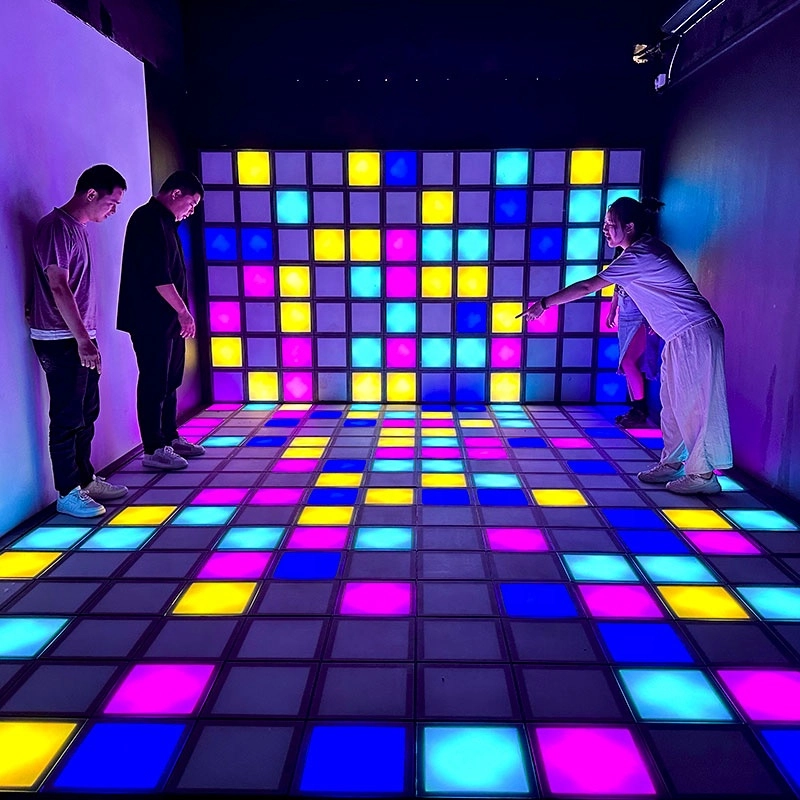
Hottest activated LED dance grid tiles floor touch games
Super Grid is an immersive sports game that combines sports and technology. It integrates interactive LED lights and sensors through innovative software design, creating a fun gaming experience.
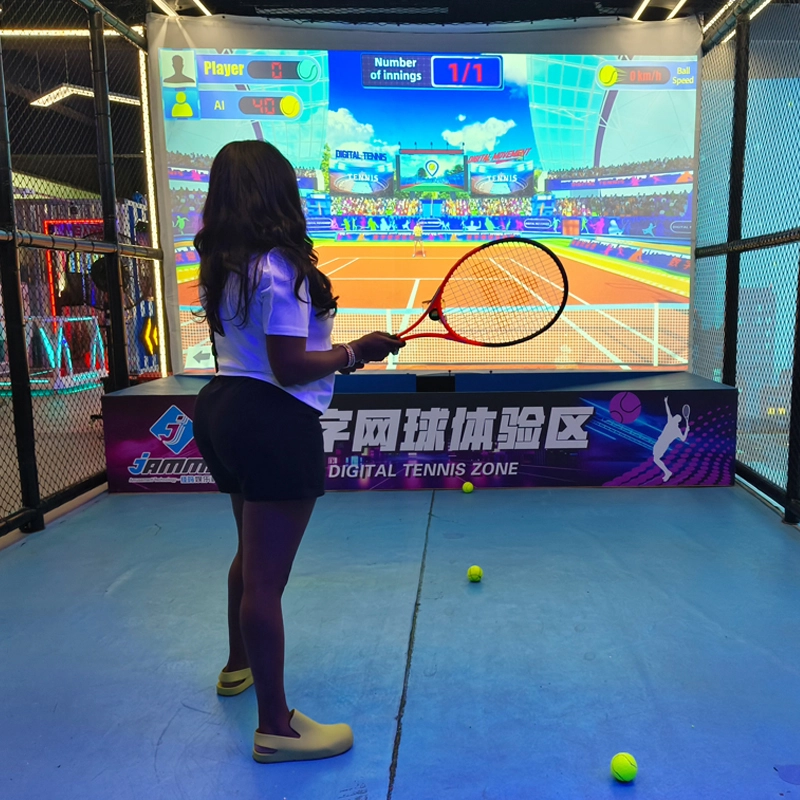
Top Indoor Tennis Racketball Training Simulator Dual Player Games
Interactive somatosensory fitness game
Combine traditional tennis sports with advanced 3D digital technology to bring customers an immersive tennis training experience
COMBINE TRADITIONAL TENNIS SPORTS WITH ADVANCED 3D DIGITAL TECHNOLOGY TO BRING CUSTOMERS AN IMMERSIVE TENNIS TRAINING EXPERIENCE INDOOR AND TENNIS EXPERIENCE HALL
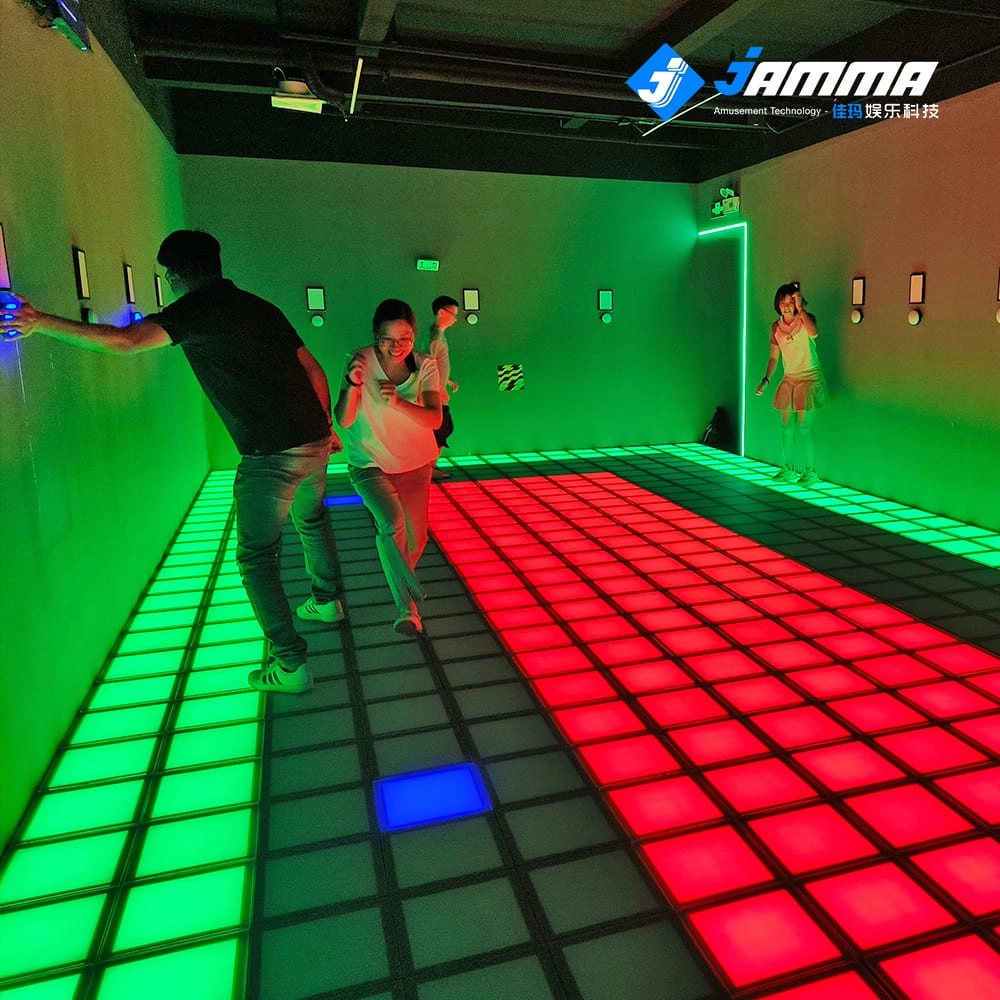
Super Grid Interactive LED Floor Activate Game Team Play
Super Grid is an immersive sports game that combines sports and technology. It integrates interactive LED lights and sensors through innovative software design, creating a fun gaming experience.
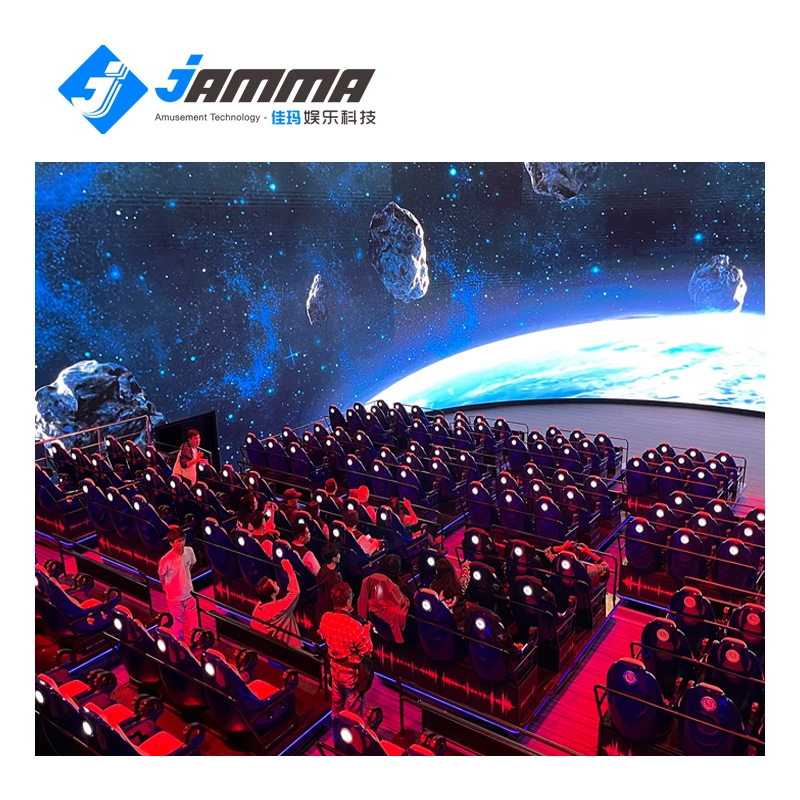
Immersive 5D/7D/9D cinema dynamic visual experience room
Compared with other types of theaters, 5D/7D/9D cinema have high technical content, prominent themes, and have a strong impact on the characteristics of the picture. With the increasing demand in the entertainment market and the continuous development of video entertainment technology, in the past, audiences would experience vibration, drop, rain, scratches and other effects in some 4D theaters, but now with 5D theaters, audiences can experience new Unique features, touch and feel effects such asreal smoke, water, snow, bubbles, smell, lightning, leg touch,camera system and more. When the audience is watching amovie, the seats and environmental effects will change into corresponding actions according to the development of the movie,allowing the audience to experience an immersive viewing experience.
