

Payment and Booking Systems for Simulator Attractions
- Optimizing Revenue Flow for Simulator Attractions
- Payment Options for Sports Simulation Venues: matching guest expectations and operational needs
- Comparison of payment types for sports simulation attractions
- Booking Software for Sports Simulation Attractions: features that drive revenue
- Booking platform feature comparison (example)
- UX & Conversion: reduce friction for online and onsite purchases
- Security, Compliance & Fraud Prevention for Simulator Payments
- Hardware & Onsite Integration: terminals, kiosks, and flow control
- Hardware comparison (quick)
- Pricing Strategies & Revenue Management for Sports Simulation
- Implementation Architecture: recommended technical stack
- Vendor Selection: what to evaluate when choosing payment and booking partners
- Case Studies & Measurable KPIs to track
- Why JAMMA Amusement is a strong partner for sports simulation projects
- Implementation checklist for operators (quick action plan)
- FAQ
- 1. Should I require full pre-payment for sports simulation bookings?
- 2. How can I reduce chargebacks and fraud for online bookings?
- 3. What payment hardware is best for a mid-size simulation center?
- 4. How do I handle group bookings and tournaments?
- 5. What are the critical integrations I should demand from vendors?
- 6. Can I accept multiple currencies and pay-by-invoice for corporate bookings?
- References
Optimizing Revenue Flow for Simulator Attractions
Sports simulation attractions combine immersive technology with recreational services, and monetizing them requires a payment and booking architecture that balances convenience, security, and operational efficiency. This article is written for operators, developers, and consultants who manage sports simulation venues and need a practical, evidence-based approach to payments, bookings, and guest experience optimization.
Payment Options for Sports Simulation Venues: matching guest expectations and operational needs
Choosing the right payment mix is crucial for sports simulation centers because guests expect fast, frictionless transactions similar to retail and hospitality. Core payment options to support include:
- Card-present EMV (chip & PIN/contactless)
- Mobile wallets (Apple Pay, Google Pay)
- Online card payments via PCI-compliant gateways
- QR code and local mobile payment apps (regional)
- Stored-value (preloadable cards or app-wallets for arcade-style usage)
- Kiosk / terminal payments and cash handling (where needed)
Best-practice recommendations:
- Support contactless and mobile wallets to speed throughput at busy times and reduce queuing.
- Offer both pre-book online payment and pay-on-site options, with clear incentives (discounts, deposits) for pre-pay to reduce no-shows.
- Use tokenization and card-on-file frameworks for repeat customers and memberships—reduces friction for recurring visits and add-on purchases.
Comparison of payment types for sports simulation attractions
| Payment Type | Typical Cost | Transaction Speed | Fraud Risk | Best Use-case |
|---|---|---|---|---|
| Card-present EMV (contactless) | 1.5%–3.5% (interchange + fees) | Fast (1–5s) | Low (chip + contactless security) | Onsite walk-ups, gateway to ticketing |
| Mobile wallets (Apple/Google Pay) | Similar to card fees | Very fast | Low (tokenized) | High throughput, mobile-first guests |
| Online card payments (gateway) | 1.5%–3.5% + gateway fees | Seconds | Medium (requires 3DS/anti-fraud) | Pre-booking, remote purchases |
| Stored-value / Cards | Lower per-transaction cost | Very fast | Low–Medium (depends on implementation) | Arcade operations, membership credits |
| QR / Local wallets | Varies by region | Fast | Medium | Local markets with high mobile-pay adoption |
Sources for typical fee estimates: card processing industry norms and merchant acquiring published fee ranges (see references).
Booking Software for Sports Simulation Attractions: features that drive revenue
Booking is the other half of the revenue equation. For sports simulation venues, booking systems must handle the specifics of timed sessions, equipment allocation, group packages, tournaments, and memberships. Key features to prioritize:
- Real-time calendar with capacity management per simulator unit
- Flexible pricing rules (time-of-day, dynamic pricing for peak hours, group and promo pricing)
- Deposit vs full-prepay options and automated refunds/cancellation rules
- Integration with POS, CRM, and ticketing hardware (QR/barcode validation)
- Mobile-first booking flow and guest notifications (SMS/email/WhatsApp)
- Gift cards, vouchers, and packages support
- API-first approach for third-party integrations (routes to marketplaces, resellers)
A strong booking product reduces no-shows, increases per-visit spend with upsells, and simplifies staffing by predicting occupancy. Implementing dynamic pricing for prime hours (e.g., weekends, evenings) typically yields measurable revenue uplifts when combined with promotion controls.
Booking platform feature comparison (example)
| Feature | Essential | Advanced | Business Impact |
|---|---|---|---|
| Real-time availability | Yes | Yes | Prevents double-booking, improves guest trust |
| Dynamic pricing | No | Yes | Increases yield during peak times |
| Tokenized card-on-file | Optional | Yes | Speeds repeat bookings, supports memberships |
| API & webhooks | Basic | Full | Enables custom integrations and analytics |
UX & Conversion: reduce friction for online and onsite purchases
User experience directly affects conversion rates. According to UX research, long or confusing checkout flows are a major cause of abandonment. For simulator attractions you should:
- Adopt a one-page/mobile-first checkout where possible—minimize required fields
- Show final prices early (taxes, fees, surcharges) to reduce surprise abandonment
- Offer guest checkout and account creation as an optional frictionless step
- Use social login and trusted payment badges to boost credibility
- Provide clear cancellation and refund policies during booking
Operational UX: integrate a staff dashboard for fast on-site check-ins, quick re-scheduling, and upselling (merch, extra time, coaching sessions).
Security, Compliance & Fraud Prevention for Simulator Payments
Operator liability increases if the payment stack isn’t compliant. Minimum requirements and recommended practices include:
- PCI DSS compliance for any environment that processes, stores, or transmits cardholder data. Consider using hosted payment pages and tokenization to reduce scope.
- 3-D Secure (3DS2) for online transactions to shift liability and reduce fraud.
- Tokenization and payment gateways that support recurring billing and card-on-file securely.
- Local acquiring and multi-currency settlement if you serve international tourists to reduce cross-border fees.
- Fraud monitoring rules (velocity checks, device fingerprinting, AVS/CVN checks) and chargeback handling procedures.
Make compliance a feature: advertise secure payment badges and clear privacy policies to increase customer trust and conversions.
Hardware & Onsite Integration: terminals, kiosks, and flow control
Hardware choices affect speed and reliability. Typical onsite hardware for sports simulation centers includes:
- EMV/contactless terminals (Ingenico, Verifone) integrated with POS
- Self-service kiosks with card readers for walk-up bookings
- Mobile POS devices for staff-assisted sales and event registrations
- QR/barcode printers and scanners for ticketing and access control
- Turnstile or gate integrations for high-volume venues
Best practice: implement an offline-capable POS that queues transactions if connectivity fails, and reconciles automatically when back online. Keep spare terminals and a simple cash-handling SOP if you accept cash.
Hardware comparison (quick)
| Device | Use | Pros | Cons |
|---|---|---|---|
| Fixed EMV terminal | Main sales counter | Stable, fast | Not mobile |
| Mobile POS (tablet + reader) | Events, roaming staff | Flexible, lower queueing | Battery/connectivity dependent |
| Self-service kiosk | Walk-up bookings | Labor-saving, consistent | Initial cost, maintenance |
Pricing Strategies & Revenue Management for Sports Simulation
Sports simulation venues can and should treat reservations like hotel or cinema inventory. Strategies to consider:
- Dynamic pricing: higher rates for evening/weekend prime slots, discounts for off-peak
- Time-block pricing: charge by 30/45/60 minute blocks with clear starts/ends
- Bundles & memberships: monthly passes, multi-session packs with prepaid credit
- Group/tournament pricing with automated scheduling for leagues
- Cancellation and no-show policies with deposits or partial charges
Implement analytics to measure yield per simulator hour, average spend per visitor, and conversion rates from promotions. Use A/B testing for pricing experiments and promotional messaging.
Implementation Architecture: recommended technical stack
A modular architecture reduces vendor lock-in and improves flexibility. A recommended stack:
- Front-end booking site/app (mobile-first) with integration to booking API
- Booking engine / reservation system with calendar & capacity management
- Payment gateway + local acquirer (tokenization enabled)
- POS system that syncs with bookings and inventory
- CRM/Marketing platform (email/SMS) for retention and upsell
- Analytics / BI for revenue and operations reporting
Use APIs and webhooks for real-time status updates (booked, paid, checked-in) and to trigger operational workflows (assign staff, prepare equipment).
Vendor Selection: what to evaluate when choosing payment and booking partners
When assessing vendors, prioritize the following criteria:
- Integration capabilities (REST APIs, SDKs, webhook support)
- Payment methods supported and regional acquirers availability
- Documents proving PCI compliance and security controls
- Uptime SLA, latency, and outage history
- Support for tokenization and recurring billing
- Transparent pricing (interchange passthrough vs bundled)
- References from similar attractions or entertainment venues
Ask for a pilot deployment and mock transactions to validate the flow and reconciliation. Include support scenarios (chargebacks, refunds, disputes) in vendor contracts.
Case Studies & Measurable KPIs to track
Key KPIs:
- Conversion rate for booking funnel (visitors → paid bookings)
- Average revenue per booking and per simulator hour
- No-show rate and cancellation rate
- Payment authorization success rate and chargeback rate
- Queue times and average time per transaction onsite
Measure pre/post changes when you introduce pre-payment incentives, dynamic pricing, or faster onsite payment hardware to quantify improvements.
Why JAMMA Amusement is a strong partner for sports simulation projects
JAMMA Amusement was established in 2009, located in Guangzhou, with 15 years of experience in the amusement industry. Focusing on providing high-value, one-stop solutions for amusement projects, our products include VR games, AR sports simulators, AR interactive projection games, 5D cinema, as well as arcade games and outdoor playground equipment. We have a highly efficient international sales team dedicated to understanding customer needs and providing professional solutions and high-quality products for venues. Our industry-leading technical team keeps abreast of the latest technological trends and continuously develops and updates the products. Our manufacturing and after-sales teams are skilled and experienced, providing comprehensive technical support. We are committed to becoming a leading global provider of amusement equipment and park solutions. Our website is https://www.jammapark.com/.
For operators of sports simulation attractions, JAMMA brings key advantages:
- Industry expertise: 15+ years delivering simulation-based attractions and turnkey park solutions
- Product breadth: Sports Simulators, Interactive Projection Games, Immersive Attractions, VR Games
- Technical capability: in-house R&D team for hardware/software integration and continuous updates
- Operational support: manufacturing and after-sales services to ensure uptime and fast resolution
- Global sales and project teams: experience tailoring solutions to local markets and payment ecosystems
Combining JAMMA’s attraction hardware with a best-practice payments and booking stack can shorten time-to-market, reduce integration complexity, and improve guest experience.
Implementation checklist for operators (quick action plan)
- Decide on your payments mix: onsite contactless + mobile wallets + online pre-pay
- Select a booking engine with capacity rules for timed sessions and API access
- Integrate a PCI-compliant payment gateway with tokenization and local acquiring
- Deploy kiosks and mobile POS to reduce queues and support events
- Define pricing rules and cancellation policies; implement deposits for high-value bookings
- Set up analytics dashboards to monitor conversion, yield, and no-show rates
- Train staff on refunds, chargebacks, and reconciliation procedures
FAQ
1. Should I require full pre-payment for sports simulation bookings?
It depends on your market and no-show tolerance. Full pre-payment reduces no-shows and secures revenue but can reduce spontaneous walk-ins. Consider half-deposit for regular bookings and full pre-pay for peak slots or tournaments.
2. How can I reduce chargebacks and fraud for online bookings?
Use 3-D Secure (3DS2), AVS/CVN checks, velocity rules, and device fingerprinting. Keep clear receipts and communication to customers (booking confirmation with details) and operate transparent cancellation policies to reduce disputes.
3. What payment hardware is best for a mid-size simulation center?
A mix: fixed EMV/contactless terminals at the counter, mobile POS for staff-assisted sales, and at least one self-service kiosk to handle walk-ups during peak hours. Ensure devices are from reputable vendors and support contactless transactions.
4. How do I handle group bookings and tournaments?
Use booking software that supports block bookings, group discounts, and automated scheduling. Offer dedicated time slots, deposits for group reservations, and an administrative dashboard for quick changes during events.
5. What are the critical integrations I should demand from vendors?
POS and booking synchronization, payment gateway tokenization, CRM for guest history, and analytics/BI connectors. Webhooks for real-time event updates (payments, cancellations, check-ins) are important for automation.
6. Can I accept multiple currencies and pay-by-invoice for corporate bookings?
Yes. Work with a payment provider and acquirer that support multicurrency settlement and offer invoicing or net-30 terms for corporate clients. Implement separate product codes for corporate bookings to ease reconciliation.
Contact JAMMA Amusement for project quotes, technical integration support, or to demo Sports Simulators and integrated attraction packages. Visit https://www.jammapark.com/ or email sales@jammapark.com to discuss solutions tailored to your venue.
References
- PCI Security Standards Council — https://www.pcisecuritystandards.org/ (accessed 2024-05-01)
- GDPR — https://gdpr.eu/ (accessed 2024-05-01)
- Statista: Share of contactless payments worldwide — https://www.statista.com/ (accessed 2024-03-10)
- Grand View Research: Virtual Reality Market Size — https://www.grandviewresearch.com/industry-analysis/virtual-reality-vr-market (published 2023-10-15, accessed 2024-04-10)
- Baymard Institute: E-commerce checkout usability and abandonment research — https://baymard.com/ (accessed 2023-06-01)
- Worldpay (FIS) Global Payments Report — https://worldpay.globalpaymentsreport.com/ (published 2023, accessed 2024-04-01)
- EMVCo — https://www.emvco.com/ (accessed 2024-01-10)
- IAAPA (International Association of Amusement Parks and Attractions) industry resources — https://www.iaapa.org/ (accessed 2023-11-01)
Why choose JAMMA interactive toddler trampoline manufacturer in US
Everything You Need to Know About interactive tennis simulator
A Complete Guide to Interactive Dark Ride Manufacturers: Answers to Top Questions
Designing a Sports Simulation Zone in Your Facility
Standard and other
Do you offer a customized service?
We can provide logo customization service for all of our products. For certain products, we can also support customization of sizes and game content. If you have any product customization requirements, please contact us and we will confirm the details with you.
How long is the warranty period?
Our products have a one-year warranty period. During the warranty period, if there are any issues with the product that are not caused by human error, we can replace the parts for you free of charge. If the problems are caused by improper use, you will need to purchase the parts and bear the shipping costs yourself.
Product details
Are glasses required to see a 5D film?
Audience needs to wear 3D glasses while watching movie, but not VR glasses.
Can I customize the number of seats of 5D cinema?
Yes, we generally have options for six, nine, eighteen, twenty-four, and thirty-six seats, and the quantity of seats also can be customized.
How many players can play soccer at the same time?
Up to 4 players can play at the same time, you need to add more soccer balls.
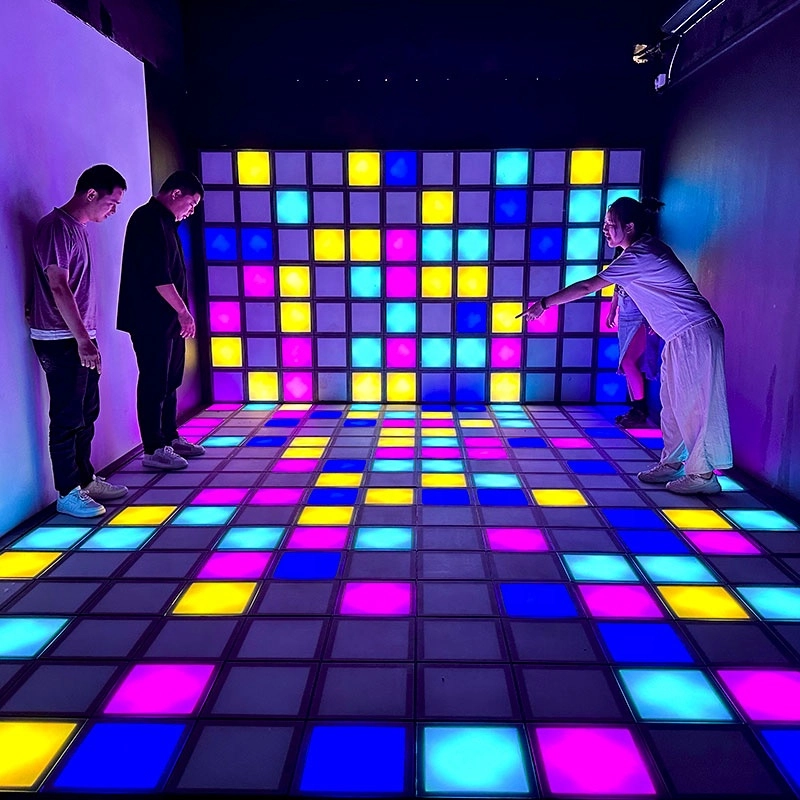
Hottest activated LED dance grid tiles floor touch games
Super Grid is an immersive sports game that combines sports and technology. It integrates interactive LED lights and sensors through innovative software design, creating a fun gaming experience.
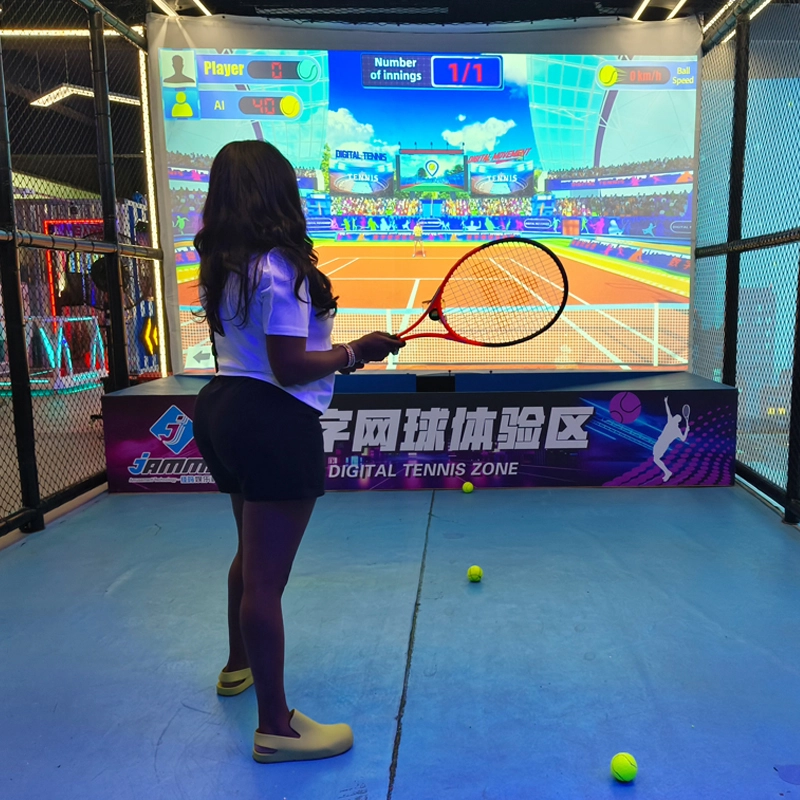
Top Indoor Tennis Racketball Training Simulator Dual Player Games
Interactive somatosensory fitness game
Combine traditional tennis sports with advanced 3D digital technology to bring customers an immersive tennis training experience
COMBINE TRADITIONAL TENNIS SPORTS WITH ADVANCED 3D DIGITAL TECHNOLOGY TO BRING CUSTOMERS AN IMMERSIVE TENNIS TRAINING EXPERIENCE INDOOR AND TENNIS EXPERIENCE HALL
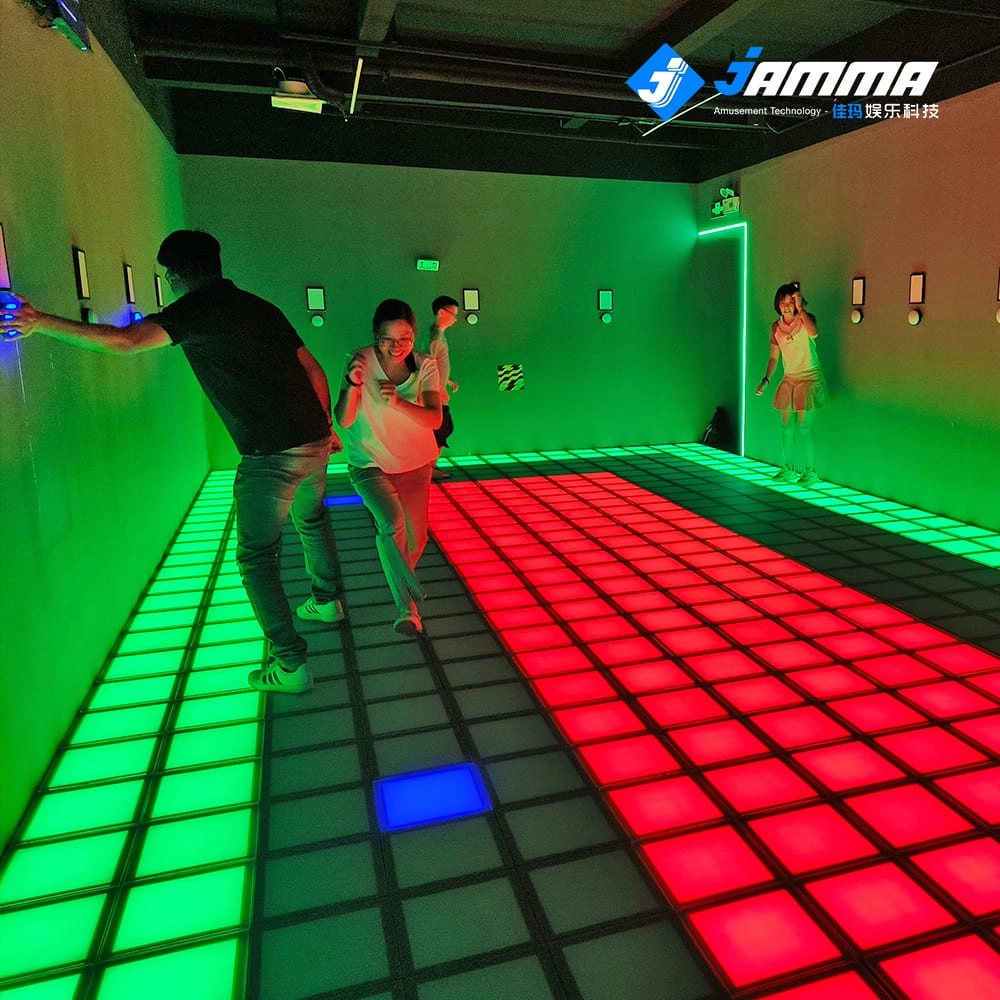
Super Grid Interactive LED Floor Activate Game Team Play
Super Grid is an immersive sports game that combines sports and technology. It integrates interactive LED lights and sensors through innovative software design, creating a fun gaming experience.
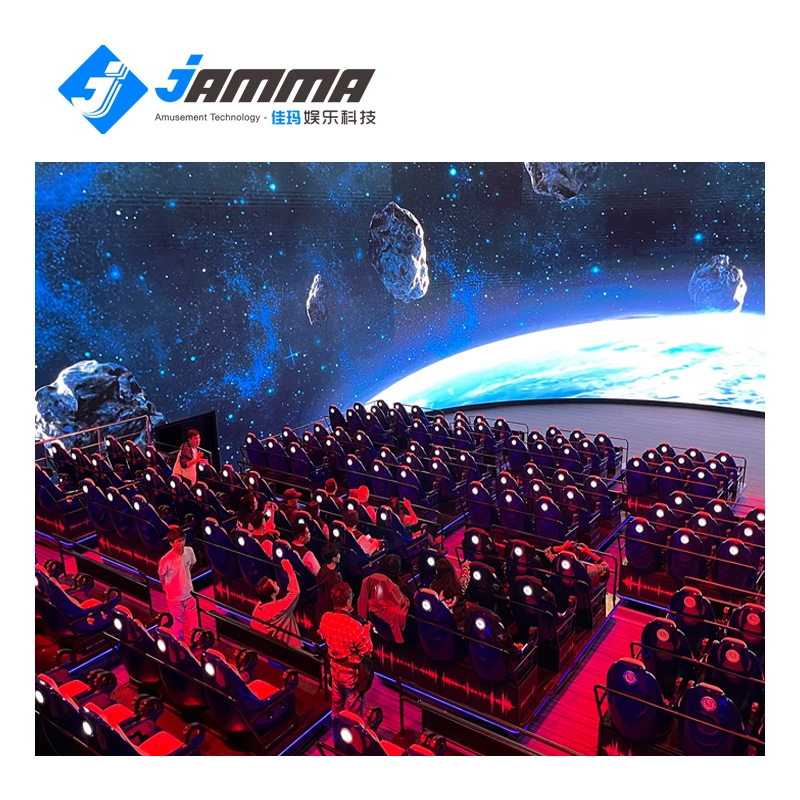
Immersive 5D/7D/9D cinema dynamic visual experience room
Compared with other types of theaters, 5D/7D/9D cinema have high technical content, prominent themes, and have a strong impact on the characteristics of the picture. With the increasing demand in the entertainment market and the continuous development of video entertainment technology, in the past, audiences would experience vibration, drop, rain, scratches and other effects in some 4D theaters, but now with 5D theaters, audiences can experience new Unique features, touch and feel effects such asreal smoke, water, snow, bubbles, smell, lightning, leg touch,camera system and more. When the audience is watching amovie, the seats and environmental effects will change into corresponding actions according to the development of the movie,allowing the audience to experience an immersive viewing experience.
