

Cost Breakdown: Opening an Indoor Playground
- Planning Your Indoor Play Center Budget
- Why accurate cost planning matters for an indoor playground
- Major cost categories (what you must budget for)
- 1) Real estate and rent
- 2) Buildout and facility infrastructure
- 3) Indoor playground equipment and play structures
- 4) Flooring and safety surfacing
- 5) Mechanical, electrical, plumbing (MEP) and AV/IT
- 6) Licensing, permits, inspection and legal
- 7) Insurance and safety compliance
- 8) Staffing and training
- 9) Marketing and pre-opening expenses
- 10) Working capital and contingency
- Sample budget scenarios: small, medium, large venues
- Key cost drivers and optimization tactics
- Location vs. size trade-offs
- Equipment procurement strategies
- Contractor selection and buildout control
- Staffing and operations efficiency
- Revenue streams and quick ROI levers
- Financing options and financial modeling
- Regulatory, safety and insurance considerations
- JAMMA Amusement: one-stop solutions for indoor playground projects
- Checklist: critical pre-opening actions to control costs
- Common pitfalls and how to avoid them
- FAQ — Frequently Asked Questions
- 1. How much does it cost to start a small indoor playground?
- 2. What are ongoing monthly expenses for an indoor play center?
- 3. Can I phase equipment purchases to reduce upfront costs?
- 4. How long until an indoor playground becomes profitable?
- 5. Do I need special insurance for an indoor playground?
- 6. What equipment provides the best ROI?
- 7. How do I estimate attendance and revenue?
- Contact & next steps
- References & further reading
Planning Your Indoor Play Center Budget
Opening an indoor playground (indoor play center, soft play, or children’s entertainment venue) is an attractive business for entrepreneurs who want to serve families and capture steady local demand. But profitability depends first on realistic capital planning. This article gives a practical, verifiable cost breakdown—from real estate and buildout to equipment, operations, and contingencies—plus sample budget scenarios, financing options and quick ROI guidance. Wherever numbers are quoted they are presented as industry-estimate ranges; you should validate local quotes for your market and operator model.
Why accurate cost planning matters for an indoor playground
Indoor playgrounds combine retail-like rent obligations, relatively high fixed costs (equipment, flooring, HVAC), and service-intensive operations (staff, cleaning, safety). Poor cost assumptions create cash-flow stress in months one through 18, when marketing and repeat-visit patterns are being established. Credible industry sources such as the U.S. Small Business Administration (SBA) and IAAPA stress detailed forecasts for location-based entertainment projects; use conservative estimates for rent, equipment lifecycles, and working capital.
Major cost categories (what you must budget for)
Below are the primary line items that account for the bulk of startup and early operating capital for an indoor playground. Each section explains what’s included, common cost drivers, and practical tips to control expense without sacrificing safety or customer experience.
1) Real estate and rent
Rent is typically the single largest recurring expense. Location drives foot traffic: malls, strip centers, or stand-alone units near family neighborhoods perform differently. Key considerations:
- Square footage: small venues 1,500–3,000 sqft, medium 3,000–7,000 sqft, larger family entertainment centers 7,000+ sqft.
- Common Area Maintenance (CAM) and utilities—often a sizeable add-on to base rent.
- Lease structure: negotiate tenant improvement (TI) allowances and graduated rent when possible.
2) Buildout and facility infrastructure
Buildout covers partitions, flooring substructure, plumbing, restrooms, storage, staff rooms, electrical capacity upgrades, HVAC enhancements, and fire/safety compliance. Quality durable materials and adequate HVAC are non-negotiable for comfort and longevity.
Estimate: buildout commonly runs 20%–40% of total startup costs depending on condition of existing shell and local code requirements.
3) Indoor playground equipment and play structures
Equipment includes soft play structures, modular climbing systems, ball pits, slides, trampolines (if included), themed sets, toddler zones, and safety surfacing. Costs vary widely by vendor, size, customization and materials. Standard packages for a medium-size center often represent one of the largest single capital purchases.
Tip: request warranties, CE or ASTM safety compliance certificates, and maintenance manuals. Buying a complete system from a single supplier can simplify installation and ongoing service.
4) Flooring and safety surfacing
Impact-attenuating surfacing (rubber tile, foam-mat systems), anti-slip finishes, and wall padding are essential for safety and insurance compliance. Costs depend on square footage and material quality.
5) Mechanical, electrical, plumbing (MEP) and AV/IT
Capacity upgrades (especially electrical and HVAC) may be required for high occupancy venues and attractions such as VR or 5D cinemas. Point-of-sale (POS) systems, booking software, CCTV for safety monitoring, and Wi‑Fi are part of this category.
6) Licensing, permits, inspection and legal
Local permits, occupancy certificates, food service permits (if offering café/snacks), and building inspections should be obtained before opening. Budget for permit fees and potential architectural/engineering costs for code compliance.
7) Insurance and safety compliance
General liability, property, workers’ compensation, and product liability insurance are critical. Insureon and similar brokers show that entertainment venue insurance High Qualitys vary by city, revenue, and claims history—expect modestly higher High Qualitys where active attractions and large capacity increase risk.
8) Staffing and training
Staff roles include floor supervisors, front-desk attendants, party hosts, cleaners, kitchen staff (if food), and management. Initial months typically require over-hiring to ensure reliable coverage as demand grows; include recruitment and training costs.
9) Marketing and pre-opening expenses
Pre-opening marketing, community outreach, website, booking engine, signage, social media advertising, and launch events are essential to build initial attendance and bookings for birthday parties and school programs.
10) Working capital and contingency
Plan for at least 3–6 months of operating expenses as working capital and a contingency reserve (10%–20% of total startup budget) for unforeseen items.
Sample budget scenarios: small, medium, large venues
The table below provides illustrative budgets for three common indoor playground scales. These are industry-estimate ranges and should be adapted to local conditions and operator model (membership-focused vs. party-centric vs. hybrid FEC).
| Category | Small (1,500–3,000 sqft) | Medium (3,000–7,000 sqft) | Large / FEC (7,000–20,000+ sqft) |
|---|---|---|---|
| Estimated total startup | $50,000 – $150,000 | $150,000 – $400,000 | $400,000 – $1,500,000+ |
| Rent / deposit (first 3 months incl.) | $6,000 – $30,000 | $15,000 – $80,000 | $50,000 – $250,000+ |
| Buildout / TI | $10,000 – $40,000 | $30,000 – $120,000 | $100,000 – $600,000+ |
| Equipment & play structures | $15,000 – $50,000 | $50,000 – $180,000 | $150,000 – $600,000+ |
| Flooring / surfacing | $5,000 – $15,000 | $15,000 – $45,000 | $40,000 – $150,000+ |
| MEP / AV / POS | $3,000 – $10,000 | $8,000 – $25,000 | $25,000 – $100,000+ |
| Operating cash / working capital | $10,000 – $30,000 | $20,000 – $60,000 | $50,000 – $200,000+ |
| Marketing & pre-opening | $2,000 – $8,000 | $5,000 – $20,000 | $10,000 – $50,000+ |
| Insurance, legal & permits | $1,000 – $5,000 | $3,000 – $15,000 | $10,000 – $50,000+ |
| Contingency (10%–20%) | $5,000 – $30,000 | $15,000 – $80,000 | $40,000 – $300,000+ |
Source: industry estimates compiled from SBA operational guidance, IAAPA trend analyses and insurer/industry vendor pricing (see references).
Key cost drivers and optimization tactics
Understanding where you can trim costs without jeopardizing safety or guest experience is crucial.
Location vs. size trade-offs
A smaller venue in a high-traffic family neighborhood or mall entrance may outperform a larger, poorly located center. Evaluate visibility, parking, and complementary tenants (cafes, kids’ retailers) when selecting space.
Equipment procurement strategies
- Buy complete systems from reputable manufacturers to ensure installation support and consistent safety standards.
- Consider phased equipment purchases: open core zones first, add attractions (VR, simulators, projection) as cash flow stabilizes.
- Negotiate warranties, spare-part packages and on-site training in purchase contracts.
Contractor selection and buildout control
Get multiple bids, insist on fixed-price contracts where possible, and allow for a realistic contingency. Contractors unfamiliar with family entertainment centers sometimes under-estimate costs, so choose firms with relevant experience.
Staffing and operations efficiency
Use software for online booking and contactless check-in to reduce front-desk staffing needs. Implement standardized cleaning and safety checklists to reduce liability and increase operational predictability.
Revenue streams and quick ROI levers
Indoor playground revenue typically combines admission fees, birthday party bookings, membership/subscription models, concessions/café sales, merchandise, classes and events, and add-on attractions (VR, simulators, projection). To improve ROI:
- Prioritize party and event bookings—these often have the highest per-guest revenue and predictable scheduling.
- Introduce memberships for repeat visitors to stabilize cash flow.
- Offer weekday classes (music, movement, STEM) to increase off-peak utilization.
Financing options and financial modeling
Capital sources include owner equity, small business loans, equipment financing/leases, franchisor financing (if franchising), and investor equity. Prepare a 12–24 month cash-flow model that includes conservative attendance, average ticket spend, and detailed expense schedules. Lenders and investors will expect contingency planning and realistic break-even timing (often 12–24 months).
Regulatory, safety and insurance considerations
Comply with local building codes, fire and occupancy rules, food safety if applicable, and playground safety standards (e.g., ASTM standards in the U.S., EN standards in EU markets). Maintain documented cleaning and inspection logs to support insurance and reduce claims risk. Consult local authorities early to avoid surprise costs.
JAMMA Amusement: one-stop solutions for indoor playground projects
JAMMA Amusement was established in 2009, located in Guangzhou, with 15 years of experience in the amusement industry. Focusing on providing high-value, one-stop solutions for amusement projects, our products include VR games, AR sports simulators, AR interactive projection games, 5D cinema, as well as arcade games and outdoor playground equipment. We have a highly efficient international sales team dedicated to understanding customer needs and providing professional solutions and high-quality products for venues. Our industry-leading technical team keeps abreast of the latest technological trends and continuously develops and updates the products. Our manufacturing and after-sales teams are skilled and experienced, providing comprehensive technical support. We are committed to becoming a leading global provider of amusement equipment and park solutions. Our website is https://www.jammapark.com/.
How JAMMA helps reduce total cost of ownership (TCO):
- Turnkey delivery: integrated design, manufacture and installation reduces coordination overhead and shortens time-to-open.
- Proven product lines (Sports Simulators, Interactive Projection Games, Immersive Attractions, VR Games) offer durable components and modular upgrades—helping operators phase investments as revenue grows.
- Technical support and after-sales service minimize downtime and lifecycle maintenance costs, improving long-term ROI.
Checklist: critical pre-opening actions to control costs
- Secure lease terms with TI allowances or rent abatement where possible.
- Obtain multiple equipment and contractor quotes; verify references and safety certifications.
- Prepare 24-month cash-flow projections with conservative revenue assumptions and 10%–20% contingency.
- Purchase adequate insurance and document safety protocols.
- Plan a phased upgrade path for attractions to manage capital expenditures over time.
Common pitfalls and how to avoid them
Typical mistakes include underestimating buildout or MEP upgrades, insufficient working capital, skimping on safety surfacing and insurance, and poor market research on local family demographics. Avoid these by building conservative budgets, speaking with existing operators, and hiring experienced designers or suppliers for family entertainment projects.
FAQ — Frequently Asked Questions
1. How much does it cost to start a small indoor playground?
Estimated startup for a small venue (1,500–3,000 sqft) is approximately $50,000–$150,000. This includes equipment, basic buildout, initial rent/deposits, and working capital. Local costs vary—obtain multiple quotes for equipment and buildout.
2. What are ongoing monthly expenses for an indoor play center?
Typical monthly costs include rent, utilities (HVAC is often substantial), payroll, insurance, maintenance, and marketing. For a mid-size facility, these can range from $15,000–$50,000+ per month depending on location and staffing.
3. Can I phase equipment purchases to reduce upfront costs?
Yes. Many operators open with core play zones and add attractions (VR, simulators, projection walls) in later phases as revenue allows. Work with suppliers who support modular expansion and provide upgrade paths.
4. How long until an indoor playground becomes profitable?
Break-even timelines commonly range 12–24 months, depending on capital structure, marketing effectiveness, and local demand. Conservative financial planning and a focus on high-margin party bookings accelerate profitability.
5. Do I need special insurance for an indoor playground?
Yes. General liability, property, workers’ compensation, and product liability (if you provide equipment or host third-party attractions) are typical. High Qualitys vary by location, venue size and attraction mix—consult an insurer experienced with entertainment venues.
6. What equipment provides the best ROI?
High-margin revenue often comes from birthday party packages, special classes, and add-on attractions (VR experiences, simulators, projection games). Invest in durable core play structures that suit your target age groups and then add High Quality attractions to drive higher ticket prices.
7. How do I estimate attendance and revenue?
Use local demographic data (children under 12 population within X miles), competitor analysis, and similar venue performance benchmarks. Assume conservative conversion rates for first-year marketing; run scenario models (best/expected/worst) to prepare cash flow plans.
Contact & next steps
If you’re planning an indoor playground project and need a reliable equipment and solution partner, JAMMA Amusement provides turnkey design, manufacturing and support. Visit https://www.jammapark.com/ for product catalogs and case studies or contact JAMMA’s international sales team to request a tailored quote and feasibility consultation. For a fast-start approach, prepare your target square footage, location, and budget range before contacting suppliers to get the most accurate proposals.
References & further reading
- U.S. Small Business Administration — “Write your business plan” and startup cost guidance. https://www.sba.gov/ (accessed 2025-12-15)
- International Association of Amusement Parks and Attractions (IAAPA) — Industry trends and reports. https://www.iaapa.org/ (accessed 2025-12-15)
- Insureon — Small business insurance for indoor playgrounds and similar venues (insurance cost factors). https://www.insureon.com/ (accessed 2025-12-15)
- Statista — Market statistics for children’s entertainment and indoor playground market size (select reports). https://www.statista.com/ (accessed 2025-12-15)
- Centers for Disease Control and Prevention (CDC) — Playground safety guidance (safety surfaces and injury prevention). https://www.cdc.gov/healthyplaces/healthtopics/places_playgrounds.htm (accessed 2025-12-15)
- JAMMA Amusement — Corporate site and product portfolio. https://www.jammapark.com/ (accessed 2025-12-15)
Tips for buy laser tag game set
Why choose JAMMA as your 4d moving theatre manufacturer in Europe
OEM/ODM interactive gym wall Manufacturers and Suppliers
Where to Buy activate game mode in America
Product details
Does the soccer simulator configuration include the curtain?
Yes, a 4-meter-wide, 3-meter-high projection curtain is included.
Are glasses required to see a 5D film?
Audience needs to wear 3D glasses while watching movie, but not VR glasses.
Standard and other
How long is the warranty period?
Our products have a one-year warranty period. During the warranty period, if there are any issues with the product that are not caused by human error, we can replace the parts for you free of charge. If the problems are caused by improper use, you will need to purchase the parts and bear the shipping costs yourself.
How will it be transported?
For large items, we usually use sea freight, while for small items, we use air freight or services like DHL, FedEx, or UPS. We can also accommodate specific shipping methods based on your requirements.
Do you offer a customized service?
We can provide logo customization service for all of our products. For certain products, we can also support customization of sizes and game content. If you have any product customization requirements, please contact us and we will confirm the details with you.
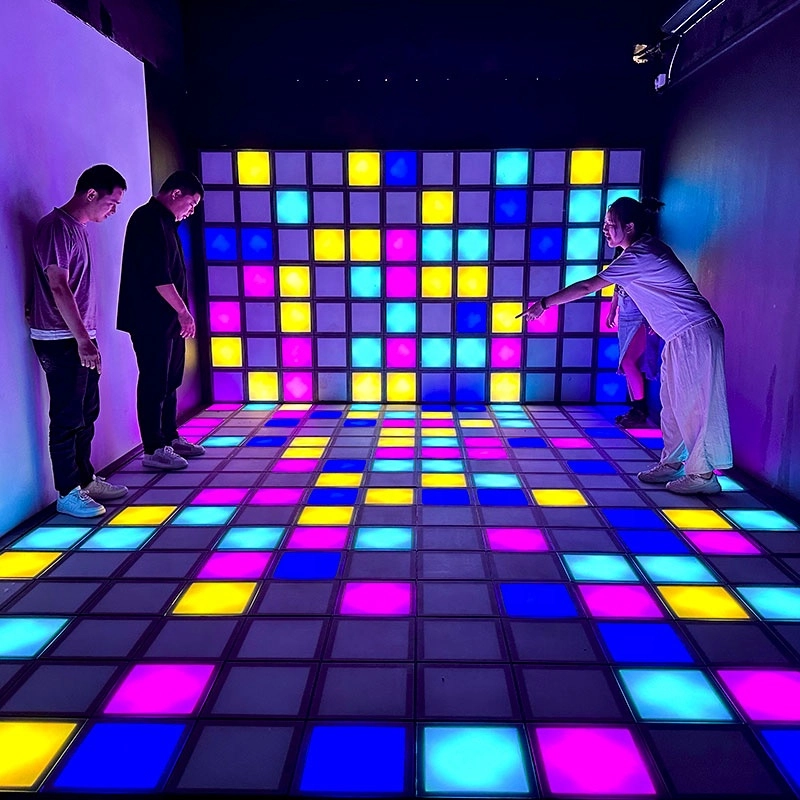
Hottest activated LED dance grid tiles floor touch games
Super Grid is an immersive sports game that combines sports and technology. It integrates interactive LED lights and sensors through innovative software design, creating a fun gaming experience.
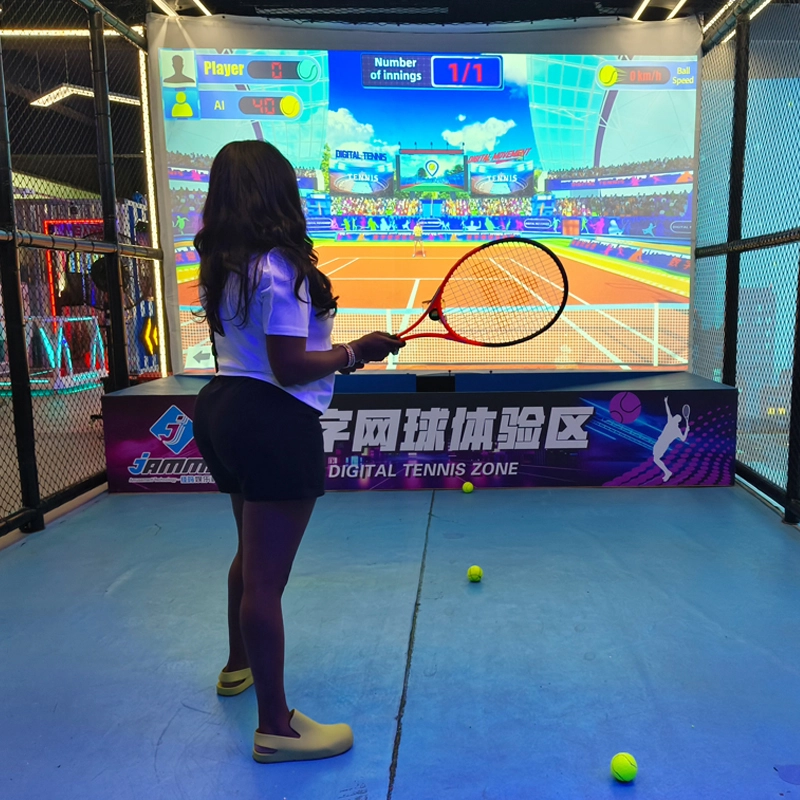
Top Indoor Tennis Racketball Training Simulator Dual Player Games
Interactive somatosensory fitness game
Combine traditional tennis sports with advanced 3D digital technology to bring customers an immersive tennis training experience
COMBINE TRADITIONAL TENNIS SPORTS WITH ADVANCED 3D DIGITAL TECHNOLOGY TO BRING CUSTOMERS AN IMMERSIVE TENNIS TRAINING EXPERIENCE INDOOR AND TENNIS EXPERIENCE HALL
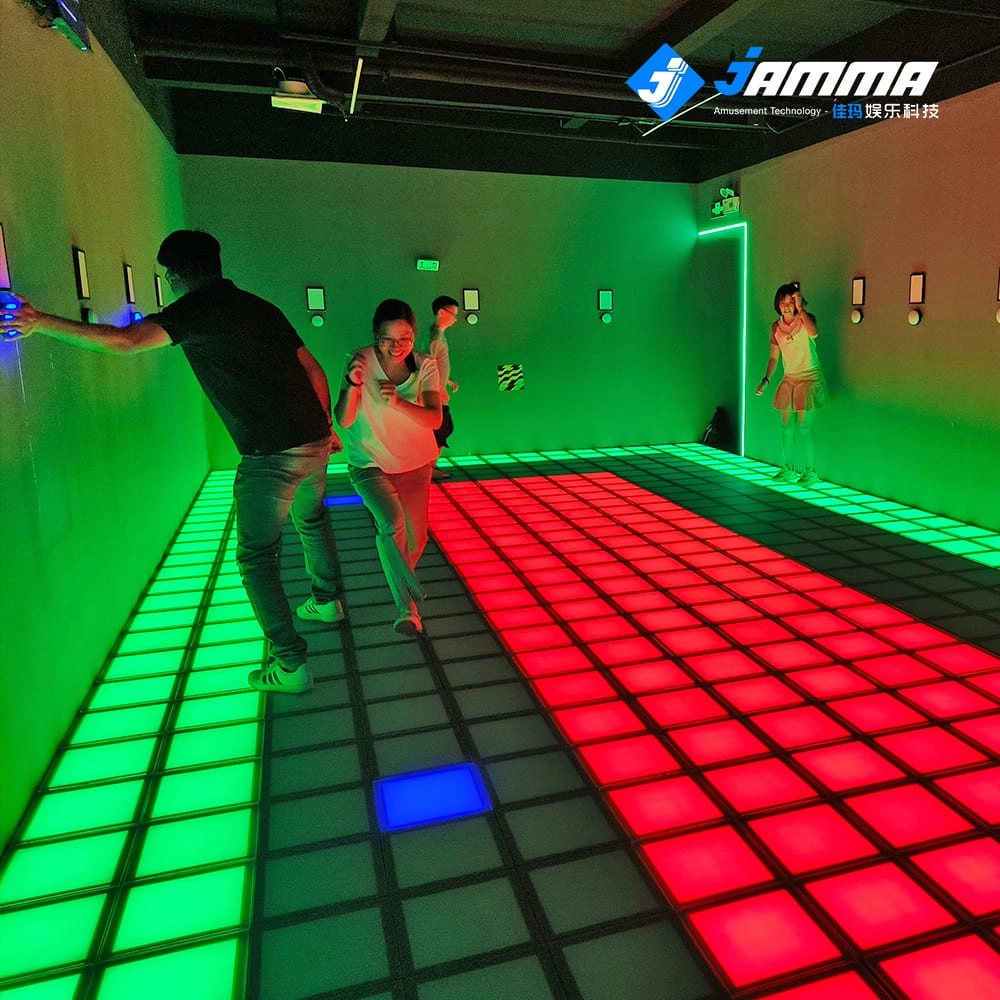
Super Grid Interactive LED Floor Activate Game Team Play
Super Grid is an immersive sports game that combines sports and technology. It integrates interactive LED lights and sensors through innovative software design, creating a fun gaming experience.
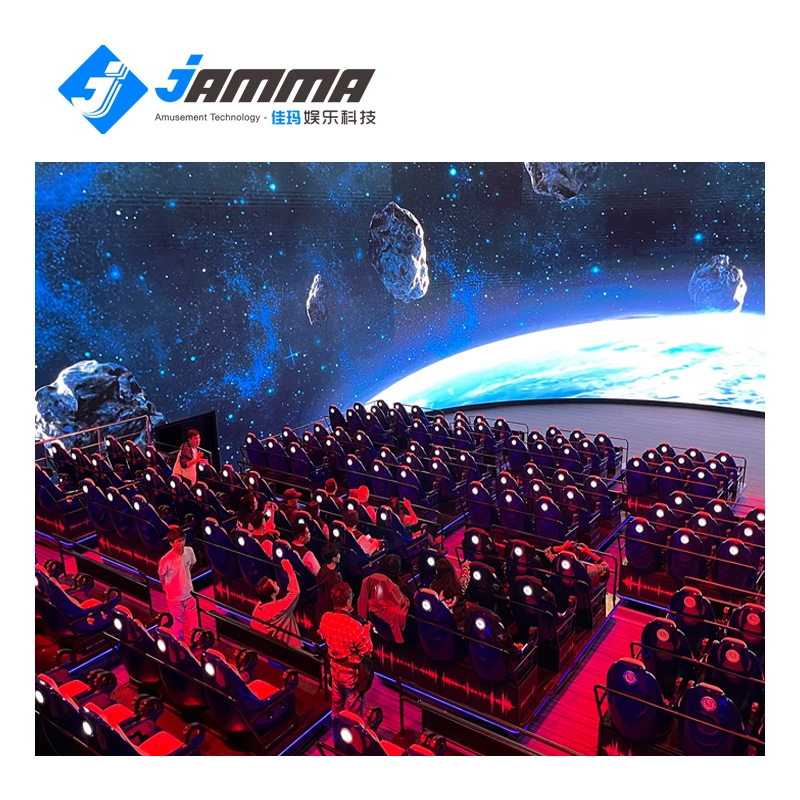
Immersive 5D/7D/9D cinema dynamic visual experience room
Compared with other types of theaters, 5D/7D/9D cinema have high technical content, prominent themes, and have a strong impact on the characteristics of the picture. With the increasing demand in the entertainment market and the continuous development of video entertainment technology, in the past, audiences would experience vibration, drop, rain, scratches and other effects in some 4D theaters, but now with 5D theaters, audiences can experience new Unique features, touch and feel effects such asreal smoke, water, snow, bubbles, smell, lightning, leg touch,camera system and more. When the audience is watching amovie, the seats and environmental effects will change into corresponding actions according to the development of the movie,allowing the audience to experience an immersive viewing experience.
