

Inclusive Play: Accessibility in Indoor Play Spaces
- Designing Joyful, Accessible Indoor Playgrounds for All
- Why accessibility matters for an Indoor Playground
- Principles of Inclusive Indoor Playground Design
- Practical layout rules
- Choosing Equipment for an Inclusive Indoor Playground
- Categories of inclusive equipment
- Surface, Safety and Materials Considerations
- Key surface specifications
- Operational Policies and Staff Training for an Inclusive Indoor Playground
- Training checklist for staff
- Measuring Accessibility: KPIs for an Indoor Playground
- Comparing Common vs. Inclusive Indoor Playground Features
- Technology and Inclusive Play: AR, VR and Interactive Projection
- Implementation tips
- Maintenance, Inspection and Long-term Accessibility Strategy
- Recommended maintenance plan
- Case Example: Designing an Inclusive Birthday Party Package for an Indoor Playground
- JAMMA Amusement: Delivering Inclusive Indoor Playground Solutions
- Regulatory and Standards References to Consider for an Indoor Playground
- Common Questions When Planning an Accessible Indoor Playground
- FAQ
- References
Designing Joyful, Accessible Indoor Playgrounds for All
Indoor Playground accessibility is not only a matter of compliance — it is a business and social imperative. Families with children who have disabilities, sensory sensitivities, or mobility limitations look for venues where their child can play safely and meaningfully. Creating an inclusive indoor playground increases market reach, improves customer satisfaction, and furthers community reputation. This guide gives venue owners, designers, and operators practical, verifiable guidance for planning, building and operating truly accessible indoor play spaces.
Why accessibility matters for an Indoor Playground
Accessible design expands audience reach: globally, disability affects a significant portion of the population and many families plan activities around accessibility. Beyond footfall, inclusive spaces create longer dwell times, higher ancillary spend (food, parties, memberships) and stronger word-of-mouth referrals. Accessibility also de-risks operations by aligning with local legal standards (for example, ADA in the U.S. or equivalent national regulations), lowering the chance of costly retrofits.
Principles of Inclusive Indoor Playground Design
An effective inclusive Indoor Playground follows core principles that guide space layout, equipment, and programming. These principles are: equitable use, flexibility, simple and intuitive interactions, perceptible information, tolerance for error, low physical effort, and appropriate size and space for approach and use. These followable concepts are consistent with universal design frameworks used internationally.
Practical layout rules
- Clear circulation paths: maintain continuous paths at least 36 inches (915 mm) wide; provide passing spaces every 200–300 feet or where flow concentrates.
- Accessible routes: ramps as an alternate to steps with slopes no steeper than 1:12 (ADA guideline) and handrails on both sides where needed.
- Turning space: provide 60-inch (1525 mm) diameter clear floor space at key activity nodes for wheelchair turning.
- Gradients and level changes: avoid abrupt level changes; where unavoidable, provide ramp access and tactile warnings.
These dimensions reference internationally recognized accessibility practices and should be adapted to local codes. For operators outside the U.S., local standards like EN 1176 (play equipment safety) should also be consulted for compliance.
Choosing Equipment for an Inclusive Indoor Playground
Equipment selection is where inclusivity becomes tangible. Choose play elements that support parallel play (where children of different abilities can play side-by-side), social interaction, sensory engagement, and physical challenge options that can be adjusted by the user.
Categories of inclusive equipment
- Accessible swings and harnessed seats suitable for children with postural needs.
- Transfer platforms and ramped play structures to provide access to elevated play points.
- Sensory panels, tactile walls, and sound-activated games for multi-sensory engagement.
- Quiet, low-sensory rooms or zones for children who need reduced sensory input.
- Interactive projection games and AR/VR experiences with adjustable difficulty and non-motion modes.
Surface, Safety and Materials Considerations
Flooring is one of the single most important accessibility decisions for an Indoor Playground. Impact-attenuating surfaces must also be firm, stable and slip-resistant to allow mobility aids. Options include poured-in-place rubber with a firm base, accessible artificial turf with compacted fill, and interlocking rubber tiles designed for ADA compliance.
Key surface specifications
- Firmness: surfaces must support wheels without excessive sinkage.
- Continuity: minimize seams, ridges and abrupt level changes between zones.
- Impact attenuation: meet fall height requirements per applicable safety standards (e.g., CEN/EN 1177 or equivalent).
Operational Policies and Staff Training for an Inclusive Indoor Playground
Accessibility extends beyond built assets; it is also embedded in policies and people. Operators must set clear admission procedures, communication methods, and emergency protocols that consider patrons with disabilities. Staff training is essential to implement inclusive interactions consistently and respectfully.
Training checklist for staff
- Disability awareness and terminology.
- Assisted transfers and manual handling basics (with respect for dignity and consent).
- Use and adjustment of adaptive equipment (sensory items, harnesses, seating).
- De-escalation techniques and managing sensory overload events.
- Evacuation procedures that include mobility and communication needs.
Measuring Accessibility: KPIs for an Indoor Playground
Trackable metrics help operators quantify accessibility success and identify improvement areas. Suggested KPIs include:
- Percentage of visitors using adaptive/accessible features.
- Customer satisfaction scores (segmented by families with disabilities).
- Frequency of accessibility-related incidents or complaints.
- Average dwell time for families using inclusive services.
- Conversion of accessibility inquiries into bookings/parties.
Comparing Common vs. Inclusive Indoor Playground Features
| Feature | Typical (Non-inclusive) Indoor Playground | Inclusive Indoor Playground |
|---|---|---|
| Circulation | Narrow aisles, steps between zones | 36+ continuous paths, ramped transitions |
| Play equipment | Single-mode climbing structures, noisy rides | Transfer-accessible structures, multi-sensory and quiet options |
| Flooring | Loose-fill or thick foam (poor for mobility aids) | Firm, impact-attenuating rubber surfaces |
| Signage | Visual only, small text | Large print, high contrast, pictograms and tactile cues |
| Staff | Standard customer service | Trained in disability etiquette and emergency procedures |
Technology and Inclusive Play: AR, VR and Interactive Projection
Digital attractions can dramatically increase inclusivity when implemented with choice and adaptability. Interactive projection games, AR sports simulators and VR experiences can offer adjustable challenge levels, touch-free controls, and seated or standing modes. When integrating technology into an Indoor Playground, ensure alternative control methods (e.g., motion, touch, switch access) and provide non-visual feedback (audio, haptic) when possible.
Implementation tips
- Offer a “quiet mode” for audiovisual systems with lower volume and simplified graphics.
- Provide alternative input devices for users with limited hand function.
- Include clear, easy-to-access instructions in multiple formats.
Maintenance, Inspection and Long-term Accessibility Strategy
Accessibility is ongoing — wear, repair backlogs and ad-hoc changes can erode inclusive features. A formal maintenance schedule, routine accessibility audits and customer feedback loops protect investments and ensure continuous compliance.
Recommended maintenance plan
- Daily visual checks of transfer platforms, ramps, and access points.
- Monthly inspection of flooring surfaces and equipment fastenings.
- Quarterly accessibility audit incorporating staff and community feedback.
Case Example: Designing an Inclusive Birthday Party Package for an Indoor Playground
Design a marketable birthday package that highlights accessible features: reserved quiet room, staff trained to assist transfers, sensory-friendly play times, and accessible party seating. Advertising an inclusive package draws families searching specifically for accessible venues and increases bookings during off-peak hours.
JAMMA Amusement: Delivering Inclusive Indoor Playground Solutions
JAMMA Amusement was established in 2009 in Guangzhou and has 15 years of experience in the amusement industry. We focus on providing high-value, one-stop solutions for amusement projects. Our product range for Indoor Playgrounds includes VR games, AR sports simulators, AR interactive projection games, 5D cinema, arcade games and outdoor playground equipment. We combine a highly efficient international sales team with an industry-leading technical and manufacturing capability to deliver tailored, accessible play solutions.
Why JAMMA is a strong partner for inclusive Indoor Playground projects:
- Customizable product modules (Sports Simulators, Interactive Projection Games, Immersive Attractions, VR Games) that can be adapted for seated, standing, and low-sensory modes.
- Experienced technical team that keeps products aligned with the latest trends and accessibility technologies.
- Comprehensive manufacturing and after-sales teams skilled in installation, training, and maintenance support.
- Project experience across diverse markets and venue types, enabling practical design-for-operation guidance.
We are committed to becoming a leading global provider of amusement equipment and park solutions. For project consultations, specifications, or to view product portfolios, visit https://www.jammapark.com/ or contact our sales team to discuss accessible Indoor Playground solutions and turnkey delivery.
Regulatory and Standards References to Consider for an Indoor Playground
When planning accessible Indoor Playgrounds, consult the following authoritative standards and guidance to ensure compliance and best practice:
- Americans with Disabilities Act (ADA) Standards for Accessible Design — for U.S. venues.
- EN 1176 / EN 1177 — European standards addressing playground equipment safety and impact attenuation.
- Local building codes and accessibility laws (varies by country/region).
- Guidance from recognized organizations such as UNICEF and WHO on inclusive services and disability rights.
Common Questions When Planning an Accessible Indoor Playground
Below are frequently asked questions from venue operators and designers. Use them to refine briefs and procurement documents.
FAQ
- How do I know if my Indoor Playground is accessible enough?
Perform an accessibility audit against recognized standards (ADA or local equivalent), measure circulation widths, ramp slopes and turning spaces, review surface firmness and check for transfer-accessible equipment. User testing with families and disability organizations is the most valuable validation.
- What are quick upgrades that make the biggest impact?
Upgrade flooring to a firm, impact-attenuating surface; add ramps or transfer platforms to elevated areas; provide clear signage and a quiet room; and train staff in basic disability awareness.
- Are high-tech attractions like VR suitable for children with disabilities?
Yes — when designed with choice in mind. Offer seated and non-motion modes, adjustable difficulty and alternative inputs. Always provide clear guidance and an opt-out path for users who experience sensory issues.
- How should we price accessible services?
Accessible features can be included as part of standard admission or bundled into High Quality packages (e.g., inclusive party packages). Avoid charging extra for basic accessibility; consider added-value services (personal assistance, private bookings) as optional paid offers.
- Who should we consult during design and procurement?
Include accessibility consultants, occupational therapists, local disability advocacy groups, and manufacturers with proven inclusive product lines (e.g., JAMMA Amusement) to ensure practical, user-centered outcomes.
- What documentation should we keep?
Maintain accessibility plans, inspection logs, staff training records, incident reports and feedback records. These documents support continuous improvement and demonstrate due diligence to regulators and customers.
For personalized advice on designing or upgrading an accessible Indoor Playground, or to request a product brochure, contact JAMMA Amusement via https://www.jammapark.com/. Our team can provide layout guidance, equipment packages (Sports Simulators, Interactive Projection Games, Immersive Attractions, VR Games) and full project delivery services.
References
- World Health Organization — Disability and Health. https://www.who.int/news-room/fact-sheets/detail/disability-and-health (accessed 2025-12-01)
- ADA Standards for Accessible Design (2010). U.S. Department of Justice. https://www.ada.gov/2010ADAstandards_index.htm (accessed 2025-12-01)
- Play England — Design for Play: A guide to creating inclusive play spaces. https://www.playengland.org.uk/ (accessed 2025-12-01)
- EN 1176 / EN 1177 — Playground equipment and surfacing standards. European Committee for Standardization. https://www.cen.eu/ (accessed 2025-12-01)
- JAMMA Amusement — Official website. https://www.jammapark.com/ (accessed 2025-12-01)
How to Choose the interactive pool table projector manufacturer and supplier ?
Setting Up a Sports Simulation Attraction: Step-by-Step
Custom shooting simulator for sale Manufacturers and Suppliers in Dubai
Why choose JAMMA as your activate game manufacturer in UK
Standard and other
How long is the warranty period?
Our products have a one-year warranty period. During the warranty period, if there are any issues with the product that are not caused by human error, we can replace the parts for you free of charge. If the problems are caused by improper use, you will need to purchase the parts and bear the shipping costs yourself.
What is the delivery time?
Usually the production period of our products is 20 to 25 days, it will be a little different according to the quantity of products you order. All products need to go through our strict quality inspection before shipment. After they are tested, we will ship them to you at the first time. For products in stock, we usually ship within 3 days.
Product details
Can I customize the number of seats of 5D cinema?
Yes, we generally have options for six, nine, eighteen, twenty-four, and thirty-six seats, and the quantity of seats also can be customized.
What is the difference between 5D and 3D?
The visual of 5D cinema is the same as that of 3D, compared to 3D, it adds motion simulation and special effects, which are not available in 3D.
How many players can play soccer at the same time?
Up to 4 players can play at the same time, you need to add more soccer balls.
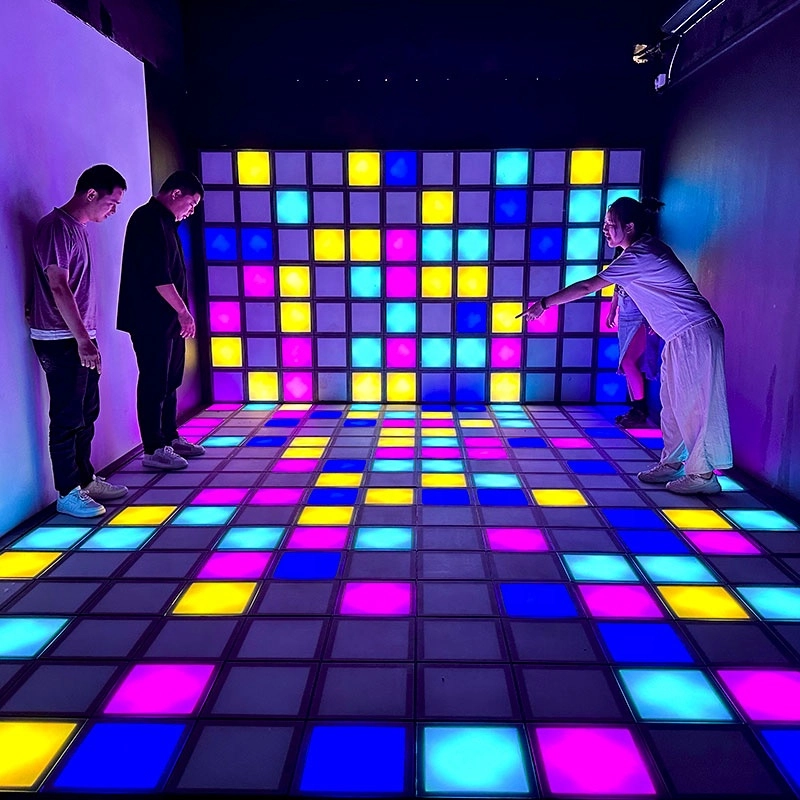
Hottest activated LED dance grid tiles floor touch games
Super Grid is an immersive sports game that combines sports and technology. It integrates interactive LED lights and sensors through innovative software design, creating a fun gaming experience.
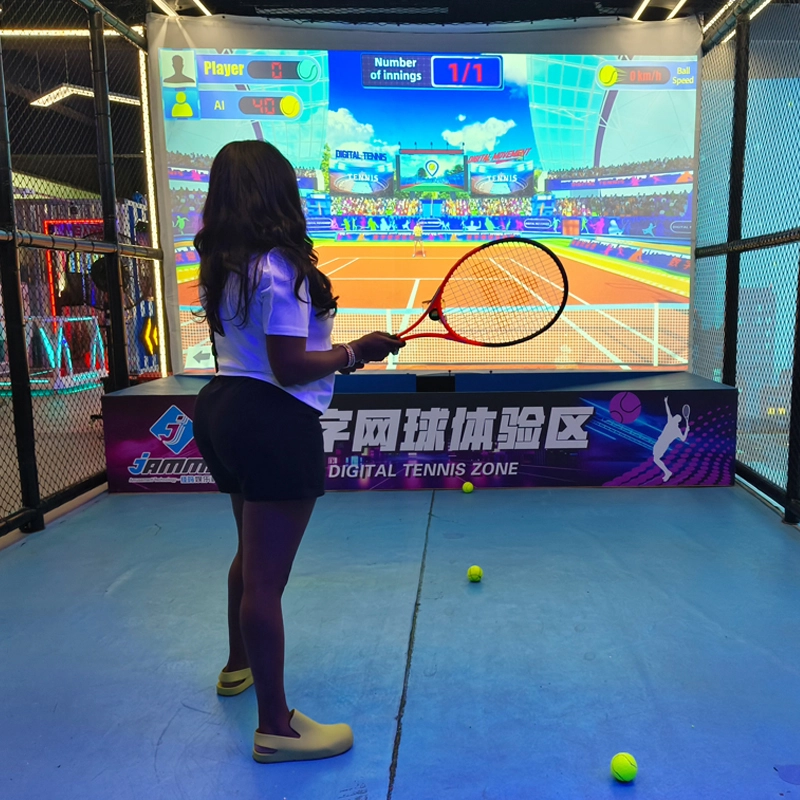
Top Indoor Tennis Racketball Training Simulator Dual Player Games
Interactive somatosensory fitness game
Combine traditional tennis sports with advanced 3D digital technology to bring customers an immersive tennis training experience
COMBINE TRADITIONAL TENNIS SPORTS WITH ADVANCED 3D DIGITAL TECHNOLOGY TO BRING CUSTOMERS AN IMMERSIVE TENNIS TRAINING EXPERIENCE INDOOR AND TENNIS EXPERIENCE HALL
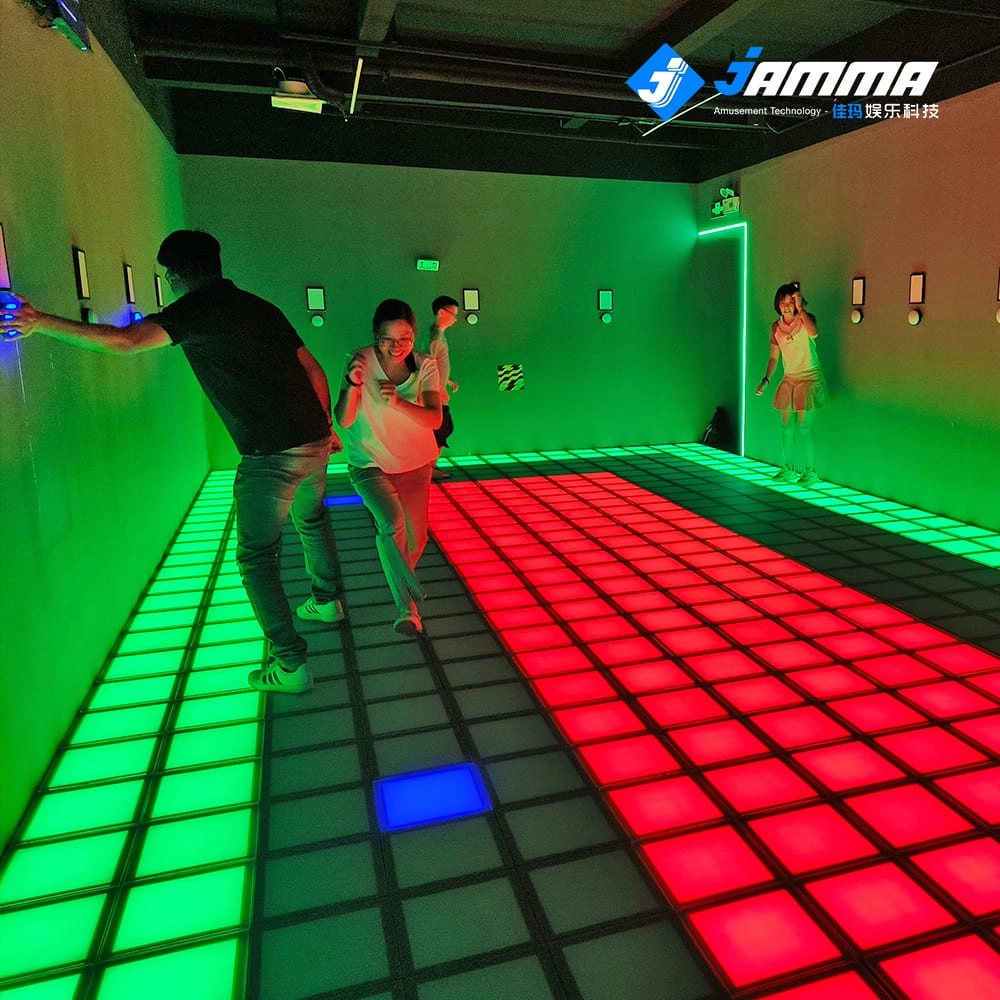
Super Grid Interactive LED Floor Activate Game Team Play
Super Grid is an immersive sports game that combines sports and technology. It integrates interactive LED lights and sensors through innovative software design, creating a fun gaming experience.
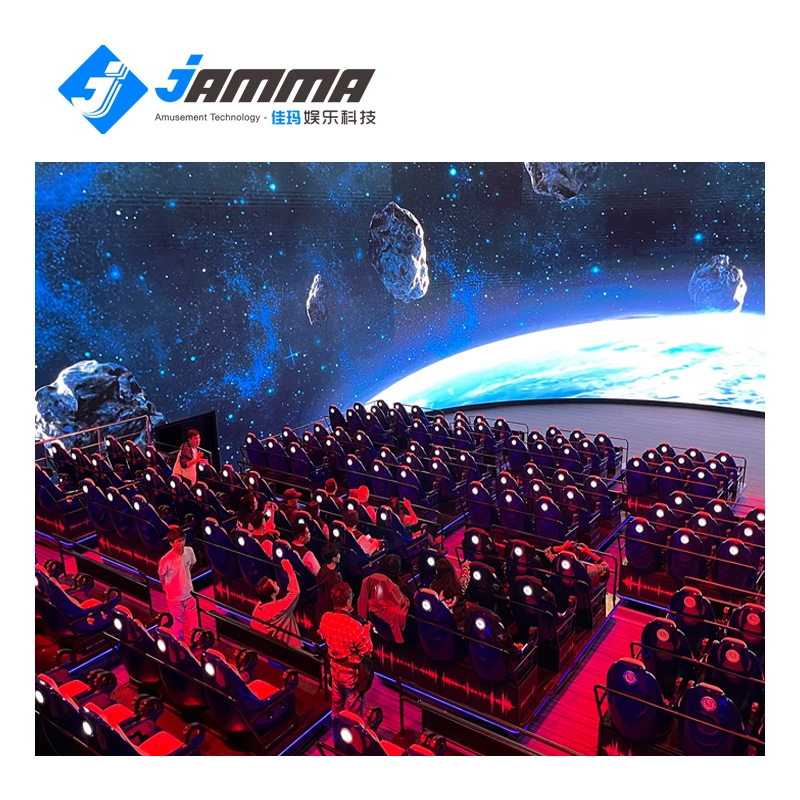
Immersive 5D/7D/9D cinema dynamic visual experience room
Compared with other types of theaters, 5D/7D/9D cinema have high technical content, prominent themes, and have a strong impact on the characteristics of the picture. With the increasing demand in the entertainment market and the continuous development of video entertainment technology, in the past, audiences would experience vibration, drop, rain, scratches and other effects in some 4D theaters, but now with 5D theaters, audiences can experience new Unique features, touch and feel effects such asreal smoke, water, snow, bubbles, smell, lightning, leg touch,camera system and more. When the audience is watching amovie, the seats and environmental effects will change into corresponding actions according to the development of the movie,allowing the audience to experience an immersive viewing experience.
