

Customizing Game Modes for Sports Simulation Guests
- Why Guest-Centered Customization Drives Value
- Understand your sports simulation guest segments to increase revenue and repeat visits
- Core game mode categories for sports simulation experiences
- Comparing game modes: operational and commercial implications
- Designing customizable parameters that matter
- Balancing realism and accessibility in sports simulation
- Operational considerations: throughput, staffing, and maintenance for sports simulation venues
- Technology stack and analytics to support adaptive game modes in sports simulation
- Monetization strategies tied to game mode customization
- JAMMA Amusement: solutions and capabilities for sports simulation venues
- How JAMMA’s sports simulation offerings support customization and venue ROI
- Implementation roadmap: from concept to optimized operations
- Practical tips from field deployments
- FAQs — Customizing Game Modes for Sports Simulation Guests
- 1. What game modes should I prioritize when opening a new sports simulation attraction?
- 2. How do I balance realism for athletes and accessibility for casual guests?
- 3. What KPIs should I track to measure mode performance?
- 4. Can tournaments and leagues work for simulation attractions?
- 5. What technology is required to support advanced customization and analytics?
- 6. How should I price High Quality modes or analytics packages?
- Contact & product inquiry
- References
Why Guest-Centered Customization Drives Value
Understand your sports simulation guest segments to increase revenue and repeat visits
Successful sports simulation venues start by recognizing the different guest motivations that bring people to play. Segmentation typically includes casual families, competitive players, training/serious athletes, corporate and group events, and tourists. Tailoring game modes to these segments increases dwell time, per-guest spend, and lifetime value. For example, casual families prefer short, easy-to-learn modes with social features, while serious athletes value high-fidelity simulation, data feedback, and customizable training drills.
Core game mode categories for sports simulation experiences
Designing a mode catalog that covers the main guest needs reduces friction and simplifies upsells. The primary categories are:
- Arcade/Quick Play — short, high-score focused (ideal for walk-ups).
- Competitive Head-to-Head — direct multiplayer with leaderboards.
- Cooperative/Party Modes — teams or mixed groups, social mechanics.
- Training/Skill Development — repeatable drills with metrics.
- Tournaments/Leagues — scheduled events with brackets and rewards.
- Free Play/Exploration — sandbox or casual exploration with low entry barriers.
Each mode should be mapped to monetization opportunities (e.g., ticket pricing, timed sessions, subscription passes, spectator seats).
Comparing game modes: operational and commercial implications
Use structured comparisons to decide which modes to prioritize. The table below summarizes typical considerations for sports simulation modes.
| Mode Type | Ideal Sports Simulation Guest | Average Session Duration | Monetization Options | Hardware/Setup Demand |
|---|---|---|---|---|
| Arcade/Quick Play | Casual visitors, families | 3–8 minutes | Pay-per-play, tokens, add-on photo | Low; single station |
| Competitive Head-to-Head | Friends, competitive players | 5–20 minutes | Entry fees, leaderboards, sponsored prizes | Medium; networking & synchronized stations |
| Training/Skill Development | Clubs, serious athletes | 15–60 minutes | Time blocks, membership packages, coaching | High; sensors, analytics & recording |
| Tournaments/Leagues | Organized groups, e-sports style fans | 30–180 minutes (event dependent) | Ticketing, sponsorship, concessions | High; event-grade staging & support |
Designing customizable parameters that matter
Customization should be meaningful, measurable, and easy for staff and guests to use. Key parameters include:
- Difficulty scaling — adjust physics fidelity, AI opponents, and assist levels.
- Session length & pacing — timed sessions, practice reps, or points-to-win.
- Rule variants — modified scoring, power-ups, handicaps for mixed-skill groups.
- Visual and audio themes — seasonal skins, spectator overlays, sponsor branding.
- Data & feedback granularity — from simple scores to biomechanics and heatmaps.
Offer 'presets' for common guest intents (e.g., Family Fun, Training Focus, Pro Challenge) plus an advanced custom menu for power users.
Balancing realism and accessibility in sports simulation
High realism (accurate physics, latency minimization, realistic input-response) increases appeal to athletes but can raise the entry barrier for casual guests. Implement multi-tiered realism settings: “Casual” (assists on, simplified rules), “Hybrid” (realistic physics with optional assists), and “Pro” (full realism, advanced metrics). Track conversion: how many casual players switch to hybrid/pro modes over time, and use that to fine-tune the onboarding flow.
Operational considerations: throughput, staffing, and maintenance for sports simulation venues
Customized modes influence throughput and demand on staff. Key operational levers include:
- Session scheduling: shorter standard sessions with optional add-ons reduce queue times.
- Self-service UI: intuitive touchscreens reduce staff intervention, lowering labor costs.
- Maintenance planning: modes that stress hardware (e.g., full-power physics, high frame rates) require proactive servicing schedules.
- Safety & accessibility: ensure rule variants do not create unsafe interactions for children or novice guests.
Track KPIs such as average revenue per session, turnover rate, and maintenance incidents per 1,000 hours to measure the operational impact of modes.
Technology stack and analytics to support adaptive game modes in sports simulation
Robust customization needs a modular technology stack: game engine layer (physics & UI), device drivers (sensors, input), session manager (scheduling & payments), and analytics backend. Instrument every session to collect telemetry: session length, mode chosen, score distributions, failure points, and repeat rate. Feed this into a product analytics system to identify which presets convert best, where guests drop off, and which modes generate the most ancillary spend.
Example implementation elements:
- Game engine: Unity or Unreal with deterministic physics modules.
- Sensor integration: optical tracking, IMUs, depth cameras for biomechanics.
- User account integration: member profiles, retained preferences, and progress tracking.
- Cloud analytics: time-series metrics, cohort analysis, A/B testing for mode presets.
Monetization strategies tied to game mode customization
Customization enables diverse revenue streams:
- Pay-per-play with High Quality mode surcharges (e.g., pro physics add-on).
- Memberships unlocking advanced modes and detailed analytics.
- Coaching packages that use training-mode metrics for improvement plans.
- Sponsorships and branded skins for tournament and competitive modes.
Use experiments to measure price elasticity — e.g., charge a small High Quality for recorded video replays or advanced analytics and measure uptake across guest segments.
JAMMA Amusement: solutions and capabilities for sports simulation venues
JAMMA Amusement was established in 2009, located in Guangzhou, with 15 years of experience in the amusement industry. Focusing on providing high-value, one-stop solutions for amusement projects, our products include VR games, AR sports simulators, AR interactive projection games, 5D cinema, as well as arcade games and outdoor playground equipment. We have a highly efficient international sales team dedicated to understanding customer needs and providing professional solutions and high-quality products for venues. Our industry-leading technical team keeps abreast of the latest technological trends and continuously develops and updates the products. Our manufacturing and after-sales teams are skilled and experienced, providing comprehensive technical support. We are committed to becoming a leading global provider of amusement equipment and park solutions. Our website is https://www.jammapark.com/.
How JAMMA’s sports simulation offerings support customization and venue ROI
JAMMA’s Sports Simulators, Interactive Projection Games, Immersive Attractions, and VR Games are engineered for modularity: preset modes for rapid guest onboarding, advanced options for training and tournaments, and cloud connectivity for updates and analytics. Key competitive advantages:
- Product breadth: a one-stop catalog from arcade to immersive attractions reduces vendor integration risk.
- Technical depth: in-house R&D teams that deliver firmware and software updates aligned with the latest sensor tech.
- Global support: manufacturing and after-sales resources to maintain uptime and long-term partnerships.
These strengths let operators deploy a phased customization roadmap—start with core presets, instrument behavior, then iterate with targeted High Quality features maximizing guest satisfaction and per-guest revenue.
Implementation roadmap: from concept to optimized operations
Practical steps for deploying customizable modes in a sports simulation attraction:
- Guest research & segmentation: run surveys and onsite observations for two weeks to validate personas.
- Define mode library: select 4–6 launch modes (e.g., Family, Quick Play, Pro Training, Tournament).
- UI/UX design: simplified presets with an “advanced” toggle for power users.
- Pilot & instrument: launch with telemetry for 30–90 days; collect KPIs.
- Iterate pricing and presets: A/B test High Quality add-ons and adjust mode parameters per cohort.
- Scale tournaments & memberships: once conversion thresholds are met, expand events and loyalty programs.
Typical timeline: 8–12 weeks from concept to pilot, with ROI inflection often visible within 6–12 months depending on location and marketing.
Practical tips from field deployments
Lessons learned from venues running sports simulation attractions:
- Make onboarding frictionless: a 60–90 second tutorial video and default ‘Family’ preset raise conversion.
- Use visible leaderboards and live displays to motivate guests to try competitive modes.
- Reserve dedicated hours for structured training/tournaments to avoid conflicts with casual play.
- Monitor hardware stress: higher realism modes accelerate wear; budget preventive maintenance accordingly.
FAQs — Customizing Game Modes for Sports Simulation Guests
1. What game modes should I prioritize when opening a new sports simulation attraction?
Start with 3–4 core modes: Family/Arcade (quick play), Competitive Head-to-Head, Training/Skill, and a Tournament mode. These cover most guest intents and allow you to test monetization levers quickly.
2. How do I balance realism for athletes and accessibility for casual guests?
Implement tiered realism presets: Casual (assists + simplified physics), Hybrid (realistic feel with optional assists), and Pro (full realism + analytics). Provide short tutorials and visible instructions to guide casual players into higher tiers gradually.
3. What KPIs should I track to measure mode performance?
Track session length, conversion rate from walk-up to paid session, repeat rate (return visits), revenue per session, ancillary spend (photos, replays), and maintenance incidents. Use cohort analysis to see how different guest types respond to presets.
4. Can tournaments and leagues work for simulation attractions?
Yes. Scheduled tournaments increase off-peak utilization and can be monetized via entry fees, sponsorships, and ticketed spectator seating. Start small (weekend brackets) and scale based on engagement.
5. What technology is required to support advanced customization and analytics?
A modular stack: a game engine with configurable physics, sensor integrations (IMU, depth cameras), a session/scheduling & payment system, and a cloud analytics backend for telemetry and A/B testing. Ensure secure data handling for guest accounts.
6. How should I price High Quality modes or analytics packages?
Use tiered pricing and experiment. Small add-on fees for High Quality modes (e.g., $1–3 per session) or monthly membership for training analytics (e.g., $15–40/month) are common starting points. A/B test prices and monitor uptake and churn.
Contact & product inquiry
For tailored solutions and to discuss how to implement customizable game modes for your sports simulation venue, contact JAMMA Amusement or visit our product pages: https://www.jammapark.com/. Our team can provide demos, technical specifications, and a phased implementation plan aligned to your goals.
References
- IAAPA – The Global Attractions Association (industry data & trends): https://www.iaapa.org/ (accessed November 2024)
- Grand View Research – Virtual Reality Market Size and Trends: https://www.grandviewresearch.com/industry-analysis/virtual-reality-vr-market (published 2024, accessed November 2024)
- Statista – Amusement and theme parks market statistics: https://www.statista.com/topics/967/theme-parks-and-amusement-parks/ (accessed November 2024)
- Market research on esports and event monetization (industry whitepapers): https://newzoo.com/insights/articles (Newzoo insights, accessed November 2024)
Custom indoor tennis simulator Manufacturers and Suppliers in France
Top 10 360 mall cinema Manufacturers and Supplier Brands
Why choose JAMMA as your interactive projector floor manufacturer in Germany
Revolutionizing Fun: The Impact of Interactive PE Projectors in the Amusement Industry
Product details
Does the soccer simulator configuration include the curtain?
Yes, a 4-meter-wide, 3-meter-high projection curtain is included.
Are glasses required to see a 5D film?
Audience needs to wear 3D glasses while watching movie, but not VR glasses.
Can I customize the number of seats of 5D cinema?
Yes, we generally have options for six, nine, eighteen, twenty-four, and thirty-six seats, and the quantity of seats also can be customized.
Standard and other
Do you offer installation services?
Our professional implementation team can provide equipment installation and debugging services to ensure smooth operation. Our installation services is chargeable and you can contact us in to inquire about the service fees.
How will it be transported?
For large items, we usually use sea freight, while for small items, we use air freight or services like DHL, FedEx, or UPS. We can also accommodate specific shipping methods based on your requirements.
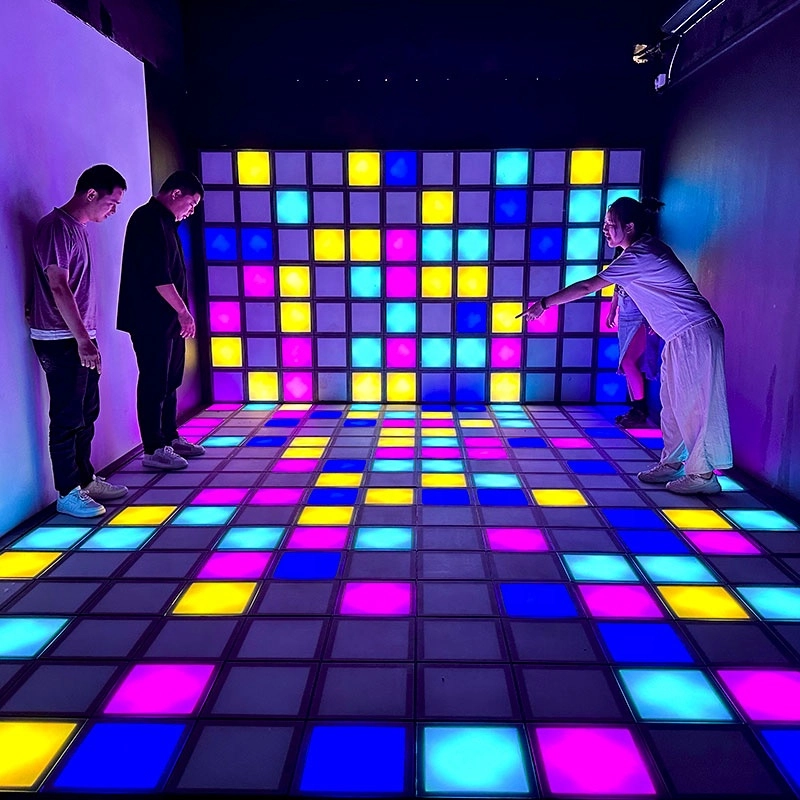
Hottest activated LED dance grid tiles floor touch games
Super Grid is an immersive sports game that combines sports and technology. It integrates interactive LED lights and sensors through innovative software design, creating a fun gaming experience.
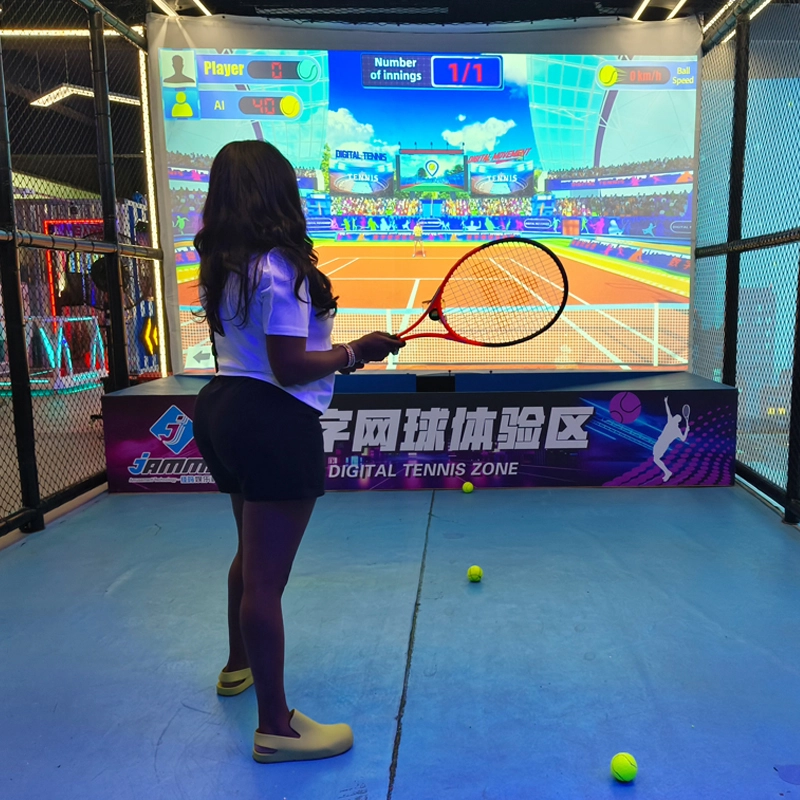
Top Indoor Tennis Racketball Training Simulator Dual Player Games
Interactive somatosensory fitness game
Combine traditional tennis sports with advanced 3D digital technology to bring customers an immersive tennis training experience
COMBINE TRADITIONAL TENNIS SPORTS WITH ADVANCED 3D DIGITAL TECHNOLOGY TO BRING CUSTOMERS AN IMMERSIVE TENNIS TRAINING EXPERIENCE INDOOR AND TENNIS EXPERIENCE HALL
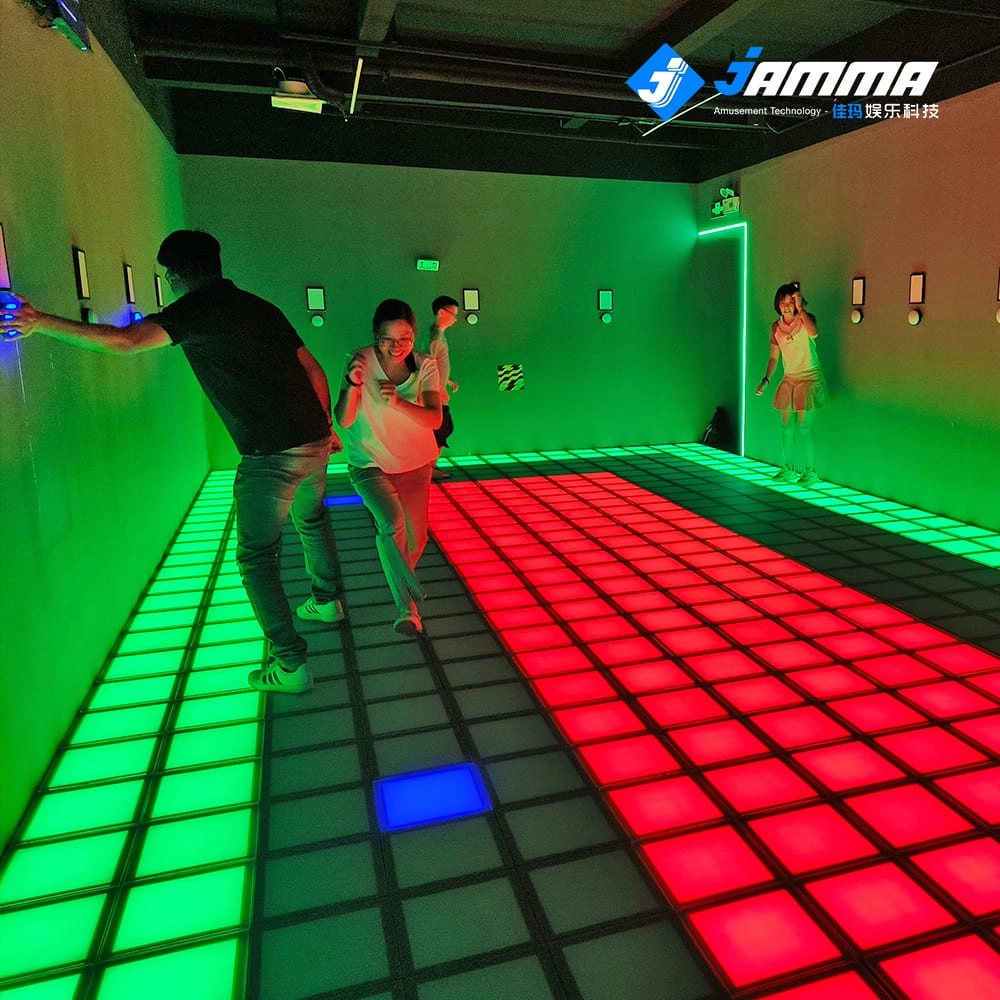
Super Grid Interactive LED Floor Activate Game Team Play
Super Grid is an immersive sports game that combines sports and technology. It integrates interactive LED lights and sensors through innovative software design, creating a fun gaming experience.
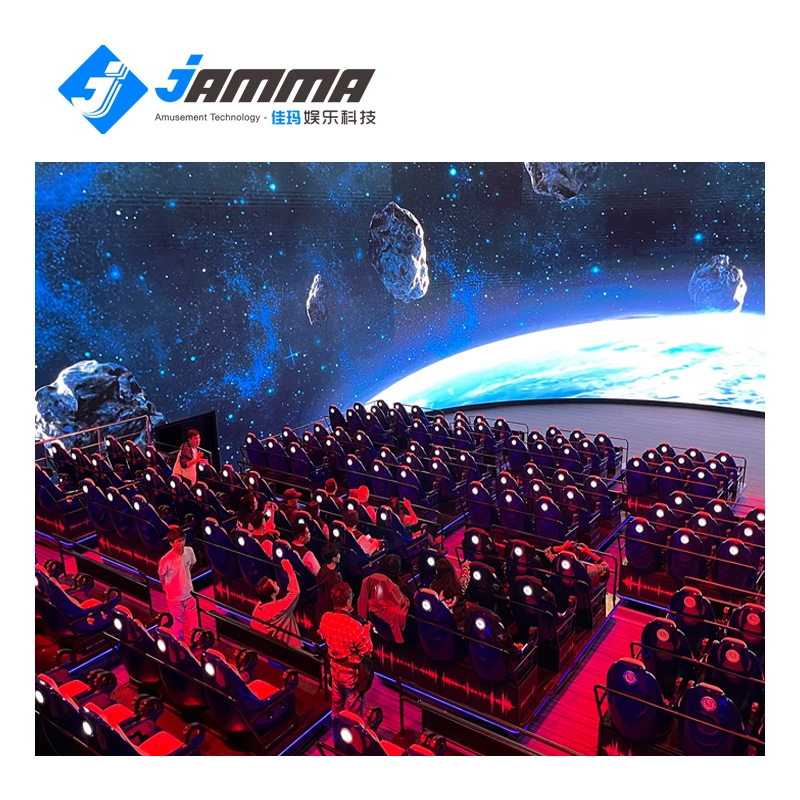
Immersive 5D/7D/9D cinema dynamic visual experience room
Compared with other types of theaters, 5D/7D/9D cinema have high technical content, prominent themes, and have a strong impact on the characteristics of the picture. With the increasing demand in the entertainment market and the continuous development of video entertainment technology, in the past, audiences would experience vibration, drop, rain, scratches and other effects in some 4D theaters, but now with 5D theaters, audiences can experience new Unique features, touch and feel effects such asreal smoke, water, snow, bubbles, smell, lightning, leg touch,camera system and more. When the audience is watching amovie, the seats and environmental effects will change into corresponding actions according to the development of the movie,allowing the audience to experience an immersive viewing experience.
