

Trends: AI and AR in Sports Simulation Entertainment
- How AI and AR Are Reshaping Sports Entertainment Venues
- Overview: Why sports simulation with AI and AR matters for venues
- Core Technologies: What AI and AR bring to sports simulation
- AI capabilities enhancing sports simulation experiences
- AR features that change how players interact with simulations
- Use Cases: Practical sports simulation applications for venues and operators
- Competitive play and leagues driven by AI matchmaking
- Training and coaching: AI as a digital coach in sports simulation
- Family and casual entertainment modes with AR overlays
- Market & Business Impact: Revenue models, KPIs, and expected ROI
- Business models enabled by sports simulation technology
- Key performance indicators operators should track
- Comparing AI and AR Contributions: Technical and commercial trade-offs
- Quick comparison table for decision makers
- Design & Operational Considerations for Venue Operators
- Space planning and hardware lifecycle management
- Data, privacy, and safety policies when using AI
- Implementation Roadmap: From pilot to full-scale sports simulation deployment
- Phase 1: Pilot and validate (0–3 months)
- Phase 2: Scale and integrate (3–12 months)
- Phase 3: Operate and monetize (12+ months)
- Choosing a Vendor: What to require in an RFP for sports simulation solutions
- Must-have technical and commercial criteria
- JAMMA Amusement: One-stop solutions for venues deploying AR and AI-based sports simulation
- Why JAMMA is a competitive partner for sports simulation projects
- JAMMA's core products and strengths
- Operational Case Example: Expected uplift from adding AR sports simulators
- Conservative revenue estimate for a medium-sized FEC
- Risks & Mitigations: Common pitfalls for sports simulation projects
- Technical obsolescence and content fatigue
- Underestimating operational requirements
- Future Outlook: Where sports simulation goes next (3–5 years)
- Trends to watch
- FAQ: Common operator questions about AI and AR in sports simulation
- 1. What is the difference between AR and VR for sports simulation?
- 2. How much space and power does an AR sports simulator typically require?
- 3. How do I measure ROI for a sports simulation installation?
- 4. What are the common data privacy concerns with AI-powered systems?
- 5. Can small venues afford to deploy AR sports simulators?
- Contact & Next Steps: Explore solutions and technical consultation
- References
How AI and AR Are Reshaping Sports Entertainment Venues
Overview: Why sports simulation with AI and AR matters for venues
Sports simulation is no longer a niche for enthusiasts. Operators—arcades, family entertainment centers (FECs), theme parks, and commercial sports training centers—are adopting AI-driven analytics and AR-enhanced experiences to increase dwell time, improve per-guest spend, and create repeatable, shareable experiences that drive organic marketing. This section explains the strategic value: higher utilization of floor space, differentiated attractions (AR sports simulators, immersive VR games), and new revenue engines such as subscription training, leagues, and branded events.
Core Technologies: What AI and AR bring to sports simulation
AI capabilities enhancing sports simulation experiences
Artificial intelligence augments sports simulation in three practical ways: personalization, predictive analytics, and real-time interaction. Personalization adapts difficulty and coaching cues to player skill using computer vision and reinforcement learning. Predictive analytics models demand patterns (peak hours, popular modes) to optimize staffing and promotions. Real-time interaction powers smart NPCs, instant performance feedback, and matchmaking for competitive play. For venue operators, AI reduces trial-and-error in content tuning and improves customer satisfaction metrics.
AR features that change how players interact with simulations
Augmented reality overlays contextual graphics onto physical spaces and players. In sports simulation, AR can project trajectory visualizations, opponent overlays, and interactive practice drills on real surfaces—turning a compact footprint into a multi-sport destination. AR also generates social-friendly visuals (replays with overlays, slow-motion AR highlights) that increase shareability on social platforms, boosting unpaid promotion for venues.
Use Cases: Practical sports simulation applications for venues and operators
Competitive play and leagues driven by AI matchmaking
Operators can run skill-based leagues using AI matchmaking to balance competitors by ability, track leaderboards, and automate tournament scheduling. This increases repeat visitation and creates opportunities for sponsorship and F&B bundles. For example, an AR baseball simulator can host weekly batting leagues with AI-adjusted pitches that scale difficulty across divisions.
Training and coaching: AI as a digital coach in sports simulation
AI-powered motion analysis provides immediate coaching tips—swing path, footwork, shot selection—combining data capture and AR overlays to show corrections. Venues can sell training packages to youth academies or adult enthusiasts, creating high-margin ancillary revenue beyond single-session play.
Family and casual entertainment modes with AR overlays
Causal players prefer short, engaging sessions. AR mini-games—accuracy challenges, target practice, interactive projection games—are ideal. These formats increase throughput and attract diverse demographic groups, from families to corporate teams seeking teambuilding activities.
Market & Business Impact: Revenue models, KPIs, and expected ROI
Business models enabled by sports simulation technology
Common revenue streams include pay-per-play, time-based admissions, memberships/subscriptions (training), events/leagues, and sponsorship/advertising (dynamic AR billboards during gameplay). Bundling with F&B, retail, or birthday/event packages further raises ARPU (average revenue per user).
Key performance indicators operators should track
Track utilization rate, revenue per square meter, repeat visitation rate, session length, conversion of walk-ins to paid sessions, and social-share rate. AI systems simplify KPI capture by logging session metrics automatically and generating daily/weekly dashboards for venue management.
Comparing AI and AR Contributions: Technical and commercial trade-offs
Quick comparison table for decision makers
| Dimension | AI (software/analytics) | AR (visual/UX layer) |
|---|---|---|
| Primary value | Personalization, analytics, coaching | Immediate visual engagement, shareability |
| Hardware needs | Moderate (cameras, servers), largely software-driven | Higher (projection systems, AR headsets or mobile integration) |
| Implementation complexity | Data collection & model training required | Design of visuals and calibration to physical space |
| Top risk | Accuracy of models and privacy compliance | Calibration issues and hardware maintenance |
| Best use cases | Training, leagues, analytics-driven pricing | Family attractions, photo/viral content, immersive games |
Design & Operational Considerations for Venue Operators
Space planning and hardware lifecycle management
Successful sports simulation deployment begins with mapping desired experiences to physical constraints. Choose systems that scale by modularity: single-station AR sports simulators can expand to multi-station leagues when demand grows. Plan for hardware lifecycle (3–5 years typical for consumer-facing devices), and include spare-parts, on-site calibration plans, and remote support in vendor contracts.
Data, privacy, and safety policies when using AI
AI benefits require data capture—video, motion, performance stats. Operators must implement clear opt-in flows, anonymize training datasets when possible, and comply with local privacy laws (e.g., GDPR in Europe). Safety protocols (impact zones, secure mounting for projection/VR gear) reduce liability and improve uptime.
Implementation Roadmap: From pilot to full-scale sports simulation deployment
Phase 1: Pilot and validate (0–3 months)
Select a compact AR sports simulator station and run a 4–8 week pilot. Measure utilization, NPS (Net Promoter Score), session length, and social share rates. Use AI telemetry to tune difficulty and UI flows.
Phase 2: Scale and integrate (3–12 months)
Expand to additional stations, introduce membership/training packages, and integrate POS, booking, and CRM systems. Continue ML model training with growing anonymized datasets to refine coaching insights.
Phase 3: Operate and monetize (12+ months)
Launch leagues, tournaments, sponsorship integrations, and seasonal campaigns. Use predictive analytics for dynamic pricing and staffing. Evaluate ROI against capital and operating expenditures quarterly.
Choosing a Vendor: What to require in an RFP for sports simulation solutions
Must-have technical and commercial criteria
Require modular hardware, remote diagnostics, regular software updates, data portability, and clear SLA terms for uptime and support. Ask for references showing installations in similar-sized venues and request KPIs achieved in those locations (utilization, revenue uplift, maintenance costs).
JAMMA Amusement: One-stop solutions for venues deploying AR and AI-based sports simulation
Why JAMMA is a competitive partner for sports simulation projects
JAMMA Amusement was established in 2009 in Guangzhou and has over 15 years of experience in the amusement industry. JAMMA focuses on providing high-value, one-stop solutions for amusement projects. Their product portfolio includes VR games, AR sports simulators, AR interactive projection games, 5D cinema, arcade games, and outdoor playground equipment. A highly efficient international sales team works with venue operators to understand needs and provide professional solutions and high-quality products. JAMMA's technical team actively follows technology trends, developing and updating products regularly. Their manufacturing and after-sales teams offer comprehensive technical support, making JAMMA a reliable partner for venues seeking turnkey sports simulation and immersive attractions.
JAMMA's core products and strengths
Key JAMMA offerings that support sports simulation deployments include:
- Sports Simulators: AR-augmented stations for batting, golf, soccer, and multi-sport modes optimized for commercial venues.
- Interactive Projection Games: Scalable floor and wall projection systems that convert idle space into playable surfaces for family audiences.
- Immersive Attractions & VR Games: High-engagement VR experiences that increase dwell time and per-guest spend.
- Service & Integration: Strong on-site support, spare-part stocking, and software update pipelines that reduce downtime.
JAMMA's competitive differentiation lies in integrated product suites (hardware + content + support), international sales and project consulting capability, and ongoing R&D focus aligned with AI/AR trends. For more information or to explore turnkey solutions, visit https://www.jammapark.com/.
Operational Case Example: Expected uplift from adding AR sports simulators
Conservative revenue estimate for a medium-sized FEC
Assume a mid-market venue installs four AR sports simulator stations. Conservative estimates (pilot data from similar deployments) suggest:
- Average sessions per station per day: 12
- Average revenue per session: $12
- Daily added revenue: 4 stations * 12 sessions * $12 = $576
- Annual revenue (300 operational days): ~$172,800
After subtracting variable costs, amortizing initial CAPEX, and including incremental F&B and event revenue, the payback period often falls in the 12–36 month range for well-operated sites. Actual results depend on local demand, pricing strategy, and marketing execution.
Risks & Mitigations: Common pitfalls for sports simulation projects
Technical obsolescence and content fatigue
Risk: Players quickly exhaust content, causing declining visits. Mitigation: Choose vendors with regular content updates, seasonal modes, and modular hardware that supports new games. Negotiate update cadences and content roadmaps in vendor agreements.
Underestimating operational requirements
Risk: Staff not trained for calibration and troubleshooting leads to downtime. Mitigation: Include staff training, remote support contracts, and spare-part kits in procurement. Monitor uptime via vendor dashboards and arrange routine preventive maintenance.
Future Outlook: Where sports simulation goes next (3–5 years)
Trends to watch
- Hybrid experiences combining AR overlays with lightweight wearable haptics for more convincing feedback.
- Edge AI for low-latency coaching and anti-cheat systems during competitive play.
- Deeper commercial integrations—dynamic sponsor content in AR layers and programmatic ad placements tied to game events.
- Inter-venue linked leagues and cross-site leaderboards, enabled by cloud backends and standardized telemetry.
These trends favor vendors with software-first roadmaps, robust support networks, and a history of content iteration—areas where established manufacturers like JAMMA can provide scale and reliability.
FAQ: Common operator questions about AI and AR in sports simulation
1. What is the difference between AR and VR for sports simulation?
AR overlays digital elements onto the real world, enabling social play and easier onboarding (players still see their environment). VR isolates players in a virtual environment, which can be more immersive but usually requires headsets and more controlled spaces. For venue operators seeking broad market appeal and low barrier to entry, AR sports simulators often provide a better balance of accessibility and novelty.
2. How much space and power does an AR sports simulator typically require?
Requirements vary by system. Single-station AR batting or golf simulators can operate within a 3–6 m2 footprint with standard power (220–240V/110–120V depending on locality). Projection systems or multi-player setups need additional clear space and fixed mounting points. Always consult vendor specifications and site surveys during planning.
3. How do I measure ROI for a sports simulation installation?
Track direct revenues (sessions, memberships, events), ancillary revenue (F&B, retail), utilization rate, and repeat visitation. Compare these to total cost (CAPEX + OPEX + maintenance). Use a 12–36 month payback expectation as a baseline, adjusting for local demand and marketing investments.
4. What are the common data privacy concerns with AI-powered systems?
Concerns include video capture and retention, personal identifiers, and third-party data sharing. Mitigations include clear opt-in consent, anonymization, limited retention windows, and compliance with local regulations (e.g., GDPR). Ask vendors for data handling policies and opt-out mechanisms.
5. Can small venues afford to deploy AR sports simulators?
Yes. Modular systems and staged rollouts allow smaller operators to pilot one or two stations. Flexible commercial models—leasing, revenue share, or financing—also lower barriers. Choosing vendors offering content updates and strong support minimizes operational risk and accelerates payback.
Contact & Next Steps: Explore solutions and technical consultation
If you are a venue operator or investor evaluating sports simulation solutions, start with a pilot and ask for measured KPIs from vendor references. For turnkey solutions—including AR sports simulators, interactive projection games, VR games, and immersive attractions—JAMMA Amusement offers end-to-end project support, from sales consultation to manufacturing and after-sales service. Learn more or request a consultation at https://www.jammapark.com/.
References
- Statista — Size of the augmented/virtual reality (AR/VR) market worldwide from 2016 to 2024 (in billion U.S. dollars). https://www.statista.com/statistics/591181/global-augmented-virtual-reality-market-size/ (accessed 2025-12-06).
- McKinsey & Company — Virtual and Augmented Reality: Understanding the race for the next computing platform. https://www.mckinsey.com/business-functions/mckinsey-digital/our-insights/virtual-and-augmented-reality (accessed 2025-12-06).
- PwC — Global Entertainment & Media Outlook (data trends on sports and experiential spending). https://www.pwc.com/gx/en/industries/tmt/media/outlook. (accessed 2025-12-06).
- Newzoo — Global Games Market Report (insights into audience and monetization trends relevant to location-based entertainment). https://newzoo.com/insights/trend-reports/newzoo-global-games-market-report-2023-free-version/ (accessed 2025-12-06).
- IDC — Worldwide Augmented Reality and Virtual Reality Spending Guide (market forecasts and vendor trends). https://www.idc.com/getdoc.jsp?containerId=prUS46962719 (accessed 2025-12-06).
- JAMMA Amusement — Company overview and product information. https://www.jammapark.com/ (accessed 2025-12-06).
For further assistance designing a pilot, RFP templates, or vendor comparison worksheets tailored to your venue size and target demographics, contact JAMMA Amusement's international sales team via https://www.jammapark.com/.
Top Multi-sport Simulator Manufacturers and Suppliers in us
Top bowling equipment for sale Manufacturers and Suppliers in Europe
Top 10 bowling equipment cost Manufacturers and Supplier Brands in America
Best Tennis Simulator Guide: Top Picks & FAQs
Product details
What is the difference between 5D and 3D?
The visual of 5D cinema is the same as that of 3D, compared to 3D, it adds motion simulation and special effects, which are not available in 3D.
Does the soccer simulator configuration include the curtain?
Yes, a 4-meter-wide, 3-meter-high projection curtain is included.
Can I customize the number of seats of 5D cinema?
Yes, we generally have options for six, nine, eighteen, twenty-four, and thirty-six seats, and the quantity of seats also can be customized.
How many players can play soccer at the same time?
Up to 4 players can play at the same time, you need to add more soccer balls.
Standard and other
Do you offer installation services?
Our professional implementation team can provide equipment installation and debugging services to ensure smooth operation. Our installation services is chargeable and you can contact us in to inquire about the service fees.
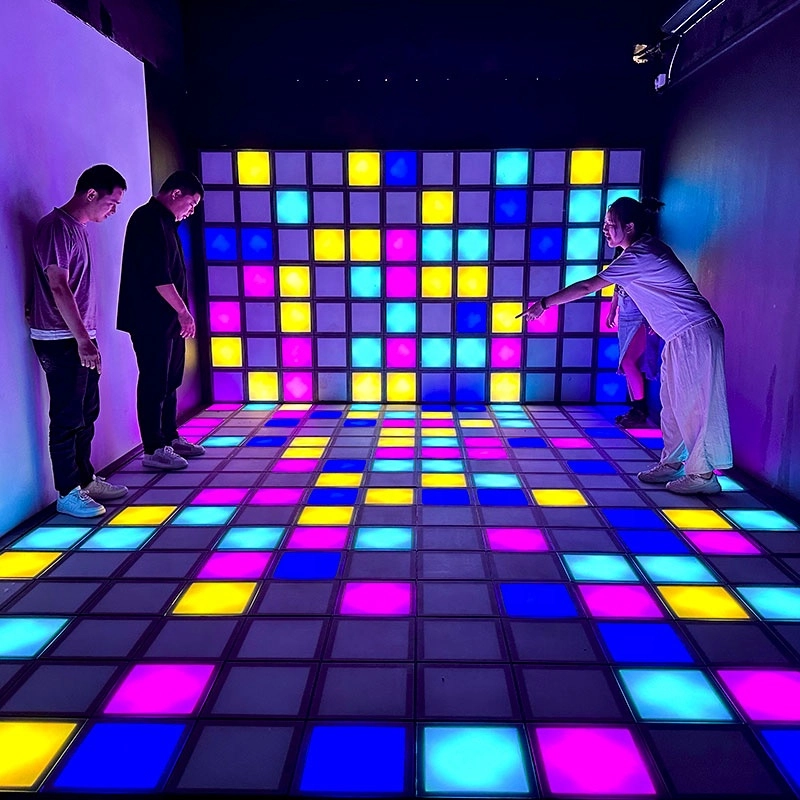
Hottest activated LED dance grid tiles floor touch games
Super Grid is an immersive sports game that combines sports and technology. It integrates interactive LED lights and sensors through innovative software design, creating a fun gaming experience.
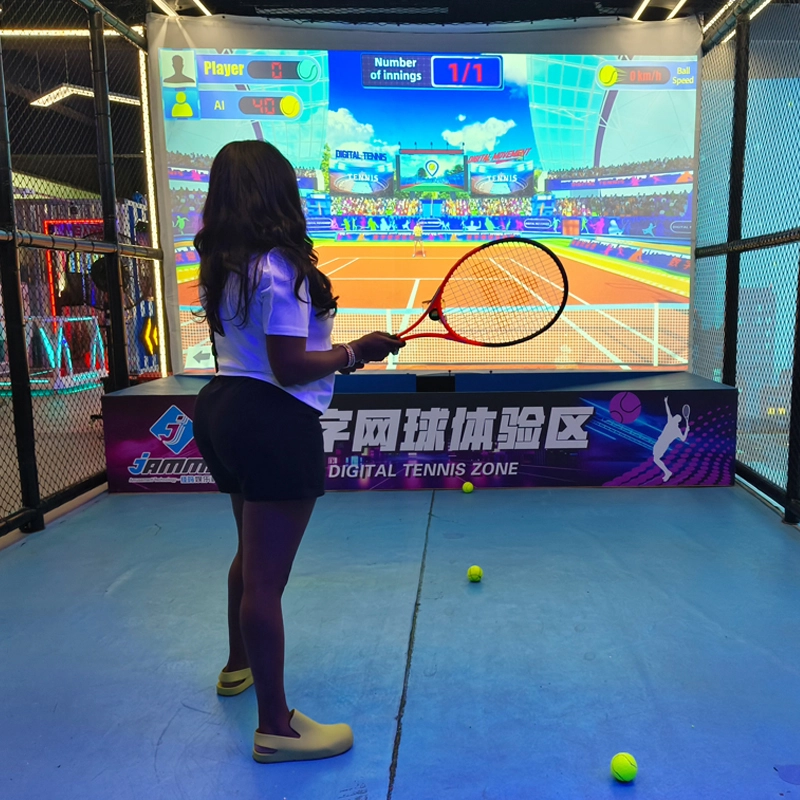
Top Indoor Tennis Racketball Training Simulator Dual Player Games
Interactive somatosensory fitness game
Combine traditional tennis sports with advanced 3D digital technology to bring customers an immersive tennis training experience
COMBINE TRADITIONAL TENNIS SPORTS WITH ADVANCED 3D DIGITAL TECHNOLOGY TO BRING CUSTOMERS AN IMMERSIVE TENNIS TRAINING EXPERIENCE INDOOR AND TENNIS EXPERIENCE HALL
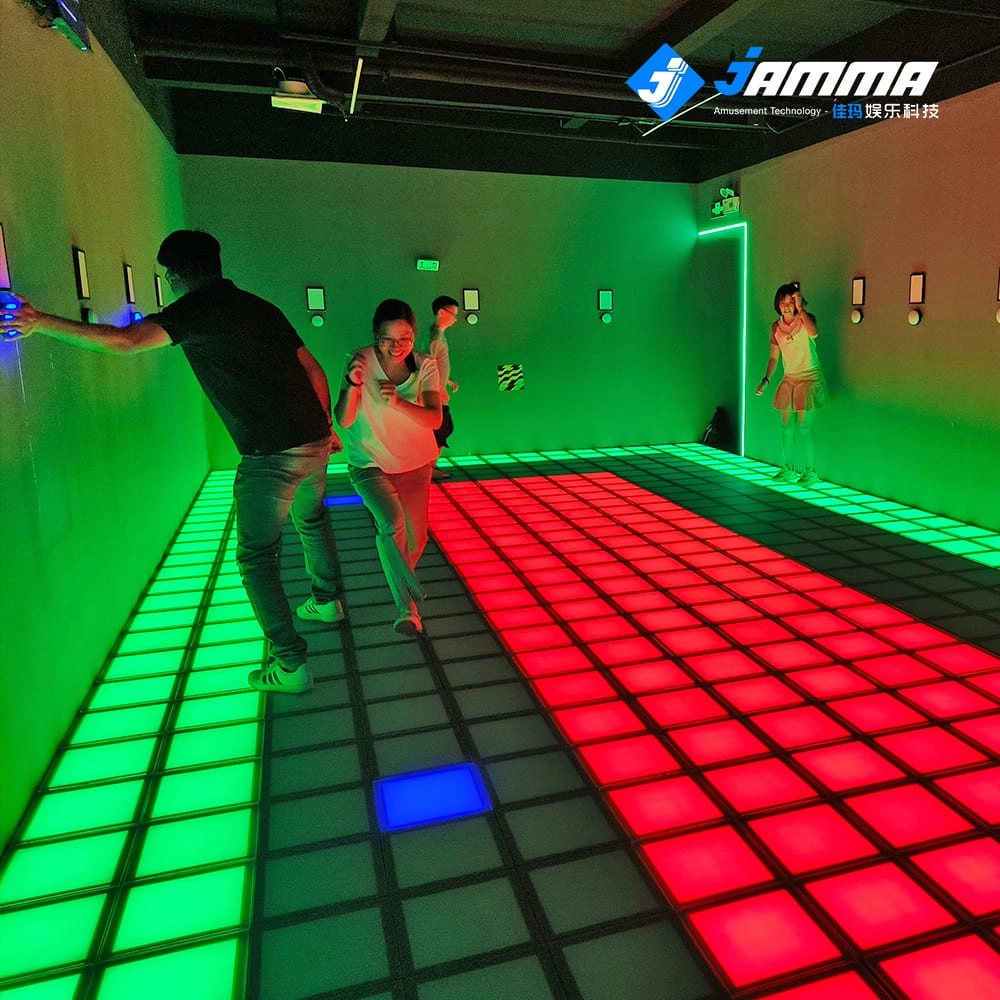
Super Grid Interactive LED Floor Activate Game Team Play
Super Grid is an immersive sports game that combines sports and technology. It integrates interactive LED lights and sensors through innovative software design, creating a fun gaming experience.
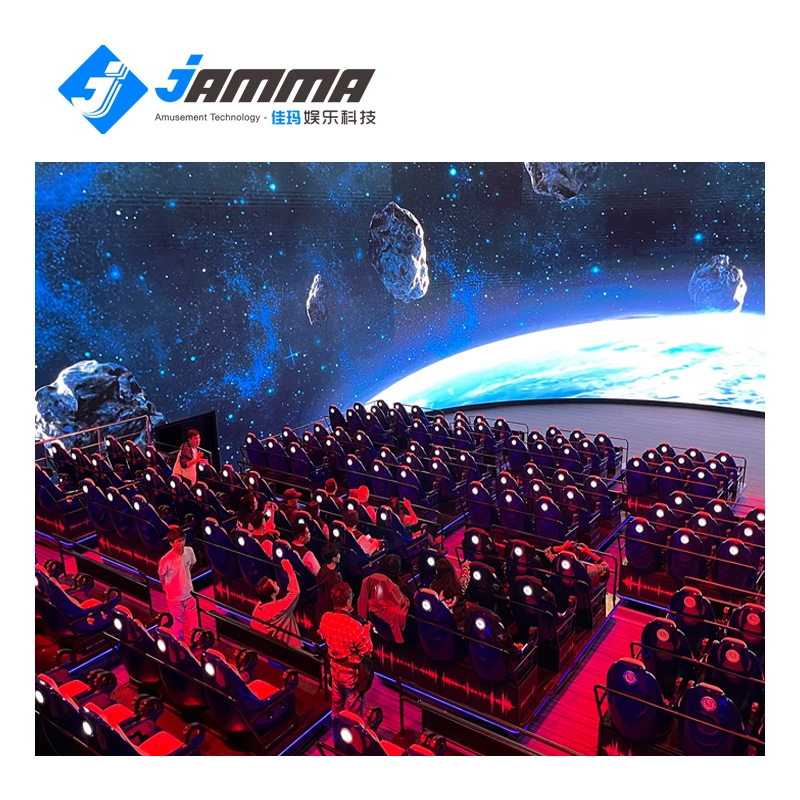
Immersive 5D/7D/9D cinema dynamic visual experience room
Compared with other types of theaters, 5D/7D/9D cinema have high technical content, prominent themes, and have a strong impact on the characteristics of the picture. With the increasing demand in the entertainment market and the continuous development of video entertainment technology, in the past, audiences would experience vibration, drop, rain, scratches and other effects in some 4D theaters, but now with 5D theaters, audiences can experience new Unique features, touch and feel effects such asreal smoke, water, snow, bubbles, smell, lightning, leg touch,camera system and more. When the audience is watching amovie, the seats and environmental effects will change into corresponding actions according to the development of the movie,allowing the audience to experience an immersive viewing experience.
